Brake Cleaner vs Carb Cleaner: Can You Substitute in Carb Cleaning? A Practical Comparison
Explore whether brake cleaner can substitute carb cleaner, with safety, material compatibility, solvent properties, and practical guidance for carburetor cleaning.


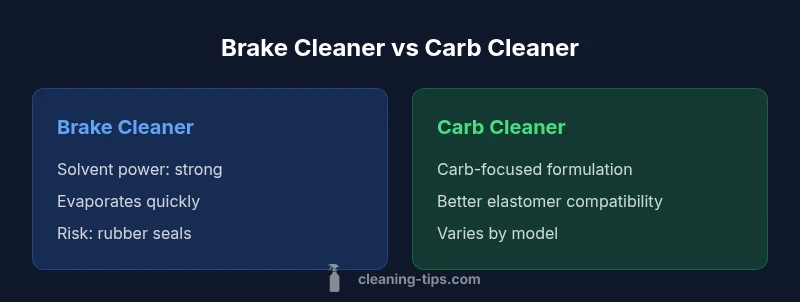
Can you substitute brake cleaner for carb cleaner? In most cases, no. Brake cleaner is a strong solvent designed for degreasing metal and varnish removal, but it can damage rubber seals, diaphragms, and coatings inside a carburetor. Carb cleaners are formulated to balance solvent strength with gasket compatibility, so they are the safer, recommended choice for carburetor cleaning. When in doubt, use the dedicated carb cleaner and observe proper safety measures.
How the question is framed and why it matters
When you ask can you use brake cleaner instead of carb clean, you’re weighing two very different cleaners tailored to different tasks. Brake cleaner prioritizes rapid degreasing of metal surfaces and varnish removal, often with very aggressive solvents. Carb cleaner, however, is engineered to clean carburetors while protecting vulnerable components like rubber gaskets and diaphragms. This distinction isn’t cosmetic—it's about material compatibility, solvent strength, and the likelihood of lingering residue. The Cleaning Tips team emphasizes that understanding the chemical makeup of cleaners helps homeowners avoid costly mistakes. Always check the SDS, test on a non-critical part, and avoid spraying onto sensitive seals or paint. If you must use a substitute, start with the least aggressive option, and document outcomes for future reference.
Brake cleaner: composition, solvents, and typical uses
Brake cleaners come in chlorinated or non-chlorinated formulations and are designed to remove heavy oils, brake fluid residues, and varnish from metal surfaces. They evaporate rapidly, leaving little residue, which is excellent for quick degreasing but risky for organic components. The typical use-case is metal brake components, calipers, and drum hardware where rubber exposure is minimized. If you accidentally mist rubber hoses or gaskets, you risk swelling, softening, or drying out the material. For exterior metallic parts, brake cleaner can be effective, but its aggressive chemistry makes it a poor choice for carburetor internals. In short, the dealer-approved approach is to reserve brake cleaner for metal surfaces and disassembly tasks that don’t involve carburetor rubbers.
Carb cleaner: formulation and purpose
Carb cleaners are designed specifically for carburetors, balancing solvent strength with gasket and elastomer compatibility. They target varnish, gum, and fuel-derived deposits without aggressively attacking rubber components or paint. Some formulations include corrosion inhibitors or lubricants to protect metal parts while cleaning, which can help during reassembly. The goal is to remove contaminants while preserving the integrity of diaphragms, O-rings, and seals. If you’re trying to restore carb performance, using a dedicated carb cleaner is the most reliable approach. As Cleaning Tips notes, always verify compatibility with your carb model and check the product’s SDS before use.
Material compatibility and risks when substituting
Rubber components—O-rings, diaphragms, and seals—are particularly vulnerable to brake cleaner’s aggressive solvents. Spraying brake cleaner near these parts can cause swelling, hardening, or shrinking, which may lead to leaks or malfunctions. Plastic housings and painted surfaces can also be damaged by certain brake cleaner formulations. Carb cleaners, while gentler on elastomers, aren’t universal and can still harm coatings or delicate metal finishes if misused. Before substituting, identify all affected parts, review material compatibility charts, and consider performing a spot test on a non-critical surface. If you see any gloss loss, cracking, or softness, stop and revert to a carb cleaner.
Safety considerations and ventilation
Both cleaners are highly flammable and emit strong fumes, so a well-ventilated area is essential. Wear chemical-resistant gloves and eye protection, and avoid ignition sources during use. Keep containers sealed when not in use. Never mix cleaners with gasoline or other solvents, as reactive vapors can create hazardous fumes. Dispose of used wipes and rags according to local codes. The SDS for each product will outline first-aid steps in case of contact or ingestion. Proper storage away from heat and sunlight further reduces risk.
Practical decision framework: when substitution might seem tempting
If carb cleaner is unavailable, follow a cautious decision framework: (1) Identify all carburetor components involved and verify material compatibility. (2) If you must substitute, choose the mildest solvent among readily available options and limit exposure to elastomers. (3) Perform a controlled application to small areas, then inspect for signs of damage. (4) Document the outcome and revert to a dedicated carb cleaner for future maintenance. The key is to avoid permanent damage to seals and gaskets while achieving reasonable cleaning results.
Safer alternatives you can use in a pinch
In an emergency scenario, isopropyl alcohol or a cleaner labeled safe for rubber components can be a safer interim option than brake cleaner. Use cleaners explicitly designed for carburetors or automotive fuel systems whenever possible. If you can’t access carb cleaner, consider a dedicated metal degreaser for non-rubber surfaces and postpone any cleaning that would expose rubber seals until you obtain proper carb-safe products. Remember to minimize contact with critical elastomer parts and to perform a leak test after cleaning.
Step-by-step cleaning approach with dedicated carb cleaner
- Remove the carburetor or accessible carb parts in a clean, ventilated workspace. 2) Disconnect power and fuel lines as per vehicle manufacturer guidelines. 3) Apply carb cleaner to a brush or cloth; scrub varnish from metal surfaces, jets, and passages. 4) Avoid direct spray into delicate assemblies where rubber meets metal. 5) Rinse with a light mist of cleaner and wipe dry with lint-free towels. 6) Allow parts to dry completely before reassembly. 7) Reassemble and perform a leak and idle check. 8) Dispose of waste according to local regulations.
Maintenance and prevention to avoid carb issues
Regular maintenance reduces the need for aggressive cleaning. Use fresh fuel, replace worn gaskets, and inspect diaphragms for wear. Periodically inspect and clean air and fuel passages to prevent varnish buildup. Keeping a log of cleaning products used and the observed outcomes helps refine your process over time. Cleaning Tips recommends sticking with carb-specific cleaners for reliability and longevity, especially on vehicles with sensitive fuel systems. Consistent maintenance reduces the risk of damage from improper cleaning methods.
Quick reference cheat sheet for cleaners
- Brake cleaner: best for metal surfaces only; avoid rubber seals and carb internals.
- Carb cleaner: designed for carburetors; safer on elastomers but still test compatibility.
- If you must improvise, choose the least aggressive solvent and ventilate thoroughly; always test on a non-critical part first.
- Follow the SDS and manufacturer recommendations for any product used on carburetors.
Comparison
| Feature | Brake Cleaner | Carb Cleaner |
|---|---|---|
| Solvent type | Strong hydrocarbon solvents (fast evaporation) | Carb cleaner blend (carb-focused formulation) |
| Best for | Metal degreasing and quick dry | Carburetor cleaning and varnish removal |
| Material compatibility | Rubber seals at risk; some coatings may be affected | Designed to protect elastomers, but check gaskets and diaphragms |
| Evaporation rate | Very fast evaporation | Moderate to fast evaporation with balance |
| Safety considerations | Highly flammable fumes; requires ventilation | Flammable but generally gentler on elastomers; still needs ventilation and PPE |
| Best practice | Use on metal surfaces; avoid carb internals | Use carb cleaner for carburetors; reserve brake cleaner for metal parts |
Strengths
- Strong solvent power for degreasing metal surfaces
- Fast drying helps prevent drips and run-off
- Widely available and often cheaper
- Effective for stubborn varnish on metal when used correctly
Weaknesses
- Risk of damaging rubber seals and diaphragms
- Can attack coatings and some plastics
- Not designed for carburetors; improper use can cause leaks
- Flammable with strong fumes requiring ventilation
Carb cleaner is the safer, more reliable choice for carburetor cleaning; brake cleaner is not generally recommended for carb internals
For carburetor maintenance, prioritize dedicated carb cleaner to protect elastomer parts and prevent leaks. Use brake cleaner only on metal surfaces and with strict safety precautions, if at all necessary.
Questions & Answers
Is brake cleaner safe on carburetor rubber seals?
Not generally. Brake cleaner can degrade rubber seals and diaphragms, leading to leaks. Use carb cleaner for areas involving elastomers and follow the manufacturer guidance.
Brake cleaner can damage rubber seals in carburetors; stick with carb cleaner for those parts.
Can brake cleaner be used to remove varnish from metal parts of a carburetor?
Yes, brake cleaner can remove varnish from metal components, but avoid high exposure to rubber, diaphragms, and coatings. Test first and use sparingly.
It can remove varnish on metal parts, but be careful around rubber and coatings.
What are safer alternatives if carb cleaner is not available?
Consider isopropyl alcohol or a cleaner labeled safe for carburetors. These options reduce risk to elastomers but may require more effort for varnish removal.
Isopropyl alcohol can work, but carb cleaner is still best for carburetors.
Should I use these cleaners on painted surfaces?
Avoid cleaners that can strip paint or clear coats. Always test on an inconspicuous area and prefer carb cleaner formulations designed for automotive components when paint exposure is possible.
Be careful with paint—test first and avoid aggressive cleaners on painted areas.
What safety steps should I follow when using cleaners?
Work in a well-ventilated area, wear gloves and eye protection, and keep away from flames. Read the SDS and follow disposal regulations for used wipes and rags.
Ventilate the area, protect yourself, and follow disposal rules.
The Essentials
- Rely on carb cleaner for carb maintenance; brake cleaner risks elastomers
- Avoid spraying near gaskets and seals; test compatibility
- Ventilate well and wear PPE when using any solvent
- When substitution is unavoidable, use the mildest effective solvent
- Document outcomes and revert to carb-specific products when possible