Clean for Oxygen Service: Step-by-Step Guide
A comprehensive, step-by-step guide to cleaning for oxygen service. Learn how to select oxygen-safe cleaners, control residues, and verify cleanliness to minimize ignition risk in oxygen-enriched environments.


Learn how to clean for oxygen service safely and effectively. This guide covers oxygen-compatible detergents, non-sparking tools, and contamination controls to minimize ignition risk and keep components ready for use in oxygen-enriched environments. We emphasize validation steps, documentation, and choosing cleaners that leave no flammable residues. Follow the steps and checklists in this article to achieve compliant cleanliness without compromising safety.
What cleaning for oxygen service means
In industries where equipment operates in oxygen-enriched atmospheres, cleaning for oxygen service means removing all materials that could ignite or accelerate a flame. The goal is to leave surfaces free of hydrocarbon residues, oils, and particulates, and to ensure compatibility with high-oxygen environments. According to Cleaning Tips, the safest approach centers on using oxygen-compatible cleaners, dedicated tools, and a controlled workflow that minimizes recontamination. By starting with a clear plan, facility design supports a safe, repeatable process. In practice, this means selecting detergents that do not break down under oxygen exposure, avoiding petroleum solvents, and drying surfaces thoroughly to prevent vapor pockets. The result is a cleaned part, tool, or surface ready for use in oxygen service without introducing ignition risks or contaminants. The first step is to define the scope: which components require cleaning, what residues are acceptable, and how verification will occur.
Why ignition risk matters in oxygen-rich environments
Oxygen-enriched atmospheres lower the ignition threshold for many materials. A tiny residue, lubricant film, or dust particle can become fuel when exposed to elevated oxygen levels. In practice, this means that traditional cleaning goals—cosmetic appearance—are insufficient. The Cleaning Tips team emphasizes treating every surface as a potential ignition source until proven otherwise. When planning an oxygen-service cleaning workflow, factors such as material compatibility, surface energy, and residual oxygen after drying should guide cleaner selection and equipment choices. Implementing conservative acceptance criteria reduces rework and enhances safety across maintenance cycles. By focusing on risk reduction rather than mere cleanliness, teams can prevent ignition events and support safe operations in oxygen-intensive settings.
Materials and detergents: what to use and what to avoid
Choose detergents that are water-based, low-foaming, and explicitly approved for oxygen service. Avoid hydrocarbon-based solvents and chlorinated cleaners that can leave flammable residues or react with oxygen to form unstable compounds. Use non-shedding wipes, lint-free cloths, and brushes made from non-reactive materials. Ensure that all tools and containers are compatible with high-oxygen environments to prevent corrosion or fiber shedding. Always review the safety data sheet (SDS) and vendor documentation to confirm broad compatibility with your substrate and environment. The right cleaner reduces the risk of ignition while still providing effective soil removal. Cleaning Tips notes that poor chemical choice is a common source of recontamination and rework; double-check compatibility before use.
Control of residues and compatibility testing
Residue control means both removing oils and ensuring no combustible residues remain after cleaning. After washing surfaces, perform a thorough rinse with high-purity water to flush out detergents and contaminants. Use surface swab tests on critical areas to detect any residual hydrocarbons or hydrocarbons equivalents; compare results to your internal acceptance criteria. If residues are detected, repeat cleaning steps focusing on those areas until pass criteria are met. Document all steps: cleaners used, rinse water quality, surface areas tested, and drying methods. Oxygen service cleanliness requires repeatable methods and robust traceability across equipment lifecycles. Cleaning Tips suggests maintaining a simple, auditable checklist to support ongoing improvements and audits.
Cleaning workflows and facility design
Set up a dedicated cleaning area designed to minimize cross-contamination and ignition risk. Control airflow to prevent aerosol spread and ensure a dry environment. Use static-dissipative mats and non-sparking tools to reduce electrical hazards. Organize cleaning tasks to minimize backtracking; steps should flow from gross soil removal to final rinse and drying. Transport cleaned parts in sealed barrier bags to prevent recontamination. When possible, schedule oxygen-service cleaning in a controlled area adjacent to the work zone to avoid moving parts through non-clean areas. A well-designed workflow reduces errors and improves repeatability across teams and shifts.
Verification: how to prove cleanliness
Verification combines qualitative observations with quantitative checks. On representative surfaces, perform swab tests and interpret results against your acceptance criteria. Confirm dryness through tactile assessment or moisture measurement where appropriate. Collect and store test results, including lot numbers, cleaners used, rinse volumes, and drying times, for audits and reproducibility. A verified clean surface in oxygen service should have minimal residue and no signs of contamination. The Cleaning Tips approach emphasizes that transparent documentation and traceability build trust with stakeholders and support continuous safety improvements.
Common mistakes and how to avoid them
Rushing cleaning steps can leave hazardous residues that ignite in oxygen environments. Skipping thorough drying creates a risk of moisture-driven ignition. Reusing tools across zones can recontaminate surfaces. Inadequate documentation hinders traceability and audits. Avoid these by following checklists, using dedicated oxygen-service tools, and maintaining a well-organized cleaning area. Training and routine practice are essential to maintain consistency across maintenance cycles.
Putting it all together: a sample workflow
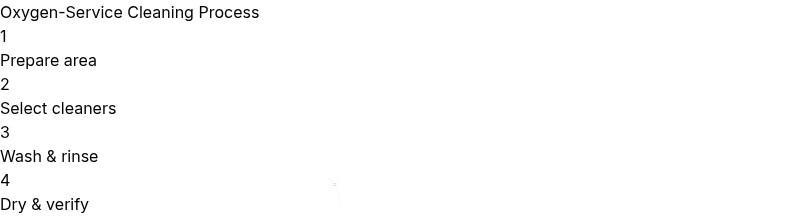
Define scope and acceptance criteria, prepare the area, select compatible cleaners, perform wash, rinse, and dry, verify with swabs and dryness checks, and document every step. This structured workflow yields reproducible results and aligns with internal standards and external guidelines. The result is a trustworthy process that supports safe operations in oxygen service environments and reduces the risk of ignition or contamination during maintenance.
Tools & Materials
- Oxygen-service compatible detergents(Non-flammable, low-foaming; verify suitability for high-oxygen environments (check SDS))
- Non-shedding, lint-free wipes(For soil removal without fibers or particulates)
- Distilled or high-purity water(For rinsing; avoid mineral deposits that could harbor residues)
- Dedicated, non-sparking brushes(Materials like nylon or PTFE; dedicated to oxygen-service use)
- Dedicated cleaning station or containment area(Reduces cross-contamination and ignition risk)
- PPE for cleaners(Gloves, eye protection; ensure PPE compatible with chosen cleaners)
- Residue-testing kit (swabs/solvent)(For post-clean verification and documentation)
Steps
Estimated time: 60-90 minutes
- 1
Prepare the cleaning area
Clear the workspace, set up a dedicated cleaning station, and remove any ignition sources.Verify that ventilation is appropriate and that all non-essential items are stored away to minimize contamination.
Tip: Use static-dissipative mats and remove any accelerants nearby. - 2
Select oxygen-safe cleaners and tools
Choose cleaners approved for oxygen service and ensure all brushes, wipes, and containers are compatible with the environment. Do not reuse household solvents.
Tip: Double-check SDS and vendor docs before use. - 3
Apply detergent and scrub surfaces
Apply the detergent to the target surfaces and scrub using non-sparking brushes to remove soils without creating aerosols. Cover all critical areas.
Tip: Focus on joints and crevices where soils accumulate. - 4
Rinse thoroughly with high-purity water
Rinse surfaces completely to flush away detergents and soils. Use clean water and ensure runoff does not recontaminate cleaned zones.
Tip: Rinse until no detergent scent or visible residues remain. - 5
Dry surfaces completely
Dry using clean, non-static air flow or lint-free towels until surfaces are visibly dry. Confirm there are no wet pockets that could harbor ignition sources.
Tip: Avoid leaving surfaces damp; moisture can facilitate ignition in oxygen-rich environments. - 6
Verify cleanliness and document results
Perform residue checks (swabs or visual inspection) and record cleaner details, rinse water quality, and drying method. Store results for audits.
Tip: Keep a running log and attach lot numbers to each cleaned part.
Questions & Answers
What is oxygen service cleaning?
Oxygen service cleaning prepares equipment for use in oxygen-rich environments by removing contaminants that could ignite. It relies on compatible cleaners, thorough rinsing, and complete drying, followed by verification.
Oxygen service cleaning prepares equipment for use in oxygen-rich environments by removing contaminants that could ignite, using compatible cleaners, thorough rinsing, drying, and verification.
Can I use standard household cleaners for oxygen service?
No. Household cleaners may contain residues or solvents that are flammable or reactive with oxygen. Oxygen-service cleaning requires approved, oxygen-compatible cleaners and methods.
No. Household cleaners are not suitable for oxygen service; use cleaners approved for oxygen environments and follow safety documentation.
How is cleanliness verified after cleaning for oxygen service?
Verification uses surface swabs or residue analysis against internal acceptance criteria, plus drying verification. Documentation includes cleaners used, rinse water quality, and drying times.
Cleanliness is verified with surface swabs or residue checks against set criteria and documented drying times and cleaners used.
What drying times are typical after cleaning for oxygen service?
Drying time varies by material and airflow. Surfaces should be visibly dry with no moisture pockets before verification. Factors include ambient humidity and ventilation.
Drying times depend on material and airflow; surfaces must be visibly dry before verification.
Are there standards for oxygen-service cleaning I should follow?
Yes. Follow industry guidelines and your internal specs; consult SDS and supplier recommendations. Document processes for audits and continuous improvement.
There are industry guidelines and internal specs you should follow; always document for audits.
Watch Video
The Essentials
- Choose oxygen-safe cleaners and dedicated tools
- Dry surfaces thoroughly to prevent ignition risk
- Verify cleanliness with swab testing and document results
- Maintain a dedicated oxygen-cleaning area to reduce cross-contamination