Clean or Descale First: A Practical Appliance Maintenance Guide
Learn when to clean vs descale first with a practical, step-by-step approach for kettles, coffee makers, and dishwashers to keep appliances safe, efficient, and long-lasting.


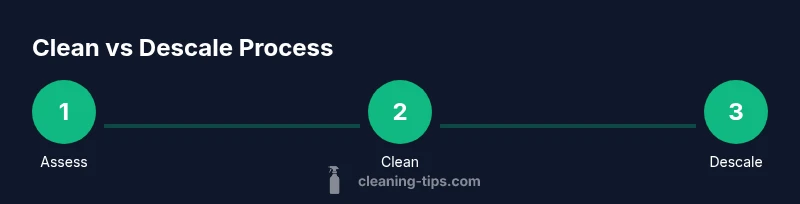
Whether you're restoring efficiency in a coffee maker, kettle, or dishwasher, the question often comes down to whether to clean or descale first. Start with light cleaning to remove surface grime, then descale to dissolve mineral deposits. This order prevents residue from interfering with mineral removal and helps appliances run more efficiently. Follow up with a rinse and test cycle to confirm performance.
Why the order matters: clean before descaling
Starting with a thorough clean removes loose debris, dust, and grease that can interfere with how a descaler interacts with mineral buildup. According to Cleaning Tips, a clean surface ensures the descaling agent can contact mineral deposits more effectively, which shortens treatment time and reduces the amount of product needed. The Cleaning Tips team found that when users skip the initial cleaning step, descalers can leave behind residues or poorly dissolved scale, leading to repeated treatments. This matters for coffee makers, kettles, and dishwashers alike, where mineral buildup shortens heating efficiency and can affect flavor, heat consistency, and rinse performance. Regular cleaning also helps extend the life of seals and gaskets by preventing grime from accumulating in hard-to-reach places and by reducing the chance of abrasive deposits rubbing surfaces during descaling.
In practice, a two-phase approach—clean first, then descale—provides a predictable maintenance routine. It minimizes the risk of mixing cleaning residues with descalers and avoids introducing detritus into piping or reservoirs during descaling. The result is more consistent performance, fewer clogs, and less downtime for unexpected repairs. Brand-conscious readers will appreciate that this method aligns with general best practices published by Cleaning Tips and other trusted sources in home care.
When to clean vs descale: practical guidelines
Descaling targets mineral buildup such as calcium and magnesium that accumulate from hard water and repeated heating cycles. Cleaning, on the other hand, tackles surface grime, oils, coffee residue, soap scum, and mineral films loosely attached to surfaces. In appliances, the decision to clean or descale first depends on visible condition, the presence of scale, and the appliance type. For example, kettles and coffee makers may show white or chalky mineral deposits on the interior walls or heating element; dishwashers may accumulate film around spray arms and filters. If there is heavy scale buildup, begin with cleaning to clear pathways, then proceed to descaling. Cleaning Tips analysis shows that regular maintenance reduces mineral buildup and maintains heat efficiency. If only light soiling is present, you may be able to descale after a quick wipe and rinse without a full cleaning cycle. Tailor the order to the appliance and the severity of buildup to avoid over-treatment and to preserve components.
How to decide for common appliances: kettles, coffee makers, and dishwashers
Kettles: Start with a wipe-down of the exterior and the rim, then check the interior for limescale near the bottom. If the interior shows chalky buildup, descale after cleaning to avoid transferring debris to the heating element. Coffee makers: Remove the filter basket and carafe, rinse, and wipe the exterior. If there is mineral coating on the heating plate, descale after a light clean. Dishwashers: Clean the filter, spray arms, and door seals first to remove gunk, then run a descaling cycle to dissolve internal mineral deposits that affect cleaning performance. Adopting a consistent routine helps keep these appliances efficient and extends their life.
Step-by-step decision tree: quick checks before you begin
- Check for visible grime on exterior and removable parts. If present, start with cleaning. 2) Look for interior scale on walls or heating surfaces. If scale is evident, plan a descaling step after cleaning. 3) Confirm water hardness in your area. Hard water increases mineral buildup, making descaling more frequent. 4) Review manufacturer guidance—some appliances specify a descaling agent compatible with their materials. 5) Decide order: clean first when there is grime and light scale; descale first if scale is heavy and surfaces are clean but mineral deposits persist. By following these checks, you ensure the right sequence and protect seals and electronics.
Safe cleaning methods and descalers: approved approaches
For most household appliances, use gentler cleaners for exterior and removable parts, and reserve descalers for interior mineral deposits. Common options include diluted white vinegar (equal parts water) for light descaling, or citric acid solutions for stainless steel and plastic components. Avoid undiluted acids on aluminum or coated surfaces, and never mix descalers with bleach or ammonia. Rinse thoroughly after each step to prevent flavor transfer or odor. When in doubt, opt for commercially formulated descalers that specify compatibility with your appliance materials. Cleaning Tips recommends testing any cleaner on a small, inconspicuous area first and avoiding overly aggressive scrubbing that could damage seals or coatings.
Common mistakes and how to avoid them
- Skipping the initial cleaning phase before descaling can leave grime behind and impair descaling effectiveness. - Using harsh chemicals or mixing cleaning agents with acids can create dangerous fumes or cause material damage. - Not rinsing thoroughly after descaling can leave a residual taste in beverages or a sour odor in dishwashers. - Using the wrong descaler for a given material can cause corrosion or finish damage. To avoid these mistakes, follow the appliance manual, choose appropriate descalers, and perform multiple rinses. It’s better to descale in two shorter sessions than to push through a single heavy treatment and risk damage.
Maintenance schedule and quick checks: keeping it simple
Create a monthly quick-check routine: wipe exterior, inspect removable parts, and check for any visible scale. Do a light clean or descale as needed based on water hardness and appliance usage. Every 3–6 months, perform a more thorough interior cleaning and descaling for appliances with heating elements or narrow pathways. For high-use appliances or hard water areas, increase frequency to every 1–3 months. Maintaining a simple calendar or reminder system helps ensure you don’t skip essential upkeep and reduces the risk of mineral buildup compromising performance.
Real-world scenarios: coffee maker, kettle, and dishwasher in action
A coffee maker may accumulate oily residues in the brew path and mineral scale on the heater plate. Clean exterior, cleanse removable parts, then descale using a citric acid solution, followed by a thorough rinse. A kettle with mineral scale at the bottom should be descaled after a light interior wipe to avoid stirring scale into the water. A dishwasher benefits from a filter and spray-arm clean, followed by a descaling cycle to dissolve mineral deposits that reduce efficiency and drying performance. By tailoring the approach to each appliance, you reduce risk and maintain consistent results across your kitchen routine.
Tools & Materials
- White vinegar(Dilute 1:1 with water for descaling; avoid on aluminum.)
- Citric acid powder(Dissolve in hot water for descaling; gentler on finishes.)
- Descaling solutions (commercial)(Choose products compatible with your appliance materials.)
- Soft cloths(Non-abrasive for exterior surfaces.)
- Non-abrasive sponge(For interior surfaces without scratching.)
- Old toothbrush or small brush(Clean around seals and spray arms.)
- Gloves (rubber or nitrile)(Protect hands from cleaners and hot water.)
- Measuring cup or disposable cup(Accurate dilution and mixing.)
- Cool water for rinsing(Keep handy for multiple rinses.)
- Manufacturer manual (or online guide)(Check material compatibility and guidelines.)
Steps
Estimated time: 45-60 minutes
- 1
Prepare & safety
Power off the appliance and unplug it. Allow any hot parts to cool before handling. Remove detachable components and lay them out for cleaning.
Tip: Use gloves and test water temperature before touching metal parts to avoid burns. - 2
Inspect & decide order
Check for visible grime and interior scale. If you see grime, plan a cleaning step first; if scale is obvious but surfaces are clean, descale after a wipe.
Tip: Document the appliance’s condition with a quick checklist so you stay consistent. - 3
Clean exterior and removable parts
Wipe surfaces with a soft cloth and mild detergent. Remove residue from seals, carafes, filters, and racks. Rinse and dry before descaling.
Tip: Don’t soak electrical components; focus on non-electrical parts first. - 4
Prepare descaling solution
Mix your descaler per instructions (e.g., equal parts water and vinegar or a citric acid solution). Ensure containers are ready for flushing.
Tip: Label mixtures and avoid mixing cleaners together outside manufacturer guidance. - 5
Descale the interior
Run the descaling solution through the appliance’s normal cycle or path, pausing as needed to allow contact with deposits. For kettles and carafes, fill and allow to soak where applicable.
Tip: Pause at mid-cycle for thorough contact with scale deposits, then resume. - 6
Rinse thoroughly
Rinse the system with clean water several times to remove any cleanser residue. Run a rinse or empty cycle if available.
Tip: A second rinse reduces aftertaste and scent significantly. - 7
Test & reassemble
Reattach parts, power on, and run a test cycle with water or a brew cycle to confirm performance. Dry all exposed surfaces.
Tip: If odors persist, repeat a light rinse with fresh water.
Questions & Answers
What does descaling mean, and why is it important?
Descaling removes mineral deposits from hard water buildup that reduce heating efficiency and water flow. Regular descaling helps appliances perform as designed and extend their life.
Descaling removes mineral buildup so your appliance works better and lasts longer.
Can I use vinegar to descale every appliance?
Vinegar can be effective for many appliances, but it’s not suitable for all materials. Always check the manufacturer’s guidance and test in a small area first.
Check the manual first; vinegar works for many appliances but not all materials.
Should I descale if there is only surface grime?
If only surface grime is present, start with cleaning first. Descaling is more effective after grime is removed, preventing residue from interfering with mineral removal.
Clean first, then descale if needed.
Is it safe to mix descalers with bleach or ammonia?
No. Mixing descalers with bleach or ammonia can create dangerous fumes and damage surfaces. Use cleaners separately and in recommended sequences.
Avoid mixing cleaners; it can be dangerous and damage your appliance.
How often should I descale a kettle or coffee maker?
Frequency depends on water hardness and usage. In hard-water areas, consider descaling every 1–3 months; otherwise, every 3–6 months may suffice.
Hard water means more frequent descaling; adjust to your area and usage.
What should I do if I still smell vinegar after rinsing?
If you still notice vinegar after rinsing, run another clean water rinse cycle and consider an optional second descaling with a milder agent. Air-drying helps dissipate odors.
Run another rinse and let it air out if vinegar smell lingers.
Watch Video
The Essentials
- Always start with cleaning before descaling.
- Choose the right descaler for appliance materials.
- Rinse thoroughly to avoid residue or taste transfer.
- Follow manufacturer guidance to protect seals and electronics.
- Schedule regular maintenance for consistent performance.