How to Clean Up App Reviews: A Step-by-Step Guide
A thorough, step-by-step approach to clean up app reviews that stays compliant with platform policies, improves public perception, and drives meaningful product improvements.


To clean up app reviews, establish a clear moderation policy, respond promptly to recent feedback, and document actions. Identify patterns in current reviews, separate constructive criticism from spam, and use templates for consistent replies. Schedule regular monitoring, flag inappropriate content per platform rules, and encourage authentic reviews from satisfied users.
Why Clean Up App Reviews Matters
In the digital landscape, app reviews are more than just stars—they shape first impressions, influence discovery, and guide user expectations. Cleaning up app reviews is not about concealing issues; it’s about creating a transparent, fair, and helpful feedback loop. According to Cleaning Tips, a disciplined approach to review management can reduce confusion, surface genuine problems, and accelerate product improvements. When done correctly, clean up app reviews helps your team respond with empathy, maintain authenticity, and build long-term trust with users. A well-managed review system acts as a public diagnostic for your product, signaling that you listen and act. This is especially important for homeowners and renters who rely on practical, real-world user experiences when evaluating apps for daily tasks and home management. By treating reviews as a valuable data source—and not merely as a rating—the process of clean up app reviews becomes a competitive advantage that supports healthier app ecosystems and better user satisfaction.
In this guide, we’ll walk through a practical, ethics-first approach to clean up app reviews. You’ll learn how to audit existing feedback, establish policies, craft templates, and implement a sustainable routine. The goal is not to game the system but to create a credible narrative around user sentiment. Cleaning Tips emphasizes that consistency, transparency, and respect for user voices are key. As you read, think about how your app’s reviews can tell a story of continuous improvement, not just a score to chase. The act of clean up app reviews should align with platform guidelines and privacy considerations while remaining helpful to your users and your team.
This article uses plain-language guidance you can apply today. You’ll find concrete steps, practical examples, and ready-to-use templates you can adapt to your app’s needs. If you’re a developer, product manager, or support staffer, this guide will help you build a repeatable workflow for clean up app reviews that scales with growth and maintains integrity across platforms.
noteActionsEmbeddedOnlyForContentCreatorsOnlyNullForReaders
tip: ensure you separate genuine feedback from spam or harassment and document your decisions for auditability.
Tools & Materials
- Apple App Store Connect access(Needed to review and respond to iOS user reviews from the App Store.)
- Google Play Console access(Needed to review and respond to Android user reviews from the Google Play Store.)
- Web browser (Chrome/Edge/Firefox)(For dashboards, developer policies, and posting responses.)
- Spreadsheet software (Google Sheets/Excel)(Track reviews, actions taken, and follow-ups.)
- Template response library(Pre-written replies to common scenarios for consistency.)
- Moderation policy document(Internal rules for what can be edited, removed, or flagged.)
- Sentiment quick-look tool (optional)(Basic keyword/search to spot trends quickly.)
Steps
Estimated time: 2-3 hours
- 1
Audit current reviews
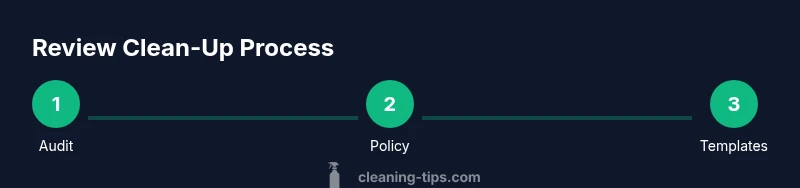
Collect all recent reviews from both platforms and categorize by sentiment (positive, neutral, negative) and topic (bugs, features, performance, support). Document patterns, recurring issues, and notable outliers. This baseline will guide your policy and templates. Why: you can’t clean up what you don’t measure.
Tip: Create a master log in a spreadsheet and tag each entry by sentiment and topic. - 2
Define a review policy
Draft a short policy that covers what constitutes acceptable content, when to remove, and when to escalate. Include privacy considerations and how you treat harassment or misinformation. Publish this policy internally and reference it in your templates.
Tip: Link policy to platform guidelines to ensure compliance. - 3
Create response templates
Develop a small set of versatile replies for common scenarios: acknowledgement, troubleshooting steps, apology, and escalation. Use neutral, professional language and avoid defensive tones. Update templates as patterns evolve.
Tip: Leave placeholders for personalization (name, issue ID, next steps). - 4
Respond to recent reviews
Publicly respond to new reviews within 24–48 hours where possible. Address specifics, offer next steps, and invite further feedback. For negative reviews, show empathy and outline a path to resolution.
Tip: Avoid arguing in public; keep responses concise and actionable. - 5
Address problematic content
Identify reviews that violate policies (spam, harassment, personal data exposure) and take appropriate action per policy. Document decisions and create a flag/report workflow for compliance teams.
Tip: Follow platform-specific moderation rules to avoid policy violations. - 6
Encourage fresh, authentic feedback
After fixing an issue, politely ask satisfied users to share their experience. Ensure requests comply with platform rules and avoid paid or incentivized reviews.
Tip: Timing matters: ask after a tangible fix or improvement. - 7
Automate monitoring
Set up a routine (daily/bi-weekly) to review new feedback, log actions, and adjust templates as needed. Use lightweight automation to flag emerging topics.
Tip: Automations shouldn’t replace human judgment. - 8
Measure impact and improve
Track metrics like response time, sentiment shift, and rating changes post-intervention. Use insights to refine templates and the policy for ongoing clean up app reviews.
Tip: Review metrics monthly and adjust workflow accordingly.
Questions & Answers
What counts as a policy violation when cleaning up app reviews?
Policy violations include harassment, threats, profanity, personal data, and spam. Remove or report such content following platform guidelines, and document decisions for audits.
Policy violations include harassment, threats, and personal data. Remove or report them per platform rules and keep an audit trail.
Can I delete reviews that are negative but legitimate?
Only delete content that violates policies. For valid, constructive feedback, respond publicly and use it to inform improvements rather than removing it.
Only remove reviews that break rules. Respond to legitimate feedback and use it to improve your app.
How quickly should I respond to reviews?
Aim to respond within 24-48 hours, especially for urgent issues or bugs. Quick responses show you value user input and are actively investigating.
Try to respond within 24 to 48 hours, especially if there’s a bug or urgent issue.
Should you respond to negative reviews publicly?
Yes. Public replies demonstrate accountability, provide next steps, and can defuse tension. Keep tone respectful and offer a path to resolution.
Yes—public replies show you care and outline next steps.
Is it okay to ask for reviews after fixes?
Yes, ethically request reviews after meaningful improvements. Avoid coercion or incentives and ensure requests align with platform policies.
It’s okay to ask for reviews after a real fix, as long as it’s voluntary and policy-friendly.
What should I do about fake reviews?
Investigate suspicious activity, report policy violations to the platform, and avoid engaging with suspected fake reviews in a way that could amplify them.
If you suspect a fake review, investigate and report it to the platform; don’t engage to avoid spreading it.
Watch Video
The Essentials
- Establish a clear policy before acting on reviews
- Use templates to keep replies consistent and compliant
- Publicly acknowledge issues and guide users to resolution
- Regular monitoring and iteration improve trust and ratings