Headlight Cleanliness: How Dirty Headlights Affect Brightness and Safety
An objective, in-depth comparison of how dirty headlights affect brightness, beam pattern, and nighttime visibility, with practical cleaning tips and maintenance strategies for homeowners and car owners.


Compared to clean headlights approximately how effective are dirty beams? In short, dirty headlights reduce light output, blur the beam, and create glare that hinders nighttime visibility. Cleaning or restoring the lenses often restores brightness and improves safety, though the degree of improvement depends on dirt type, oxidation, and lens condition. This article provides a clear, data-informed comparison to help you decide your maintenance approach.
Why Headlight Cleanliness Impacts Visibility and Safety
When you ask compared to clean headlights approximately how effective are dirty, the answer hinges on light output, beam pattern, and glare. Dirt and oxidation on headlight lenses scatter light, reduce transmission, and create hazy beams that substantially lower nighttime visibility. According to Cleaning Tips, even small surface accumulations can cut perceived brightness by noticeable margins, especially on poorly maintained lenses. The situation worsens under rain or fog, where glare from a dirty lens reduces contrast and makes it harder to discern pedestrians and road edges. Homeowners and renters should recognize that headlight cleanliness is not cosmetic alone—it is a safety and efficiency issue with real-world consequences.
How Headlight Dirt Affects Light Output and Beam Pattern
Dirt on the lens creates micro-scratches and an uneven surface, which disperses light unevenly and smooths the cut-off line of the beam. This results in reduced forward luminance and a foggy, diffused glow rather than a crisp, focused beam. Oxidation on polycarbonate lenses compounds the problem by forming a yellowed or cloudy layer that can lower transmission. The contrast between a clean, well-polished headlight and a dirty one can be noticeable even in daylight, but the impact is most pronounced after dark when beam precision matters most. Cleaning Tips emphasizes that maintaining a uniform, clear lens helps preserve intended beam geometry and exposure on the road ahead.
Real-World Metrics: What Drivers Notice
In practical terms, drivers often report slower recognition of hazards at distances where clean headlights would typically provide strong detection. The difference shows up in several everyday scenarios: spotting a pedestrian at a crosswalk earlier, reading road signs sooner, and perceiving oncoming vehicles at night with less dazzling glare. While exact lumen counts or transmission percentages vary by lamp type and dirt composition, the consensus is clear: dirt reduces effective lighting, and that reduced effectiveness translates into measurable declines in reaction time and driving comfort. Cleaning Tips analysis suggests prioritizing headlights as part of routine vehicle maintenance to preserve visibility on urban and rural roads alike.
Cleaning vs. Replacing: Balancing Cost, Effort, and Benefit
Cleaning a dirty headlight can restore a portion of lost brightness, but heavy oxidation may require restoration or replacement. There are low-cost, at-home options such as polishing compounds and headlight restoration kits, which can reclaim most of the original clarity. For severely pitted or yellowed lenses, replacement may offer a longer-lasting improvement, albeit at a higher upfront cost. The decision should consider vehicle age, driving conditions, and how often you drive at night. Cleaning Tips notes that a practical maintenance plan—regular cleaning, seasonal checks, and occasional restoration—often yields the best balance of safety, cost, and convenience.
Headlight Types and How Dirt Affects Each
Sealed-beam systems and modern polycarbonate lenses respond differently to grime. Sealed-beam units can tolerate minor surface grime without dramatic changes in focus, but persistent dirt degrades beam symmetry. Polycarbonate lenses, while more impact-resistant, are more susceptible to yellowing and micro-scratches that scatter light and dull appearance. Understanding the type of headlight on your vehicle helps tailor cleaning methods and restoration options. Cleaning Tips recommends following manufacturer guidance for cleaning agents and avoiding abrasive materials that could scratch the lens surface.
Environmental and Driving Conditions that Amplify Dirt Effects
Night driving during rain, fog, or snow makes dirt effects more pronounced. Wet surfaces combine with a dirty lens to increase glare and reduce perceived contrast, which can be particularly hazardous on winding roads or when encountering pedestrians at night. Urban drivers may experience less dramatic effects due to street lighting, but the safety gains from clean headlights remain substantial. Regular cleaning reduces accumulating grime from road spray, insect splatter, and chemical exposures from road treatments. Cleaning Tips advocates integrating headlight care into a monthly cleaning routine to prevent long-term performance loss.
Legal and Insurance Considerations for Headlight Maintenance
Some jurisdictions require headlights to meet minimum illumination standards for safe operation. While these rules focus on overall visibility, dirty or poorly maintained headlights can fail safety inspections and potentially influence insurance coverage in the event of a claim. Keeping lenses clean is a straightforward way to stay compliant and reduce risk. Cleaning Tips highlights that proactive maintenance—cleaning, restoring, and replacing as needed—helps you avoid compliance issues and maintain optimal road safety.
Practical Maintenance Plan: A Step-By-Step Schedule
Create a simple maintenance calendar that includes a quarterly exterior wash, an annual headlight polish or restoration step, and a replacement check every few years depending on usage. Start with a clean lens assessment using a bright light and a dark wall to observe transmission and beam clarity. If you notice yellowing, deep scratches, or persistent fog, consider professional restoration or replacement. Keeping a small kit in the garage with microfiber cloths, polishing compound, and a sealant can make routine upkeep quick and effective. The Cleaning Tips team recommends documenting the headlight condition in your vehicle maintenance log for easy reference.
Practical Takeaways for Household Routines
- Regularly inspect headlights for clarity and beam consistency.
- Use safe cleaning methods that preserve lens integrity.
- Prioritize restoration or replacement when dirt and oxidation are severe.
- Incorporate headlight care into seasonal cleaning routines.
- Track maintenance in a simple log for long-term savings and safety.
Final Thoughts: Aligning Visibility with Vehicle Care Goals
Headlight cleanliness ties directly to visibility, safety, and the overall condition of your vehicle. By understanding the differences between dirty and clean headlights, you can make informed decisions about when to clean, restore, or replace. The goal is not merely cosmetic improvement but reliable performance and safer night driving. Cleaning Tips underscores that proactive care yields tangible benefits in reaction time, hazard detection, and comfort behind the wheel.
Comparison
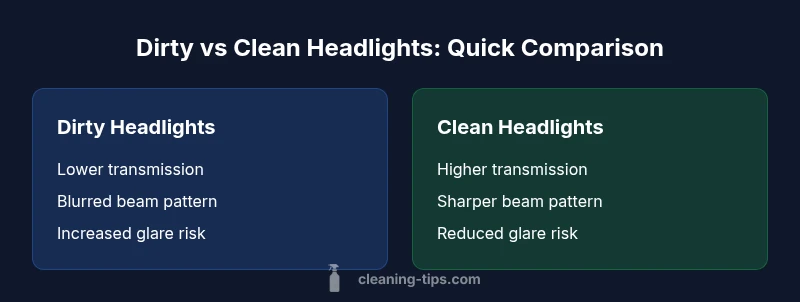
| Feature | Dirty Headlights | Clean Headlights |
|---|---|---|
| Light Output | Reduced transmission due to surface grime and oxidation | Maximized transmission with clear, polished lenses |
| Beam Pattern | Diffused, smeared beam with less defined cutoff | Sharper, more precise beam with better alignment |
| Glare and Safety | Increased glare and reduced contrast in dark conditions | Lower glare, improved contrast, enhanced pedestrian visibility |
| Maintenance Cost | Lower upfront cost if ignored but higher risk of major restoration later | Moderate cost for cleaning; lower long-term risk with regular upkeep |
| Best For | Drivers in poor weather or with aging lenses seeking quick gains | Drivers prioritizing safety and long-term durability with best performance |
Strengths
- Improved nighttime visibility after cleaning
- Low-cost maintenance option
- Enhanced safety with sharper beam patterns
- Prevents early lens aging through regular care
- Simple at-home maintenance when feasible
Weaknesses
- Diminished returns on severely oxidized lenses
- Not a permanent fix for deep scratches or pitting
- Cleaning offers temporary improvement if underlying material is degraded
- Replacement may be necessary for long-term performance
Clean headlights deliver superior visibility and safety; cleaning is a crucial maintenance step.
If you want the best nighttime visibility and proper beam geometry, opt for cleaning, restoration, or replacement as needed. Regular upkeep reduces glare and improves recognition distances, supporting safer driving.
Questions & Answers
Do dirty headlights significantly reduce nighttime visibility?
Yes. Dirt and oxidation scatter light and blur the beam, reducing perceived brightness and making it harder to spot hazards at night. Regular cleaning helps maintain safer visibility.
Yes. Dirty headlights blur the beam and reduce visibility at night, so keeping them clean improves safety.
What is the quickest way to determine if my headlights need cleaning or restoration?
Look for a yellow or hazy surface, reduced glare control, and a noticeable difference between the left and right beams. If cleaning brings a strong improvement, maintenance is warranted; if not, restoration or replacement may be required.
Check for hazy surfaces and reduced beam sharpness; if cleaning helps a lot, you should maintain them regularly.
Are there safe at-home methods for headlight restoration?
Yes. Use non-abrasive polishes or dedicated headlight restoration kits following product instructions. Avoid rough pads or household cleaners that can scratch or damage the lens.
You can safely restore headlights at home with proper kits and gentle polishing.
How often should headlights be cleaned in a typical maintenance routine?
A practical approach is a quarterly exterior clean with a dedicated headlight check, plus an annual restoration if necessary. More frequent cleaning is advised in dusty or coastal environments.
Clean them every few months, with a yearly check for restoration if needed.
Do headlights affect insurance or legal compliance?
Dirty or degraded headlights can compromise safety compliance and, in some cases, may affect claims if visibility issues are involved. Regular maintenance reduces risk and helps stay compliant.
Regular headlight care keeps you compliant and lowers risk in case of claims.
What if one headlight is cleaner than the other after cleaning?
Uneven cleanliness can indicate lens wear or mounting issues. Rebalancing beam alignment and potentially replacing the more degraded unit may be necessary.
If beams are uneven, check alignment and consider replacing the worse lens.
The Essentials
- Prioritize headlight maintenance as part of routine car care
- Regular cleaning restores transmission and beam sharpness
- Choose restoration or replacement for heavily degraded lenses
- Avoid aggressive cleaners that scratch or haze lenses
- Document headlight condition in your vehicle maintenance log