How to Clean a Frying Pan Bottom
Learn safe, effective methods to clean the bottom of a frying pan—whether it's nonstick, stainless steel, or cast iron. Step-by-step tips, gentle cleaners, and prevention strategies from Cleaning Tips.


This guide teaches a safe, effective way to clean the bottom of a frying pan, whether it’s greasy, scorched, or stained. You’ll learn material-specific care, sensible cleaners, and a simple, repeatable step-by-step process you can follow at home. By using these methods, you’ll restore shine and extend your pan’s life.
Why the bottom of a frying pan gets dirty
The bottom of a frying pan accumulates heat, oil, and food particles during cooking. Over time, grease can cling to the surface, mineral deposits from water can leave dull rings, and burnt bits may fuse to the metal. Regular cleaning helps prevent scorching and keeps heat transfer efficient. According to Cleaning Tips, regular pan-bottom care can extend cookware life. The Cleaning Tips Team notes that starting with a quick wipe after cooking reduces buildup and makes deeper cleaning easier, especially for busy households. This section outlines the physics of residue formation and why a routine keeps your pan performing like new.
- Grease and oil: Surface oils can bake onto the metal when exposed to high heat, forming a film that is harder to remove over time.
- Burnt-on bits: Sugars caramelize and proteins coagulate, creating tough, dark deposits at the bottom.
- Mineral rings: Hard water minerals can leave pale stains that trap grease, making future cleaning more challenging.
Understanding these factors helps you pick the right method for your pan material and the level of soiling you’re facing.
Assessing the stain: burnt-on vs grease
Not all bottom staining is the same. Distinguish burnt-on residue from simple grease to choose the right approach. Burnt-on deposits often appear dark, crusty, and uneven, sometimes radiating outward from the center. Grease tends to form a slick film or sticky patches that wipe away with soap and warm water. For burnt-on areas, you’ll likely need a mild abrasive or a paste, while greasy bottoms respond well to soaking and regular scrubbing.
In practice, you can test a small hidden area with a gentle implement to ensure the chosen method won’t scratch the surface. If your pan has a nonstick coating, avoid metal scrapers that could damage the coating; for stainless steel or cast iron, you have more flexibility with gentle abrasives. Cleaning Tips analysis, 2026, suggests that a combination of soaking and a baking-soda paste resolves most burnt-on bottoms without harsh chemicals. The team also recommends drying thoroughly to prevent rust or coating damage in vulnerable metals.
Material-specific approaches: nonstick, stainless steel, cast iron
Pan materials respond differently to cleaners. Nonstick surfaces require the gentlest touch: avoid metal scrubbers, and prefer soft sponges with mild dish soap. Stainless steel can handle a bit more abrasion and benefits from a baking-soda paste for stubborn spots. Cast iron enjoys a balance of heat, oil, and mechanical cleaning, followed by reseasoning. Always check the manufacturer’s care instructions before aggressive cleaning.
For nonstick, steer clear of abrasive cleaners and metal implements. For stainless steel, a vinegar rinse after washing can help remove mineral streaks. For cast iron, dry promptly and apply a light layer of oil to restore protective seasoning after cleaning. Cleaning Tips emphasizes tailoring your approach to the pan’s material to avoid long-term damage.
Safe cleaners you can rely on
Safe cleaners are often inexpensive and readily available. Start with warm water and mild dish soap for a quick clean. For tougher residue, a paste of baking soda and water provides gentle abrasion without scratching. White vinegar can help cut through mineral buildup, but don’t mix vinegar with bleach. If you’re dealing with scorching, a dash of baking soda in hot water can lift burnt bits. Always rinse thoroughly to remove resting cleaner residues and dry completely before storing.
- Everyday cleaning: dish soap + warm water
- Tough residues: baking soda paste
- Mineral buildup: white vinegar rinse (avoid mixing with bleach)
- Rinse and dry: essential for all pan types
These options keep costs down while remaining effective for most home kitchens.
Step-by-step overview for common scenarios
If you’re cleaning after weeknight cooking, a quick method often suffices: wash with warm, soapy water, scrub with a non-scratch sponge, rinse, and dry. For burnt-on bottoms, you’ll need to soak, apply a paste, and gently scrub. Cast iron requires reseasoning after cleaning to maintain its nonstick-like surface and rust resistance. By segmenting approaches based on the residue and material, you can address most situations without special tools or harsh chemicals.
Remember to work in a well-ventilated area when using stronger cleaners, and always read the pan’s care label before tackling stubborn stains. The combination of proper technique and appropriate cleaners yields the best long-term results.
Preventing future buildup: routine and maintenance
Prevention is easier than corrective cleaning. Wipe the pan after use to remove food particles while the surface is warm, which reduces sticking. Avoid heating empty pans for long periods, which catalyzes residue formation. After cooking, soak the pan in warm, soapy water for a few minutes to loosen oil and food before a final wash. Dry immediately to prevent surface oxidation, particularly on carbon steel or cast iron. If you season cast iron regularly, reapply a light coating of oil after drying to keep the surface protected.
Developing a small, repeatable routine can make big differences in keeping your pan bottoms clean and shiny over time.
When to call a pro
If your pan has deep pitting, warped edges, or persistent discoloration despite repeated cleaning, professional care may be warranted. Some pans, especially expensive specialty cookware, benefit from a professional restoration to restore seal, nonstick integrity, or seasoning layers. If in doubt, refer to the manufacturer’s warranty or seek guidance from a local cookware specialist. Regular maintenance often prevents the need for professional intervention.
Common mistakes to avoid
Avoid harsh solvents and bleach, which can degrade finishes and even release fumes when heated. Do not use metal pads on nonstick coatings; these can permanently scratch the surface. Don’t soak nonstick pans for extended periods, as prolonged exposure to moisture can loosen coatings. Finally, never store a wet pan; bacteria and rust love damp darkness. By steering clear of these traps, you’ll preserve pan performance and longevity.
Tools & Materials
- Warm water(For rinsing and soaking; avoid scalding temperatures)
- Dish soap(Mild formula preferred)
- Baking soda(Gentle abrasive paste for tough spots)
- Distilled white vinegar(Helpful for mineral buildup)
- Non-abrasive sponge(Soft sponge to avoid scratches)
- Soft-bristle brush or old toothbrush(For seams and corners)
- Rubber gloves(Protection for your hands)
- Aluminum foil ball(Extra abrasive for stubborn spots (gentle use))
- Cast iron conditioning oil or neutral oil(Help reseason after cleaning cast iron)
Steps
Estimated time: 25-40 minutes
- 1
Clear and prep
Remove loose food and rinse the pan under warm water. This initial rinse helps loosen surface oil and debris before the deeper clean. If the pan is very greasy, you can let it sit for a few minutes to soften residues.
Tip: Wipe the exterior handle with a damp cloth to avoid slipping. - 2
Choose your cleaner
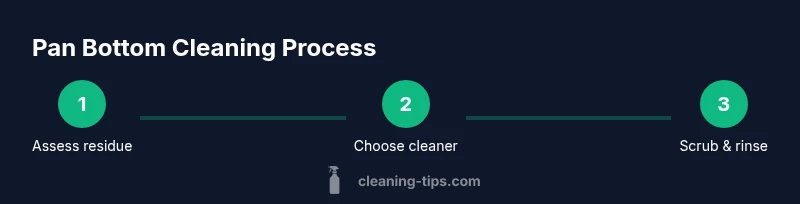
Pick a cleaning agent based on residue and material. Nonstick pans favor mild soap and soft tools; stainless steel can tolerate a baking-soda paste; cast iron benefits from a light oil after cleaning to restore seasoning.
Tip: Avoid bleach or chlorine-based cleaners on nonstick. - 3
Loosen with soak or paste
If residue is heavy, soak the bottom in warm, soapy water for 10–15 minutes, then apply a baking-soda paste to stubborn spots. Letting residues loosen makes scrubbing easier without damaging the surface.
Tip: For stainless steel, a short soak plus paste handles most stains. - 4
Scrub gently
Use a non-abrasive sponge or a soft-bristle brush to scrub in circular motions. Focus on the bottom’s edges and any grooves where bits collect. Rinse and repeat as needed until clean.
Tip: Do not use metal pads on nonstick coatings. - 5
Rinse and inspect
Rinse thoroughly to remove all cleaner residues. Dry with a clean towel and inspect for remaining spots. If any remain, repeat targeted cleaning rather than a full aggressive scrub.
Tip: Dry immediately to prevent water spots or rust. - 6
Season if needed
If you’re cleaning cast iron, apply a thin layer of oil and heat briefly to reseal the surface. For other metals, a light wipe with oil can help protect the bottom before storage.
Tip: Seasoning is optional for stainless steel but beneficial for cast iron.
Questions & Answers
Can I use dish soap on a hot pan?
Yes, use warm or cool water with mild dish soap. Hot water can cause warping on some metals and may be unsafe if there are recently heated surfaces.
You can use warm water and dish soap after the pan has cooled a bit; avoid pouring boiling water directly onto a hot surface.
Is it safe to put a pan with burnt bottom in the dishwasher?
Dishwashers are generally not recommended for nonstick coatings or cast iron. They can erode coatings and cause rust or seasoning loss. Stainless steel pans often fare better but check manufacturer guidelines.
Most nonstick and cast iron pans are not dishwasher safe; check the label and clean by hand instead.
What’s the best method for nonstick pans?
Use mild soap, warm water, and a soft sponge. Skip metal scrubbers and aggressive abrasives. For stubborn spots, a baking-soda paste can help without damaging the coating.
Stick with soft sponges and mild cleaners for nonstick, and avoid harsh scrubbing.
Should I use metal scrubbers on stainless steel?
A soft-bristle brush or non-abrasive pad is usually fine on stainless steel. For very stubborn spots, a baking-soda paste works well without scratching.
A non-scratch pad is generally enough for stainless; reserve metal scrubbers for tough, localized gunk.
How often should I clean the bottom to prevent buildup?
Clean after each use with a quick wash or soak when needed. Regular maintenance reduces heavy scrubbing and keeps pans in better condition longer.
Clean after cooking when possible; a quick wash after each use helps prevent heavy buildup.
Watch Video
The Essentials
- Identify residue type before cleaning.
- Choose material-appropriate cleaners to avoid damage.
- Soak, then scrub with non-abrasive tools.
- Dry completely and reseason if needed.
- Develop a consistent routine to prevent buildup.