How to Clean Dyson Big Ball Vacuum: A Practical Guide
Learn a safe, step-by-step method to clean a Dyson Big Ball vacuum—canister, brush bar, cyclone, and filters—to maintain suction and extend the machine’s life.


You can clean a Dyson Big Ball vacuum by giving the canister a thorough wipe, brushing debris from the brush bar, and rinsing washable parts like the filters and cyclone; then reassemble and test suction. The key is to work with unplugged equipment and dry parts completely. Follow the step-by-step guide for best results and to prolong your machine's life.
Understanding Dyson Big Ball Vacuum Design
The Dyson Big Ball vacuum is designed around a self-righting ball system and a powerful cyclone to separate dust from air. This design makes the machine heavier than some canister models, but it also improves maneuverability on carpet and hardwood. Because the cyclone and filter assemblies are exposed to daily dust, regular cleaning helps maintain optimal suction and prolongs the life of the motor. According to Cleaning Tips, routine maintenance not only prevents clogs but also protects seals and belts from wear. A thoughtful cleaning routine reduces the need for pricey repairs and keeps indoor air quality higher in your home.
Safety Considerations Before You Begin
Before disassembling any part of your Dyson Big Ball vacuum, unplug the device from the wall outlet and remove any attachments. Do not clean with the power on, and avoid exposing electrical components to water. If you notice damaged cords, cracked plastics, or a cracked cyclone, discontinue use and seek professional service. Wear gloves to protect your hands from sharp debris, and work in a well-ventilated area to keep dust from persisting in the room.
Preparation and Tools You’ll Need
Having the right tools at hand makes the cleaning quicker and safer. Gather a microfiber cloth, a soft brush, warm water, and a small amount of mild dish soap. You’ll also want a towel or drying rack to air-dry parts, and a tooth brush or nylon brush for crevices. Keep a shallow tray or basin for soaking any washable parts and label parts so you don’t mix them up during reassembly. These steps set you up for a thorough clean without damaging seals, gaskets, or the motor housing.
Step-by-Step Cleaning: Exterior, Canister, and Attachments
The exterior of the Dyson Big Ball can collect dust quickly. Wipe the housing with a damp microfiber cloth and dry with a separate clean cloth. Detach the wand and hose to examine the connections for hair or fabric lint. Wash the canister interior with mild soap and warm water, being careful not to submerge any electrical components. Ensure all parts are fully dry before reassembling to avoid mold or mildew growth.
Cleaning the Brush Bar and Beater Bar
The brush bar accumulates hair and fibers that block airflow. Remove the cleaner head if your model allows it, and use scissors to cut away hair wrapped around the bar. Use a small nylon brush to loosen stubborn fibers in the grooves. Rinse the bar briefly under cool water if the manufacturer recommends it, then dry completely before reassembling. This step helps restore suction and protects belt life.
Cleaning the Cyclone and Air Path
Dust and debris can clog the cyclone chamber, reducing performance. Detach the cyclone assembly following your model’s instructions and rinse with warm water if washable. Use a brush to dislodge dust from narrow slots; never use sharp tools that could scratch plastic surfaces. Allow the cyclone to dry for several hours in a well-ventilated area before reinstalling.
Cleaning the Filters and Sealed Areas
Washable filters respond well to gentle rinsing with cool water. If your model has non-washable filters, replace them per the manufacturer’s guidelines. Do not use detergents in the filter housing; instead, rinse until clear and squeeze excess moisture gently. Dry filters completely on a clean surface before reinserting, to avoid damp odors or mildew.
Cleaning the Hose and Wand Attachments
Check hoses for cracks or tears while cleaning. Rinse hoses with water, avoiding the motor section, and shake out any trapped debris. Use the brush to clear lint from the wand connection and ensure the inlet is clear. Dry thoroughly to prevent mold growth and ensure a smooth airflow path when you reassemble.
Reassembly and Routine Maintenance
Reassemble all parts in reverse order of disassembly. Run the vacuum briefly to test suction and listen for unusual noises that might indicate misalignment. Create a simple maintenance schedule—for example, a mini-clean every 4-6 weeks with a full deep-clean every 3-6 months—to keep performance steady. Cleaning Tips recommends tracking wear and tear on belts and seals to catch issues early.
Troubleshooting Common Issues After Cleaning
If suction remains weak after cleaning, recheck the cyclone and filter seating; a stuck seal or misaligned parts can mimic a clog. Ensure the dust bin is securely closed and that there are no cracks around the motor housing. If odor persists, consider cleaning or replacing filters and ensuring parts are completely dry before use. Remember that not all models have the same cleaning cycle, so consult your manual for model-specific guidance.
Tools & Materials
- Microfiber cloth(For wiping surfaces and exterior.)
- Soft brush(Gently loosen debris from surfaces and crevices.)
- Warm water(For rinsing parts; avoid hot water.)
- Mild dish soap(A few drops to clean filters and plastic parts.)
- Toothbrush or nylon brush(For tight crevices like cyclone inlets.)
- Towel or drying rack(Dry parts thoroughly before reassembly.)
Steps
Estimated time: 25-45 minutes
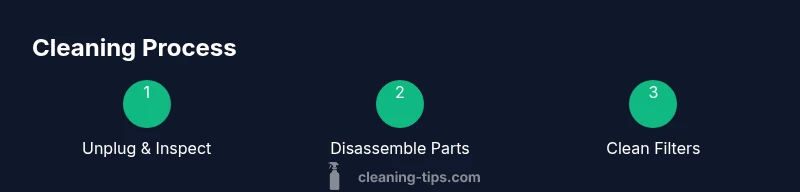
- 1
Unplug and inspect
Unplug the vacuum and remove any attachments. Inspect for obvious damage and set aside parts that can be safely washed. This precaution protects you from electrical hazards while you work.
Tip: Always unplug first; never work on a plugged appliance. - 2
Detach major assemblies
Carefully detach the canister, wand, and hose according to your model’s instructions. Keeping track of how pieces separate will simplify reassembly and prevent lost parts.
Tip: Take photos during disassembly to reference later. - 3
Empty and wipe the bin
Empty the dust bin into a waste container, then wipe the interior with a damp microfiber cloth. Avoid water contact with any motorized or sealed components.
Tip: Wash the bin only; never submerge the motor housing. - 4
Treat the cyclone and brush bar
Remove the cyclone and brush bar as directed by your model. Use a soft brush to loosen debris from the cyclone slots and hair from the brush bar.
Tip: Use scissors carefully to cut hair—do not yank. - 5
Clean the filters
Rinse washable filters under cool running water until clear. If the model uses non-washable filters, replace them as needed.
Tip: Allow filters to dry completely before reinstallation to prevent bacteria growth. - 6
Rinse hoses and wand
Rinse the hose and wand to remove dust clogs, testing for any kinks or cracks. Dry thoroughly before reconnecting to avoid moisture in the motor.
Tip: Do not force water through parts not rated as washable. - 7
Dry and reassemble
Let all parts air-dry completely on a clean surface. Reassemble in reverse order, ensuring each connection is snug.
Tip: A loose connection can cause loss of suction or noise. - 8
Test and maintain
Power on the unit and observe for proper suction and airflow. Establish a simple maintenance habit to keep performance steady over time.
Tip: Record cleaning dates to stay on top of maintenance.
Questions & Answers
How often should I clean a Dyson Big Ball vacuum?
Clean as part of regular maintenance or when you notice reduced suction. A routine deep-clean every few months is common, depending on usage and environment.
Clean your Dyson Big Ball as part of regular maintenance, especially when you notice reduced suction.
Can I rinse the filters with water?
Yes, if your model has washable filters. Rinse with cool water until clear and let them air-dry completely before reinstalling.
Yes, rinse only with cool water and let them dry completely before use.
Is it safe to use soap on all parts?
Use mild dish soap on washable plastic parts. Avoid soap on electrical components or the motor housing.
Use mild soap on washable plastics, but avoid the motor area.
My vacuum still smells after cleaning—what should I do?
Check for trapped debris in the bin, brush bar, and cyclone. Clean or replace filters if odors persist, and ensure everything is fully dry before use.
If it still smells, recheck for debris and replace damp filters.
What tools are needed for disassembly?
Basic tools like a screwdriver and a soft brush can help, but many Dyson Big Ball models snap together without tools.
A few basic tools can help, but many parts just snap together.
Watch Video
The Essentials
- Regularly clean the dust path to maintain suction
- Let all parts dry completely before reassembly
- Inspect seals and belts for wear during routine maintenance