How to Clean an Electric Kettle Safely and Effectively
Learn how to clean an electric kettle safely and effectively, remove mineral buildup, prevent odors, and protect your appliance with practical, step-by-step guidance.


By the end of this guide you will know how to clean an electric kettle safely, remove mineral buildup, and prevent odors that affect taste. You’ll learn when and how to descale, which cleaners are safe, and how to dry and store the kettle properly. Follow the steps for a healthier, more efficient appliance.
Why cleaning your electric kettle matters
According to Cleaning Tips, regular upkeep extends the life of your kettle and keeps water tasting fresh. Mineral deposits build up where water boils, coating the interior with scale that can blunt heating efficiency and trigger off flavors. When you clean on a routine basis, you reduce the chance of mineral buildup that can trap heat and shorten the kettle's lifespan. This guide focuses on safe, practical methods you can perform with common household supplies. You'll learn how to distinguish mineral deposits from residue, choose safe descalers, and establish a maintenance routine that fits your water quality. Expect clear steps, practical cautions, and a plan you can repeat every few months.
How mineral buildup forms and why it matters
Mineral buildup occurs when calcium and magnesium dissolved in hard water precipitate as the water boils. As deposits accumulate, they insulate the heating element, causing longer boil times and higher energy use. Over time this can reduce efficiency and alter the kettle's performance. Understanding this process helps you choose the right descaling approach. Cleaning Tips recommends addressing buildup not only for performance, but also to prevent stale tastes or odors from developing after repeated use. A simple, regular descaling routine keeps the kettle humming and your tea tasting bright.
Safe cleaners and how to choose
There are two widely recommended descalers: white vinegar and food-grade citric acid. Vinegar is inexpensive and effective, but its aroma can linger if you don’t rinse well. Citric acid dissolves mineral deposits without strong odors and is often preferred by households with sensitive noses. For light buildup, lemon juice can also help while adding a pleasant scent. Avoid bleach, abrasive pads, or any cleaner not rated safe for food-contact surfaces. Always check the manufacturer's guidance; many kettles are designed to tolerate mild descalers, but exceptions exist. The safest approach is to dilute and test a small area before a full interior clean.
Practical cleaning scenarios: tap water vs filtered water
If your tap water is hard, mineral deposits will accumulate faster. Filtering water reduces scale buildup, but you still should descale periodically. With filtered water, you may extend the time between cleanings, yet routine maintenance remains important. Regardless of the water source, remove the kettle from its base, unplug it, and allow it to cool before you begin. A gentle, consistent cleaning routine is more effective than aggressive scrubbing, which can damage the interior lining or the heating element.
What to expect after cleaning: odor removal and performance restoration
After completing a descale and rinse, you should notice a clearer interior and faster heating times. Running a couple of plain water cycles helps remove any last traces of descaling solution and neutralizes any residual taste. Dry the interior with a clean cloth or allow it to air dry fully before the next use to prevent new minerals from forming on a wet surface. With proper care, your kettle remains efficient and its boiling performance stays consistent, ensuring hot water for tea, coffee, or hot cocoa without flavors from mineral residues.
Descale frequency and maintenance tips
Frequency depends on water hardness and usage. In general, people descale every few months or when visible scale appears, but a light monthly maintenance rinse can prevent buildup from becoming heavy. Create a simple schedule: inspect monthly, descale as needed, and perform a thorough clean every 6–12 months, adjusting for your local water and how often you use the appliance. Tip: keep a small bottle of vinegar or citric acid on hand so you can respond quickly to early signs of scale.
Tools & Materials
- White vinegar(Dilute 1:1 with water for standard descale; use less for light buildup)
- Water(Tap water is fine, but distilled reduces mineral transfer)
- Citric acid crystals(Alternative descaler; dissolve in water per package directions)
- Lemon juice(Natural option with aroma)
- Dish soap(For light interior cleaning if needed)
- Soft sponge or microfiber cloth(Gentle scrubbing to avoid scratches)
- Bottle brush or pipe cleaner(For hard-to-reach corners)
- Towel or drying rack(Dry interior completely)
Steps
Estimated time: 15-30 minutes
- 1
Prepare kettle and solution
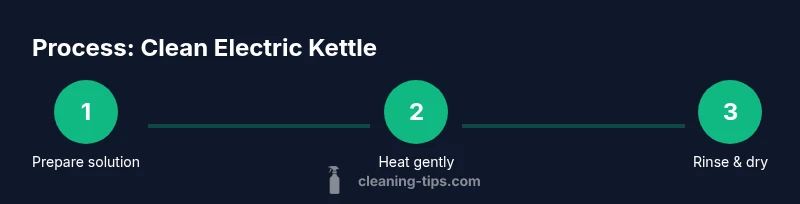
Unplug the kettle and remove it from the base. Empty any remaining water, then mix your descaling solution (vinegar or citric acid) with fresh water according to the product or recipe you choose. This ensures even distribution and reduces the chance of hot spots during boiling.
Tip: Always unplug first and ensure the kettle is cool before handling. - 2
Fill with solution and heat
Fill the kettle with the prepared solution to cover the affected interior surfaces. Turn on the kettle and bring the solution to a gentle boil, then let it simmer for several minutes to dissolve scale without splashing.
Tip: Don't boil dry; keep enough liquid to cover the coils. - 3
Soak and loosen deposits
Turn off and unplug after boiling. Allow the solution to sit in the kettle for 15–20 minutes to soften mineral deposits. If buildup is stubborn, re-warm the solution briefly and repeat.
Tip: For very stubborn scale, a second round may be necessary. - 4
Rinse thoroughly and dry
Pour out the solution and rinse the interior at least 3–5 times with clean water. Wipe the exterior and the lid, then leave the kettle open to air-dry completely before reuse.
Tip: Run two plain-water cycles after descaling to remove any taste.
Questions & Answers
Is it safe to clean an electric kettle with vinegar?
Yes, vinegar is a common descaler when diluted. Rinse thoroughly to remove any residual smell and taste.
Yes. Vinegar works well when diluted and rinsed well; make sure you rinse completely.
Can I put the kettle in the dishwasher?
Most electric kettles should not be placed in a dishwasher due to electrical components. Wipe exterior and avoid submersion in water.
No, avoid the dishwasher; clean by hand to protect the wiring and seal.
How often should I descale my kettle?
Descale as needed based on water hardness and usage. Look for visible scale or slower boils and plan a descaling cycle accordingly.
Descale when you see scale or slower boils; frequency depends on your water hardness.
What if my kettle starts leaking after cleaning?
If leakage occurs, stop using the kettle, inspect the seal and lid area, and contact the manufacturer if the issue persists. Do not attempt risky repairs.
If it leaks after cleaning, stop using it and check seals; contact support if needed.
Can I reuse the descaling solution?
Descaling solutions are generally for single use per cycle. Reusing may leave residue or reduce effectiveness and is not recommended.
Reuse is not recommended; use fresh descale for each cycle.
Does cleaning void the kettle’s warranty?
Cleaning with approved descalers and following the manual generally does not void the warranty. Keep receipts and use approved cleaners.
Cleaning with approved methods usually won’t void the warranty; follow the manual.
Watch Video
The Essentials
- Unplug and cool before cleaning
- Choose a safe descaler (vinegar or citric acid)
- Rinse thoroughly to remove residue
- Dry completely to prevent new mineral buildup
- Establish a simple maintenance schedule