How to Clean Fix a Flat Out of a Tire: A Step-by-Step Guide
Learn to safely handle a flat tire with a clear, step-by-step guide. Assess safety, choose repair vs replacement, and perform a proper patch or plug using common tools and best practices.


To handle a flat tire safely, you’ll learn how to assess the scene, secure the vehicle, and choose a repair path (patch, plug, or replacement). This guide covers the tools you need, a step-by-step repair process, safety warnings, and when to seek professional service. By the end you’ll complete a repair confidently.
Why it matters to handle a flat tire carefully
A flat tire on the road is a safety risk for you and other drivers. According to Cleaning Tips, flats commonly result from underinflation, road hazards, or worn treads. The first priority is to create a safe work zone, then decide whether you can repair the tire or you should replace it with a spare. This section explains why a calm, methodical approach reduces the chance of causing further damage to the wheel or tire and minimizes the risk of a roadside accident. You’ll also learn how to evaluate the patch vs plug option and when the tire should be retired. Expect to make your decision based on puncture size and location, tread depth, and sidewall integrity, all while keeping yourself visible and safe.
In real-world guidance from Cleaning Tips, most repairs should be performed only on the tread area and not on the sidewall. If the puncture is near the edge or there is sidewall damage, replacement is the safer choice. This mindset—safety first, then technique—will guide you through the following steps with confidence.
Tools, safety gear, and maintenance mindset
Before you start, collect your tools and safety gear. A calm, prepared setup reduces rush mistakes. Keep a wheel chock on hand and set up hazard markers if you’re on a public road. A good work light helps in low-visibility conditions. Cleaning Tips emphasizes that a tidy, well-lit workspace is part of the repair workflow, not an afterthought. Regular tire maintenance—checking pressure monthly, rotating tires, and inspecting tread depth—reduces the odds of sudden flats and extends tire life. This section outlines the items you’ll need and why each matters, so you’re ready for the repair or the next tire check.
Safety tip: wear sturdy gloves to protect your hands and use eye protection if debris might be present. Gauge rotation and re-torque lug nuts after the tire is back on the vehicle.
Understanding repair options and when to choose them
Tires can be repaired in some cases, but not all. A puncture in the tread from a small object may be patchable or pluggable, whereas a large hole, a damaged sidewall, or multiple punctures often require replacement. The decision hinges on puncture size, location, tread depth, and whether the wheel or rim is compromised. If you’re unsure, prioritize safety and consider replacing the tire or using a spare while you seek professional advice. This section helps you weigh patching, plugging, or replacing using general criteria you can apply on-site.
Remember that temporary solutions exist (like sealants) but may not be suitable for longer trips or high speeds. The goal is a safe, legal return to driving, not a risky quick fix. Cleaning Tips recommends erring on the side of caution and consulting a mechanic if there is any doubt about tire integrity.
A practical, step-by-step repair guide (overview)
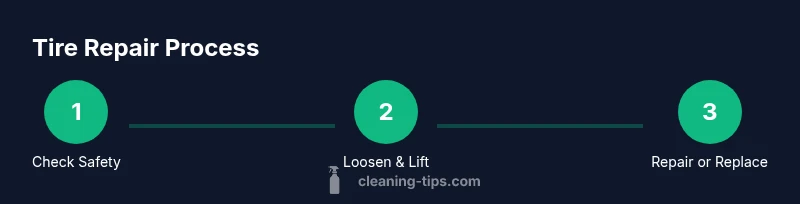
The following steps give you the framework for a roadside repair or a controlled, safe roadside tire change. While the detailed, step-by-step procedure is provided in the dedicated STEP-BY-STEP block, this overview helps you visualize the sequence: secure the scene, loosen lug nuts, lift the vehicle, remove the wheel, assess the puncture, apply patch or plug if appropriate, reinstall the wheel, and re-inflate and test. The goal is to avoid road hazards, keep you safe, and preserve tire life where possible. Cleaning Tips highlights following all manufacturer guidance for your specific vehicle and tire type.
If you’re uncertain about any step, stop and seek professional help. The ultimate aim is a secure, drivable setup that passes road safety checks.
Step-by-step safety and setup for the repair day
Even when you plan to use a spare, you still need to prepare safely. Ensure you’re parked on a flat, stable surface away from traffic. Turn on hazard lights, set up reflective markers, and chock the wheels opposite the lift. This section explains why each precaution matters and how to implement it quickly so you can get back on the road with reduced risk. It also covers light maintenance checks you can perform while the wheel is off, such as inspecting the brake rotor and wheel hub for debris or corrosion.
Consistency is key. Always check your spare tire’s inflation and condition before relying on it, and replace any worn tools or equipment. The aim is a clean, methodical process that minimizes time on the roadside and lowers the chance of mistakes.
Safety warnings, common mistakes, and troubleshooting
Common errors include over-tightening lug nuts, using the wrong jack point, or failing to re-torque after lowering. Sidewall damage or leaking rims require professional attention. This section lists warnings and pitfalls, with practical suggestions to avoid them. You’ll learn how to recognize signs that indicate you should not attempt a repair, and you’ll get guidance on what to do next—whether that’s calling roadside assistance or arranging a tow. The intent is to keep you and others safe while preserving tire integrity.
Pro tip: if you’re working at night or in poor weather, step back, reassess, and seek help if visibility or vehicle stability is compromised.
Maintenance tips to extend tire life and prevent flats
Prevention is easier than repair. This block covers practical habits such as monthly tire pressure checks, torque verification after changing wheels, and monitoring for unusual wear patterns. It also covers storage and mounting tips for seasonal tires, safe driving practices to minimize puncture risk, and the role of tread depth in safe stopping distances. Cleaning Tips reinforces that maintenance is part of the repair mindset, not a separate chore.
A small investment in upkeep—keeping a portable air compressor or a tire sealant kit in the trunk—can save time and avoid emergency repairs. Always carry a basic repair kit and learn the basics of tire pressure management.
When to seek professional help or replace tires
Some cases require expert evaluation. If the puncture is larger than a nail, if the tire shows sidewall damage, or if the wheel is bent, professional service is the safest option. This section explains when a professional repair is warranted and how to choose a shop. It also covers the importance of tire replacement estimates and warranties, so you can make an informed decision without overpaying. Cleaning Tips emphasizes that professional repair isn’t a failure—it’s prudent maintenance when tire safety is in question.
Quick troubleshooting for tricky cases: sealants, plugs, and unusual punctures
Not all punctures are created equal. This section covers scenarios such as slow leaks, irregular punctures, and tires that have been previously repaired. You’ll learn how to assess whether a sealant is a viable short-term fix, when a plug may be appropriate, and when the tire should likely be retired. The goal is to give you practical cues to decide quickly and safely, rather than risking a hazardous on-road repair.
Final note: keep your toolkit up to date and your skills current
A well-maintained toolkit and up-to-date knowledge reduce the stress of a flat tire incident. Regularly inspect your jack and lug wrench for rust, keep your spare tire inflated, and refresh your knowledge with the latest tire safety guidelines from trusted sources. The combination of preparation and solid technique makes a roadside flat manageable and safe.
Tools & Materials
- Floor jack or scissor jack(Use on a firm, level surface; never switch to a lifted vehicle without securing with stands if available; consult vehicle manual for lift points.)
- Lug wrench (tire iron)(Fits your lug nuts; check for corrosion and replace if worn.)
- Spare tire (or run-flat tire / inflator kit)(Ensure it matches your vehicle’s wheel size and is properly inflated.)
- Wheel chocks(Place on the opposite wheel to prevent rolling.)
- Bright flashlight(Prefer a headlamp for hands-free use; keep batteries fresh.)
- Tire pressure gauge(Check tire pressure before and after the repair.)
- Puncture repair kit (plug/patch) or tire sealant(Optional for temporary roadside repair; know its limitations.)
- Emergency reflective triangles or cones(Set up warnings to alert approaching traffic.)
Steps
Estimated time: 30-60 minutes
- 1
Ensure safety and pull over
Find a safe, flat area away from traffic. Turn on hazard lights and place reflective markers if available. Engage the parking brake and engage wheel chocks on the opposite wheel to prevent movement. Safety first ensures you and others stay out of harm’s way.
Tip: If you’re alone and the traffic is heavy, call for roadside assistance instead of attempting a repair. - 2
Loosen lug nuts while the car is still on the ground
Use the lug wrench to break loose the lug nuts by turning counterclockwise. Do not completely remove them yet; you want the wheel to stay on the ground for stability.
Tip: Loosen in a star-pattern to distribute stress evenly. - 3
Lift the vehicle with the jack
Position the jack at the manufacturer-specified lift point closest to the flat wheel. Raise the car slowly until the wheel just clears the ground. Ensure the jack remains stable and on a hard surface.
Tip: Never go under the car while it is supported only by the jack. - 4
Remove the wheel and inspect
Take off the lug nuts completely and remove the wheel. Inspect the tire for the type of damage, the puncture location (tread vs sidewall), and inspect the rim for damage or cracks.
Tip: If you see sidewall damage, do not attempt to repair—replace the tire. - 5
Decide repair path or replace
If the puncture is in the tread and is small, you may patch or plug it following the kit’s instructions. If the puncture is large, or on the sidewall, install the spare and proceed to professional service.
Tip: Follow the patch/plug kit directions precisely and avoid driving long distances on a temporary fix. - 6
Reinstall the wheel and lower the car
Replace the lug nuts, hand-tighten them, lower the car to the ground, and then torque them to the manufacturer’s specification using a torque wrench if available.
Tip: Re-torque in a star pattern after driving 50-100 miles, or as advised by the vehicle manual. - 7
Inflate to the correct pressure and check
Inflate the tire to the recommended pressure while the wheel is on the ground, then recheck once it is mounted and the car is on level ground. Ensure the spare or repaired tire reads properly.
Tip: Check the spare tire’s pressure at least once a week until you can replace it with a regular tire. - 8
Test drive and assess the result
Take a short test drive in a safe area to confirm the tire’s behavior. Listen for leaks, wobble, or unusual vibrations. If anything feels off, pull over and re-check or seek professional help.
Tip: If you notice a persistent leak or abnormal wear, stop driving and have the tire inspected.
Questions & Answers
Can you fix a flat tire on the road?
You can address some tread-area punctures with a patch or plug if you have the proper kit and the damage is not extensive or on the sidewall. For anything larger or on the sidewall, seek professional help and replace the tire as needed.
Yes, small tread punctures can sometimes be repaired roadside with the right tools, but sidewall damage requires professional help.
When should I replace instead of patching?
Replace if the puncture is on the sidewall, is large, or if the tread is worn or damaged beyond repair. If there are multiple punctures or signs of rim damage, replacement is safer.
If the puncture is on the sidewall or there’s heavy tread wear, replace the tire.
Is a spare tire safe for long trips?
Spare tires are intended for temporary use. Use them to reach a repair shop or replace the tire promptly, and revert to a full-size tire as soon as possible.
Spare tires are for temporary use only; get a proper tire soon.
Should I use sealant for repairs?
Sealants can be a temporary fix but may not work for all punctures or tire types. They should not be relied on for long-distance driving or high speeds.
Sealant is sometimes temporary and not suitable for all tires; check your kit’s instructions.
What if I notice sidewall damage after repair?
If you detect any sidewall damage or a bulge after attempting a repair, stop driving and have the tire inspected by a professional immediately.
If you see sidewall damage, don’t drive on it—get it inspected.
Watch Video
The Essentials
- Inspect safety first, then decide repair vs replacement.
- Follow manufacturer lift points and torque specs.
- Only repair punctures within the tread area; sidewalls require replacement.
- Maintain tires and tools for quicker, safer future fixes.
- The Cleaning Tips team emphasizes safety and proper technique for tire repairs.