How to Clean Keurig Using Vinegar: A Practical Descale Guide
Discover how to clean Keurig using vinegar safely. This step-by-step guide covers preparing the solution, running cycles, thorough rinsing, and maintenance tips to keep your brewer tasting fresh.


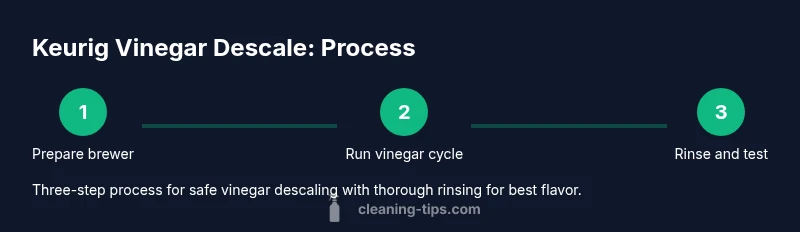
To clean a Keurig with vinegar, you will descale using a 1:1 vinegar-to-water solution, run several brewing cycles, and finish with multiple clear water rinses. Start by emptying the reservoir, unplugging the brewer, and removing any used pods. After descale, rinse until the coffee no longer tastes vinegary. Always follow your model's manual for safety.
Why vinegar is a common descaling option
Vinegar is a widely used descaling option because its acetic acid helps dissolve mineral deposits (limescale) that build up where water sits in a Keurig. Over time, mineral-rich water can create a dull flavor, reduce brewing efficiency, and shorten the lifespan of internal components. Vinegar is inexpensive and readily available, making it a popular at-home solution for a first-pass descale. When you learn how to clean keurig using vinegar, you’ll focus on dissolving mineral buildup while protecting sensitive seals and plastic parts by using a diluted mixture and thorough rinsing. According to Cleaning Tips, a careful approach—paired with regular maintenance—can extend brewer life and preserve flavor without specialized equipment.
Safety and compatibility considerations
Not all Keurig models respond the same to vinegar. Some model manuals advise against vinegar due to potential residue or rubber seal exposure, while others describe vinegar-based descaling as an effective, budget-friendly option. Before you begin, locate your model’s manual and check for any warnings about vinegar. If your manual explicitly discourages vinegar, skip to a manufacturer-approved descaling solution. If permitted, use a diluted mixture and avoid letting the solution sit in the reservoir for extended periods. Always ensure you perform a thorough rinse after the vinegar cycle to prevent aftertaste and to protect the brewing system.
Understanding minerals and residue in Keurig machines
Mineral buildup occurs most where water sits during the heating cycle. Hard water can accelerate limescale formation, which reduces heating efficiency and can affect coffee temperature and taste. Coffee oils and grounds can also cling to internal surfaces, contributing to off-flavors. A vinegar descale helps to loosen mineral deposits and emulsify oils, making them easier to flush out with clean water. That said, vinegar is not a cure-all; if you live in very hard water areas or have an older machine, you may need a more thorough or repeated descaling routine over time. Always prioritize a complete rinse to prevent vinegar aftertaste in your brews.
Prepare the cleaning solution and workspace
Before you start, clear the area around your Keurig and gather your supplies. You’ll want white distilled vinegar (often 5–8% acidity is used in descale routines) and clean water for the rinse cycles, a large measuring cup, a mug for testing, and a soft cloth for wiping surfaces. Remove any disposable pods or coffee filters from the brew head and prepare a container to collect the descale liquid. Working in a well-ventilated kitchen helps minimize any strong vinegar aroma. When you’re ready, fill the reservoir with a 1:1 vinegar-to-water solution, taking care not to exceed the maximum fill line.
Step-by-step perspective: Step 1 - Pre-cleaning actions
Power off and unplug the brewer, then detach the water reservoir if possible for thorough access. Empty any remaining water, coffee, or descaling liquid from the reservoir and carafe. Wipe down the exterior with a damp cloth to avoid accidental spills. These pre-cleaning actions reduce cross-contamination and ensure you start with a clean slate for the vinegar cycle. Pro tip: keep a dedicated cleaning cloth for appliances to avoid flavor transfer between tasks.
Step-by-step perspective: Step 2 - The vinegar descaling cycle
Install the reservoir with the diluted vinegar solution and place a mug on the tray. Run a brew cycle as if you were making coffee, but let the machine stop briefly if your model pauses automatically. Repeat until you’ve used up the vinegar solution or until a steady flow of liquid emerges. The goal is to loosen mineral deposits from the boiler, tubing, and nozzle assembly without forcing vinegar into unintended areas. Pro tip: monitor the flow and avoid forcing cycles if the machine becomes overly loud or leaky, which could indicate a blockage.
Step-by-step perspective: Step 3 - The rinse cycles
Once the vinegar reservoir is empty, refill with clean water and run multiple rinse cycles. Depending on your model, you may need 3–5 complete water cycles to flush out all vinegar odor and taste. Keep a mug handy to observe the level of liquid and ensure you’re not leaving any concentrate behind. The rinse phase is critical because even small traces of vinegar can alter the flavor of your coffee. Pro tip: consider back-to-back rinse cycles to speed up the process.
Step-by-step perspective: Step 4 - Final checks and reassembly
After rinsing, reassemble any removed parts and wipe the exterior again. Run a test brew with just water to verify that the aroma and flavor are clean. If any vinegar note remains, run one more full rinse cycle. Confirm that the unit is heating evenly and stopping as expected. Pro tip: run a small batch of hot water through the carafe first to acclimate the system before attempting a full coffee brew.
Maintenance tips to prevent mineral buildup
To minimize future descales, use filtered or bottled water instead of tap water. Regularly descale every 1–3 months depending on usage and water hardness. Store your Keurig with the reservoir dry if you won’t use it for an extended period, and wipe the drain area dry to avoid mineral residue. Cleaning Tips recommends keeping a simple schedule: descale when the water flow slows or flavor declines, and perform a quick rinse after every few uses if your water is hard. These practices help maintain optimal performance and taste without frequent heavy descaling.
Troubleshooting and common mistakes
Common mistakes include using undiluted vinegar, skipping thorough rinsing, and rushing cycles when deposits are heavy. Undiluted vinegar can be harsh on seals and plastics and leave a sour aroma. Skipping rinsing leaves residue that taints flavor, and running cycles too quickly can yield incomplete descaling. If the brewer won’t start after a vinegar cycle, unplug, inspect the water path for clogs, and consult the manual. If persistent issues occur, revert to manufacturer-recommended descalers and follow the repair guidance.
Flavor restoration and post-descalep coffee quality
After a vinegar-based descaling, expect a temporary aroma that fades with use. Run several clean water brews to flush residual scent and taste before brewing coffee you intend to drink. Some users report a brief adjustment period for the first few coffees, while others notice immediate improvement as mineral buildup is removed. If you still detect off-flavors after several full rinses, consider repeating a brief vinegar cycle or switching to a commercially approved descaling solution as per your model’s guidelines. Cleaning Tips notes that flavor results improve when you consistently use filtered water and clean the brewer’s removable parts regularly.
Tools & Materials
- White distilled vinegar(5–8% acidity commonly used; avoid colored vinegars)
- Clean water(For the rinse and final cycles)
- Measuring cup(To mix vinegar solution accurately)
- Mug for cycles(Use a standard-sized mug to collect liquid)
- Soft cloth(Wipe exterior and removable parts)
- Container for used solution(To collect and dispose of liquid during cycles)
Steps
Estimated time: 60-90 minutes
- 1
Prepare brewer and workspace
Unplug the Keurig, remove the water reservoir if possible, and clear the area. Empty the reservoir and discard any old coffee grounds. Wipe the exterior to remove dust. This ensures you start with a clean system and prevents spills during the descaling process.
Tip: Have towels handy to catch any spills. - 2
Mix and load vinegar solution
Combine equal parts white vinegar and water in the reservoir. This 1:1 solution is commonly used for mineral removal without harsh acidity. Ensure the reservoir is securely reattached before proceeding.
Tip: Label the container if storing the solution for later use. - 3
Run the vinegar cycle
Place an empty mug on the tray and run a brew cycle. Allow the machine to complete the cycle, stopping only if the model pauses by design. Repeat until the reservoir is empty or until you notice mineral deposits loosening.
Tip: Keep a rhythm; avoid forcing cycles if you sense a blockage. - 4
Rinse with clean water cycles
Fill the reservoir with clean water and run 3–5 full rinse cycles or as many as your model requires. The goal is to flush out all vinegar and any loosened minerals. Expect a brief odor during the process.
Tip: Keep a separate mug for rinsing to track progress. - 5
Final checks and test brew
After rinsing, reassemble parts and perform a test brew with water. If nothing smells or tastes vinegary, your descale is complete. If a faint vinegar flavor remains, run another couple of rinse cycles.
Tip: Taste or smell is your guide—don’t rush the last rinse.
Questions & Answers
Is vinegar safe for all Keurig models?
Vinegar as a descaling method is common, but some Keurig models or manuals caution against it. Always check your model’s instruction manual before proceeding and consider using a manufacturer-approved descaler if vinegar is not recommended.
Check your model manual first; if vinegar isn’t recommended, use the official descaler instead.
How long does vinegar descaling take?
A typical vinegar descaling routine takes about 60 to 90 minutes, including setup, the vinegar cycles, and multiple rinse cycles. Your exact time may vary with model design and water hardness.
Most descalers take about an hour to an hour and a half, plus rinsing.
Will cleaning with vinegar affect coffee flavor?
If you rinse thoroughly, any vinegar flavor should dissipate before you brew coffee. Residual taste is usually mild and short-lived, but incomplete rinsing can leave traces that affect aroma and taste.
Rinse well; you’ll likely avoid any vinegar aftertaste with proper rinsing.
Can I reuse vinegar solution for another brew?
It’s best to discard used vinegar solution after one cycle, as mineral deposits and coffee oils can remain in the mixture. Fresh solution improves effectiveness and flavor in subsequent cycles.
Use fresh vinegar solution for each descaling to maximize effectiveness.
What are safer alternatives to vinegar for descaling?
If you prefer not to use vinegar, consider a manufacturer-recommended descaling solution or a high-quality descaler designed for coffee makers. These products are formulated to protect seals and avoid off-flavors.
Descale with a product designed for coffee makers if vinegar isn’t suitable.
Watch Video
The Essentials
- Follow model-specific guidance before descaling with vinegar
- Use a 1:1 vinegar-to-water solution for effective mineral removal
- Rinse thoroughly with multiple water cycles until no vinegar taste remains
- Use filtered water to minimize future scale buildup
- Regular maintenance extends brewer life and flavor quality