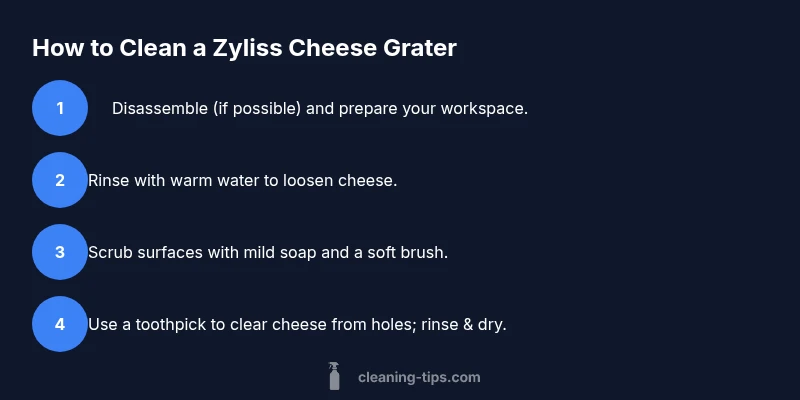
How to Clean a Zyliss Cheese Grater: Step-by-Step Guide
Master how to clean a Zyliss cheese grater safely and effectively. This guide covers prep, tools, step-by-step methods, and drying to prevent rust and preserve blade sharpness.


Achieve a spotless Zyliss cheese grater with gentle cleaning that protects blades and keeps performance sharp. You’ll disassemble if possible, rinse warm water, scrub with a soft brush, and dry immediately. This step-by-step method avoids harsh chemicals and dulling abrasives, ensuring safe, thorough cleaning after every use. Keep your grater rust-free by drying all surfaces, including crevices, with a microfiber towel, and store it open to air.
Why Cleaning a Zyliss Cheese Grater Matters
Keeping your Zyliss cheese grater clean isn't just about hygiene—it’s about preserving blade sharpness, grating efficiency, and longevity. According to Cleaning Tips, a well-maintained grater resists cheese buildup that can clog holes and dull edges. The Cleaning Tips team found that regular, mild cleaning reduces residue adhesion and helps maintain grating quality across models. When you see a small amount of cheese stuck in the holes, you’re likely seeing the early signs of residue buildup that can hinder performance over time. By cleaning promptly after use, you maintain a fresher flavor profile for your cheese and reduce cross-contamination in the kitchen. This section sets the stage for safer handling, better results, and longer tool life, all while keeping maintenance simple and approachable for everyday cooks.
Understanding Zyliss Graters: Design and Cleaning Challenges
Zyliss graters are designed with precision blades and multiple grate surfaces to handle different cheeses, from hard Parmigiano to soft mozzarella. The bite of the teeth and the spacing between holes influence how cheese adheres and where residue tends to accumulate. A common cleaning challenge is residue lodged in between tiny holes and along the edges of the grating surface, which can dull performance if not addressed. In addition, some models include removable guards or lids that may complicate the disassembly process. Understanding these design elements helps you pick the right cleaning approach for your specific piece and avoid unnecessary force that could bend or scratch components. By familiarizing yourself with your model, you’ll clean more effectively and protect your investment over time.
What You Need to Prepare (Before You Start)
Before you begin the actual cleaning, gather the tools and materials you’ll need. A tidy workspace reduces the chance of dropping or losing small parts, especially if your Zyliss model has removable elements. You’ll also benefit from clear visibility to identify stubborn residue in hard-to-reach spots. This prep stage is where you set expectations for how long the task will take and ensure you’re using mild cleaning agents to protect stainless steel or finish coatings on your grater. In short, a little planning here pays off in a faster, safer, and more thorough clean later.
Safe, Effective Cleaning: The Core Steps
The core cleaning sequence for a Zyliss cheese grater blends gentle water, mild soap, and careful scrubbing. Start by loosening cheese from the surface, then scrub with a soft brush to avoid scratching the blades. Pay special attention to the holes where cheese fibers accumulate, using a toothpick or skewer to lift residue from between openings. Rinse thoroughly to remove soap and debris, then inspect for any missed spots. If you notice persistent buildup, repeat the scrub-and-rinse cycle and consider a brief soak in warm, soapy water for stubborn areas. Dry completely with a microfiber towel to prevent water spots and rust, especially on exposed metal edges. Finally, reassemble only after all parts are dry and test the grater on a small amount of cheese to confirm smooth operation.
Drying, Maintenance, and Storage Best Practices
Drying is as important as cleaning. After washing, wipe all surfaces dry, including the underside and any crevices where water can lodge. Store the grater in a dry area with airflow to discourage rust and corrosion, rather than sealing it in a damp drawer. Regular maintenance—such as a quick rinse after use and periodic deep cleans—extends blade life and keeps grating results consistent. For extra hygiene, you can occasionally sanitize with a mild solution like diluted vinegar, then rinse and dry thoroughly. With consistent care, your Zyliss cheese grater remains a reliable kitchen workhorse for many meal preparations.
Troubleshooting and Quick Fixes
If you encounter stubborn cheese particles that refuse to budge, switch to a softer brush and a bamboo pick to avoid scratching blades. For rust concerns on stainless-steel models, a gentle baking soda paste can help lift minor rust spots—always rinse and dry completely afterward. If rust is extensive or the grater performance seems compromised, it may be time to replace worn parts or consider a new unit. Keeping the surface dry and avoiding prolonged soaking protects the grit and sharpness of the blades, so you can continue to achieve clean, even grates every time.
Tools & Materials
- Warm water(Prefer 38-45°C (100-113°F) for gentleness)
- Mild dish soap(Fragrance-free if possible; avoid harsh detergents)
- Soft-bristled brush or old toothbrush(Small head to reach holes)
- Non-abrasive sponge (optional)(For exterior surfaces)
- Toothpick or bamboo skewer(Dislodges cheese from between holes)
- Microfiber towel(Pat dry and buff to shine)
- Vinegar (optional)(Sanitizing rinse (1:1 with water))
Steps
Estimated time: 30-45 minutes
- 1
Disconnect or disassemble (if possible)
Check if your Zyliss model has removable parts or a lid. If so, carefully detach per the manual to access all surfaces. This makes it easier to reach every nook where cheese can hide. The goal is to expose the full grating surface for thorough cleaning.
Tip: If unsure about disassembly, start with a thorough external wash and proceed slowly to avoid bending parts. - 2
Rinse to loosen cheese
Hold the grater under warm running water to loosen cheese from surface and holes. Rinsing early prevents cheese from drying and crumbling inside the holes, which can be hard to remove later.
Tip: Turn the grater slightly to expose both sides during rinsing. - 3
Scrub surfaces with soap
Apply a small amount of mild dish soap to your soft brush and scrub the entire grating surface, including the edges. Target the inside of holes and any ridges where residue clings. Scrubbing helps lift oils and protein-rich cheese from the blades.
Tip: Use gentle pressure to avoid bending delicate teeth. - 4
Clean between holes
Use a toothpick or bamboo skewer to dislodge any stubborn cheese lodged between holes. Gently work along the rows without gouging the metal. This step is crucial to restore consistent shredding and prevent clogging.
Tip: Do not use metal tools that could scratch or dull the blades. - 5
Rinse again and inspect
Rinse away soap and debris, then inspect the surface for any remaining cheese. Repeat the scrub and rinse if needed, focusing on any stubborn areas. Ensure there are no soap residues that could affect flavor.
Tip: Hold the grater at different angles to catch hidden residues. - 6
Sanitize and dry completely
Optionally sanitize with a diluted vinegar solution, then rinse thoroughly. Dry all surfaces with a microfiber towel, including interstices. Air-dry with exposure to air, not wrapped tightly in a closed container.
Tip: Never leave it wet in a closed drawer; moisture invites rust. - 7
Reassemble and test
If you disassembled parts, reassemble them once all components are fully dry. Test the grater on a small piece of cheese to confirm smooth action and even shredding.
Tip: If performance feels off, recheck alignment and ensure all pieces sit securely.
Questions & Answers
Can I put the Zyliss cheese grater in the dishwasher?
Some Zyliss graters may be dishwasher-safe, but many perform best with hand washing to protect blades and finishes. Always check the model manual.
Some Zyliss graters can go in the dishwasher, but hand washing is safer for blade sharpness—check your model's manual.
What is the best method to remove cheese from tiny holes?
Warm water, a soft brush, and a toothpick or skewer are most effective for clearing cheese from small holes. Avoid metal tools that scratch.
Warm water and a soft brush with a toothpick usually clears cheese from tiny holes.
Is vinegar safe for cleaning Zyliss graters?
Diluted vinegar can sanitize, but avoid soaking long to protect finishes. Rinse well after sanitizing and dry thoroughly.
Diluted vinegar can be used occasionally, but rinse and dry thoroughly afterward.
How often should I clean my Zyliss grater?
Clean after each use to prevent buildup. Do a deeper clean weekly or when residue is visible.
Clean after each use; do a deeper clean weekly.
What should I do if the blades rust?
If rust appears, scrub with a baking soda paste and dry thoroughly. If rust is extensive, consider replacement.
If you see rust, treat it quickly and dry; replace if rust is extensive.
Can I use lemon juice to sanitize the grater?
Lemon juice can sanitize, but it may affect finishes. Rinse and dry after use to minimize effects.
Lemon juice can be used sparingly; rinse and dry after use.
Watch Video
The Essentials
- Disassemble cautiously to access all surfaces.
- Use warm water and mild soap for effective cleaning.
- Clear holes with a toothpick to prevent buildup.
- Dry completely to prevent rust and preserve blade life.