How to Make a Clean Steam Profile
Learn how to make a clean steam profile for your steam cleaner. This comprehensive guide covers water quality, baseline settings, cycle timing, and maintenance to achieve residue-free cleaning and extend equipment life. Brought to you by Cleaning Tips for homeowners and renters seeking practical, step-by-step guidance.


This quick guide shows you how to make a clean steam profile for your steam cleaner. You’ll learn how water quality, baseline temperature, cycle timing, and maintenance combine to deliver consistent, residue-free cleaning. You’ll configure a reusable profile, test it on inconspicuous surfaces, and adjust for different materials. By following these steps, you’ll minimize mineral buildup, maximize effectiveness, and extend equipment life. See how to apply these principles across common cleaning tasks.
Understanding what a steam profile means in cleaning
According to Cleaning Tips, a steam profile is the combination of temperature, pressure, cycle duration, and water quality that defines how effectively steam cleans a surface. When you know how to make clean steam profile, you tailor these parameters to the task at hand. A well-balanced profile minimizes moisture spotting, reduces residue, and prevents scorching on delicate surfaces. In practice, you’re balancing heat and flow to deliver enough energy to lift grime without overwhelming the material. The goal is to produce consistent steam output across your cleaning session so you don’t have to adjust settings mid-task. The Cleaning Tips team found that a carefully designed profile translates into steadier results, fewer passes over a surface, and less wet residue. This is especially important in kitchens, bathrooms, and outdoors where mineral deposits or porous materials are common.
Before you start, identify the surfaces you’ll clean most often and the typical soils you’ll encounter. Are you removing grease from stainless steel, or lifting soap scum from ceramic tile? Each scenario benefits from a slightly different baseline—knowing this helps you select the right temperature range, spray pattern, and cycle length.
Key components of a clean steam profile
A strong steam profile rests on a few core components. First, temperature determines how aggressively heat loosens dirt; second, the flow or pressure controls how evenly steam is delivered; third, cycle timing sets how long steam is applied in a single pass; fourth, water quality governs residue and mineral buildup; fifth, the delivery method (continuous vs pulsed) affects control over moisture and drying time. According to Cleaning Tips research, using distilled water and maintaining a clean system consistently yields fewer mineral deposits and steadier output. When you consider these components together, you can tune profiles for different surfaces—glossy metal, ceramic tile, or matte stone—without guessing.
Keep a simple matrix in your notebook or app: surface type, recommended temperature, typical cycle length, and observed results. This habit makes it easier to reproduce successful profiles and quickly adapt to new cleaning challenges.
Baseline settings and safety considerations
Setting safe baseline parameters is essential to protect surfaces and equipment. Start with a moderate temperature range that won’t risk scorching or warping delicate finishes. Choose a steady, controlled flow rather than full power; this helps prevent puddling and ensures even coverage. For each new surface, begin with conservative cycle lengths and incremental increases if residue remains or if the surface tolerates heat well. Always follow device manufacturer guidelines for safety interlocks and heat limits. Safety goggles and heat-resistant gloves should accompany testing, especially when experimenting with new profiles. Document baseline choices so you can reproduce them on future tasks without re-testing from scratch.
Remember that delicates like brushed metal, natural stone, or certain plastics may require gentler profiles. If you’re unsure, test on an inconspicuous corner first and watch for discoloration, sheen changes, or surface feel after steaming.
Water quality and setup for optimal steam
Water quality is a primary driver of a clean steam profile. Distilled water minimizes mineral buildup that can alter steam temperature, flow, and surface results. If distilled water isn’t available, filtered water with low mineral content is a reasonable substitute, but expect more frequent descale cycles. Regularly clean the water reservoir, inlet filters, and any nozzles to prevent clogging that can disrupt steam delivery. When filling, ensure the machine is powered down and cooled to avoid scalding. Keep a log of water type used for each job so you can correlate results with water quality over time.
In devices with multiple nozzles or zones, verify even distribution by performing a quick test on a flat, unnoticeable area. If you observe cold spots or uneven steam, inspect hoses or connectors for kinks or leaks and re-balance flow settings.
Testing and calibration workflow
A methodical testing process helps you validate a clean steam profile before applying it to critical surfaces. Start with a dry run to ensure the machine reaches the intended temperature and maintains steady output for a full cycle. Then perform a test on a small, inconspicuous patch to inspect for residue, spotting, or surface changes. Record observations on texture, moisture, and drying time; compare results to your baseline expectations and adjust temperature, cycle length, or flow accordingly.
Use a timer to track cycle duration and a cloth to gauge moisture transfer. If you notice dampness that lingers or streaks, dial back heat slightly or switch to a pulsed delivery mode. Re-test until outcomes are consistently clean and dry within a reasonable timeframe.
Common pitfalls and fixes
Avoid common missteps that undermine steam profiles. Too-rapid increases in temperature can scorch surfaces or fade finishes. Overly long cycles often leave surfaces damp and require extra drying time, increasing the risk of water spots. Inconsistent steam delivery, due to clogged nozzles or worn seals, produces patchy cleaning results. Regularly inspect bands, seals, and hoses for wear and replace as needed. If mineral buildup appears on surfaces, switch to distilled water and descale the system as per manufacturer guidance. Always let the unit cool before performing maintenance or opening reservoirs to prevent burns.
A practical fix is to schedule brief pre-warm and post-wipe sessions so that temperature spikes don’t occur mid-task. These small adjustments add up to steadier results and fewer surfaces needing second passes.
Maintenance and long-term care to keep steam clean
Long-term performance depends on consistent maintenance. Descale the unit according to usage frequency and water hardness, typically after every several heavy cleaning sessions. Clean filters and nozzles, and wipe down seams to reduce residue buildup that can affect pressure and heat. Periodically verify seals for leaks that can cause steam loss and inconsistent output. Keeping a maintenance calendar helps you stay on track, especially if you juggle multiple homes or cleaning tasks.
Additionally, store the device in a cool, dry place and avoid leaving water in the reservoir for extended periods, which can foster bacterial growth. Keeping a simple log of maintenance activities supports faster troubleshooting and profiling accuracy across jobs.
Real-world scenarios and quick tips
In a busy kitchen with stainless steel surfaces, a balanced profile that emphasizes quick bursts of heat with short cycles can remove grease efficiently without shine loss. For a tile bathroom, a longer cycle with a steady, moderate flow can lift soap scum without leaving wet streaks. For delicate upholstery or wooden surfaces, always err on the side of cooler, gentler profiles and short pulses. A well-documented profile library lets you reuse settings across homes and tasks, saving time while maintaining quality.
Quick tips: Always test on a hidden patch first; document every result; and calibrate after substantial water changes. With consistent practice, your steam cleaning becomes faster and more reliable, delivering better outcomes with less effort.
Closing thoughts on building a reliable steam profile
Developing a clean steam profile is an iterative process that blends science with hands-on practice. By focusing on water quality, controlled heat, precise timing, and regular maintenance, you’ll achieve predictable results and extend the life of your equipment. Remember that the best profile for one surface may not be ideal for another—keep a reference notebook and update it as you learn. With a systematic approach, you’ll consistently reach residue-free cleanliness on a wide range of materials.
Tools & Materials
- steam cleaner(Any make/model with adjustable steam profiles)
- distilled water(Use 100% distilled water to minimize mineral deposits)
- soft microfiber cloth(For surface wipe-down after steaming)
- calibrated thermometer(If your device supports temp readout, use for verification)
- heat-resistant gloves(Protect hands when testing hot steam)
- surface patch test area(Optional patch test area on inconspicuous surface)
- timer/stopwatch(Track cycle duration and rest periods)
Steps
Estimated time: 45-60 minutes
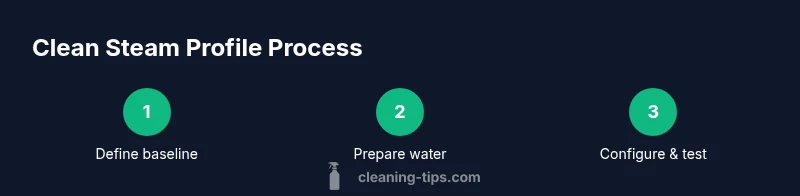
- 1
Define baseline parameters
Choose a safe baseline: moderate temperature, steady flow, and modest cycle length. The goal is predictability, not maximum heat. Document initial settings to reuse later.
Tip: Write down the exact temperature, flow level, and cycle duration you start with. - 2
Prepare water quality and equipment
Fill the reservoir with distilled water and inspect filters for cleanliness. Wipe down seals and nozzles to remove any residue that could affect steam delivery.
Tip: Always power off and cool the unit before refilling or cleaning. - 3
Configure the steam profile
Set temperature, flow, and cycle type (continuous or pulsed). Choose a mode that matches the surface you’ll treat and avoid aggressive bursts on delicate materials.
Tip: Start with lower cycle length and adjust based on results. - 4
Run a test cycle on a safe surface
Operate a single, short cycle on a hidden area to observe moisture, residue, and drying time. Note any issues with heating sweet spots or dripping.
Tip: Have a microfiber cloth ready to check moisture immediately. - 5
Evaluate results and fine-tune
Assess residue, streaks, and surface feel. If needed, adjust temperature or cycle timing and repeat on the patch area until results are clean and dry.
Tip: Keep a change log to track what works best. - 6
Document and schedule maintenance
Record the successful profile and set a maintenance reminder for descaling and filter checks. This keeps future tasks efficient and reproducible.
Tip: Set recurring reminders to descale every 1–3 months depending on usage.
Questions & Answers
What is a steam profile in cleaning?
A steam profile refers to the combination of temperature, flow, cycle duration, and water quality used during cleaning. It determines how effectively steam loosens dirt and dries surfaces. A well-tuned profile yields consistent results across tasks.
A steam profile is the combo of temperature, flow, and water quality for cleaning with a steam cleaner, which decides how well it cleans and dries.
Why does water quality matter for steam cleaning?
Water quality directly affects steam consistency and residue. Distilled water minimizes mineral buildup that can clog nozzles and reduce steam effectiveness over time.
Better water quality keeps steam steady and reduces mineral clogging, helping your cleaner last longer.
How often should I recalibrate my steam profile?
Recalibrate whenever you switch water quality, surfaces, or cleaners. If you notice changes in cleaning performance, perform a quick baseline check and adjust.
Check your baseline whenever you change water or surfaces, or if performance drops.
Can I use tap water for steam cleaning?
Tap water can be used, but it increases mineral buildup and may affect performance over time. If you must use tap water, plan for more frequent descaling.
Tap water works, but it can cause mineral buildup; descale more often.
What surfaces benefit most from a clean steam profile?
Hard, non-porous surfaces like stainless steel and ceramic tiles respond well to clean steam profiles. Delicate materials may require gentler profiles or shorter cycles.
Stainless steel and tile clean well with proper profiles; be careful with delicate surfaces.
What are signs my profile needs adjustment?
Visible residue, streaks, or damp surfaces after steaming indicate the profile needs tweaking. Uneven heat or pulsing delivery also suggests calibrations are needed.
Residue, streaks, or dampness means adjust the profile.
Watch Video
The Essentials
- Define a baseline, then test and adjust.
- Use distilled water to minimize residue.
- Document and maintain your steam profile.
- Regular descaling extends equipment life.