How to Make Clean Versions of Songs: A Practical Guide
Learn step-by-step how to create clean versions of songs, covering editing methods, licensing basics, and practical tips for personal use or sharing in family-friendly settings.


Learn how to make clean versions of songs by removing or masking explicit lyrics while preserving overall quality. This guide covers planning, editing techniques in a DAW, licensing basics, and practical tips for personal use or sharing in family-friendly environments.
Why clean versions of songs matter
Learning how to make clean versions of songs opens up listening options for families, classrooms, and shared spaces. According to Cleaning Tips, practical media practices can reduce exposure to explicit content while preserving the original melody and structure. This guide explains why clean versions matter and how to approach edits in a responsible, rights-aware way. When you learn how to make clean versions of songs, you gain a flexible skill for adapting media to different audiences without sacrificing quality. In real-world scenarios—parents curating a child’s listening list or teachers assembling classroom playlists—clean versions offer a practical solution. We’ll discuss best practices, ethical considerations, and a workflow you can apply to most popular DAWs. The key takeaway is that how to make clean versions of songs should be treated as a thoughtful process, not a shortcut, to protect artists, platforms, and listeners while preserving audio integrity.
Planning and scope before editing
Before you touch a track, define the scope of your clean version. Decide whether you will mute, beep, or replace explicit lyrics, and note the exact time ranges where sensitive words occur. Planning saves time during editing and reduces the risk of accidental oversights. Record a quick plan that lists timestamps, target edits, and any licensing constraints. This upfront step makes downstream decisions easier and helps you justify edits to content reviewers or playlist curators.
Legal and licensing considerations
Creating a clean version can be legitimate for personal use, but distribution—even in a school or community setting—often requires permission or licensing. Based on Cleaning Tips analysis, many platforms require rights-holders’ consent to distribute edited versions publicly. If you intend to share a cleaned track, obtain the correct licenses or use an officially released clean version where available. For personal listening, you typically face fewer hurdles, but you should still avoid unauthorized distribution. This section also covers fair use considerations and why documentation of permissions matters when you plan to post or monetize edited content.
Tools and techniques for clean versions
A robust toolkit helps you implement clean edits cleanly. Essential tools include a Digital Audio Workstation (DAW) for precise editing, a muting or beeping option for explicit passages, and a reliable listening setup (studio headphones or monitors) to judge transitions. Techniques include exact-time edits for局 explicit words, smooth crossfades to prevent abrupt silences, alternative background noise to mask words without sounding jarring, and careful vocal isolation to minimize leakage. You can also explore instrumental sections or alternate takes to substitute problematic phrases while preserving the song’s energy. The goal is to maintain musical integrity while meeting content guidelines.
Step-by-step workflow overview
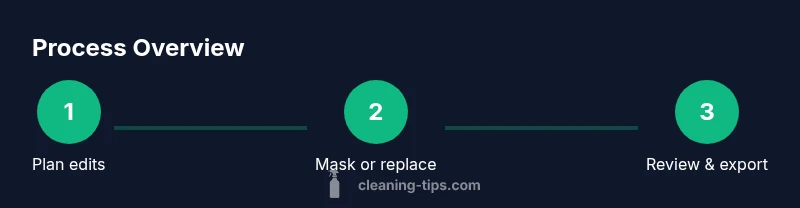
This section provides a high-level workflow you can apply to most DAWs:
- Plan your edits and rights check.
- Prepare the track by importing the original and making a duplicate.
- Identify explicit phrases with precise timing.
- Apply edits using mute, beep, or replacement techniques and ensure seamless transitions.
- Audition the edit at different playback levels and across devices.
- Export with proper metadata and licensing notes. A disciplined workflow minimizes errors and maintains quality.
Common pitfalls and troubleshooting
Common issues include audible artifacts after muting, abrupt silences, and timing drift that disrupts the groove. To avoid these, use crossfades when removing lyrics, maintain consistent dynamics, and double-check transitions at different volumes. If the vocal bleed remains, try a light de-esser or spectral editing to reduce harshness. Always verify final playback on multiple devices (phone, car, computer) to catch hidden problems.
Authority sources
For broader licensing and copyright guidance, see the following sources:
- https://www.copyright.gov
- https://fairuse.stanford.edu
- https://www.loc.gov
Practical case study: classroom-friendly playlist editing
Imagine a teacher preparing a classroom playlist. The process starts with selecting age-appropriate tracks, obtaining necessary permissions, and then applying clean edits within a DAW. The case study walks through timestamp identification, your chosen editing approach, testing in a classroom environment, and documenting licensing where required. This practical example illustrates how the workflow translates into a usable, compliant playlist that maintains musical energy and educational value.
Final reminders and next steps
As you finish your clean version, document licensing decisions and maintain a copy of the original track for reference. The Cleaning Tips team emphasizes respecting rights, staying transparent about edits, and testing across platforms to ensure consistent quality. With careful planning and disciplined editing, you can create clean song versions that support safe listening while preserving the essence of the original music.
Tools & Materials
- Digital audio workstation (DAW) software(Choose one with precise editing and automation where possible)
- Noise gate or censoring plugin(For masking explicit words without distorting the track)
- Authorized audio file (MP3/WAV/FLAC)(Ensure you have rights to edit the track)
- Headphones or studio monitors(For accurate listening and validation of edits)
- Backup storage(Keep raw and edited copies separate to avoid data loss)
Steps
Estimated time: 60-120 minutes
- 1
Plan the edit
Identify explicit sections, set editing goals, and verify licensing constraints. A clear plan keeps edits focused and legal.
Tip: Document timestamps and edit rationales for future reference. - 2
Duplicate the project
Create a working copy of the track to protect the original and make iterative edits safely.
Tip: Label the copy clearly as 'Clean Version – Do Not Overwrite Original'. - 3
Choose your masking method
Decide between muting, beeping, or replacing words with neutral sounds. Each method has a different impact on flow.
Tip: Be consistent with the chosen method to avoid uneven gaps. - 4
Apply edits precisely
Make exact cuts at the start and end of targeted words; adjust timing to preserve rhythm.
Tip: Use zoomed-in timelines and crossfades for seamless transitions. - 5
Review and refine
Play the edited track at various volumes and on different devices to detect artifacts or timing issues.
Tip: Ask a friend or colleague for a second opinion on audio quality. - 6
Export and document
Export the final clean version with metadata and licensing notes. Store both original and edited files securely.
Tip: Keep a licensing note section in the metadata for future reference.
Questions & Answers
Is it legal to create a clean version of a song for personal use?
Yes, personal-use edits are generally allowed, but distribution or monetization may require rights and licenses from the copyright holder.
For personal use, edits are typically allowed, but avoid sharing publicly without rights.
Can I sell or publish a cleaned track?
Publishing or selling an edited version usually requires licensing the underlying work; consult the rights holder and follow platform guidelines.
Public distribution generally requires permissions from the rights holder.
What is the difference between muting and beeping lyrics?
Muting removes the words entirely; beeping replaces words with a tone. Beeping preserves timing better but can sound jarring if overused.
Mute hides words entirely; beep masks them with a cue tone.
Do I need permission to distribute a cleaned version?
Yes, distributing an edited version typically requires permission from the copyright holder or a licensing arrangement.
Yes—distribute only with the rights or a license.
Are instrumental versions easier to obtain than cleaning?
Instrumental versions may be easier to license in some cases, but they might not meet all needs if you specifically want lyrics-only edits.
Instrumentals can help, but they may not fit every situation.
What policies should I check on streaming platforms?
Check each platform's content and licensing policies; many require that edited content has appropriate rights and clear disclosures.
Review platform rules to avoid takedowns or bans.
Watch Video
The Essentials
- Plan edits before starting
- Respect licensing and rights for distribution
- Choose a masking method that preserves flow
- Audit across devices to ensure quality
- Document licensing and edits for future use