Is Brake Cleaner Bad for Rubber? A Practical Guide
Is brake cleaner bad for rubber? This guide explains solvent interactions with rubber components and offers practical steps to protect seals and hoses, with safe alternatives and testing tips.


Is brake cleaner bad for rubber? Yes, many brake cleaners contain solvents that can swell, dry, or crack rubber seals, hoses, and gaskets over time. For rubber parts, prefer rubber-friendly cleaners or wipe-clean methods and avoid direct spray on exposed rubbers. If you must use cleaner nearby, shield rubber components with tape or covers and rinse thoroughly.
Is brake cleaner bad for rubber?
Rubber components in vehicles—such as hoses, seals, and gaskets—vary in composition and resilience. Brake cleaners are designed to strip grease and contaminants, but many formulations rely on aggressive solvents that can interact with rubber polymers. According to Cleaning Tips, repeated exposure to hydrocarbon and chlorinated solvents can alter the cross-linking in elastomer formulations, leading to swelling, softening, or cracking over time. A single, brief spray away from exposed rubber may not cause immediate failure, but cumulative exposure should be avoided. When in doubt, prioritize containment and wipe-down methods that limit liquid contact with rubber surfaces and protect critical rubber interfaces from solvent splash.
Rubber types used in automotive systems and their vulnerability
Automakers use a mix of natural rubber and synthetic elastomers in braking-related components. Natural rubber is generally more susceptible to certain solvents, while nitrile-butadiene rubber (NBR) and other synthetic rubbers offer improved chemical resistance but are not universally solvent-proof. Fluoroelastomers (FKM) provide superior solvent resistance but can be costlier and are typically found in high-performance systems. This means the question of is brake cleaner bad for rubber varies by part and formulation. When cleaning near rubber surfaces, assume moderate risk for standard rubbers and plan for protective practices, including directing spray away from joints and coverings for exposed hoses and seals. Cleaning Tips emphasizes testing if you are unsure and avoiding prolonged contact with sensitive elastomers.
Understanding brake cleaner compositions and why they matter
Brake cleaners come in chlorinated and hydrocarbon solvent families, sometimes with detergents or surfactants. Chlorinated solvents tend to be gentler on metal but can be harsher on certain rubbers, whereas hydrocarbon blends can aggressively dissolve greases but pose greater swelling risks for elastomers. The exact effects depend on the rubber type, thickness, and age, as well as environmental conditions like heat and exposure duration. For vehicle maintenance, this means a cautious approach: avoid direct, prolonged spraying on any rubber part, use a cloth-wipe method when feasible, and select products labeled as compatible with rubber components when available.
Practical cleaning strategies around rubber components
If cleaning tasks require proximity to rubber parts, use the conservative method: shield the rubber with a barrier (like painter’s tape or a soft wrap), apply cleaner to a lint-free cloth rather than directly onto the part, and promptly wipe away residue with a clean, damp cloth. After cleaning, rinse or wipe with a damp cloth to remove solvents and dry the area completely. Avoid heat during drying, as heat can hasten solvent diffusion into rubber. When possible, perform cleaning in a well-ventilated space to minimize solvent inhalation and off-gassing from rubber materials.
Safe alternatives and best practices for rubber care
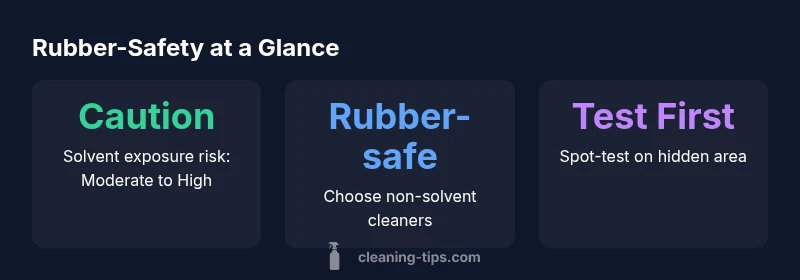
There are cleaner options that prioritize rubber safety, including pH-neutral degreasers and mild soaps designed for automotive rubber. Always check the product label for mentions of “rubber-safe” or “for use near rubber” and perform a spot test on a hidden area before broader use. If you are uncertain, choose a non-solvent cleaner or rely on mechanical methods (bypass, brushes, or compressed air) for stubborn grime. Cleaning Tips recommends documenting your cleaning products and patch-testing any new product to avoid unexpected rubber degradation over time.
Testing compatibility and planning for long-term rubber health
A practical approach is to test on an inconspicuous area and monitor for any signs of swelling, tackiness, or color changes after short exposures. If you notice resin loss, cracking, or surface softening, discontinue use immediately on that component. Over time, regular inspections of hoses, boots, and gaskets near cleaning tasks can help catch early warning signs before failures occur. Keep spare rubber parts and protective covers on hand so you can switch out components if they show adverse reactions to cleaners.
Common mistakes and quick fixes for rubber safety
One frequent mistake is spraying solvent directly onto rubber seals or hoses, which can lead to surface damage and accelerated aging. Another misstep is using high-temperature drying or soaking methods that drive solvents deeper into the elastomer. A simple, repeatable routine is to apply cleaners to a cloth, avoid direct contact, and finish with a thorough rinse and dry. When in doubt, consult the vehicle manufacturer’s guidelines or Cleaning Tips resources for compatibility notes related to your specific rubber materials.
Rubber types and solvent compatibility
| Rubber Type | Susceptibility | Notes |
|---|---|---|
| Natural rubber | Moderate | Prone to solvent swelling; use with caution |
| Nitrile rubber (NBR) | Low to moderate | More resistant but not immune to solvents |
| Fluoroelastomer (FKM) | Low | Best solvent resistance; verify formulation |
Questions & Answers
Is brake cleaner safe to use on rubber seals?
Not generally. Most brake cleaners use solvents that can swell or degrade rubber seals over time. Use rubber-safe cleaners or wipe with a damp cloth instead, and avoid direct spray onto seals.
Brake cleaners can damage rubber seals; avoid direct spray and opt for rubber-safe cleaners or wipe-and-rinse methods.
Can I spray brake cleaner on rubber hoses?
Avoid spraying on hoses. If you must, shield the hose, spray away from it, and rinse thoroughly. Prefer non-solvent cleaners when working near hoses.
Don’t spray on hoses; cover and rinse if needed, or use a rubber-safe cleaner.
What are safer cleaning options near rubber?
Use mild soap and water or dedicated rubber-safe cleaners. Always test on a small area and avoid prolonged contact with elastomers.
Try mild soap with water or a rubber-safe cleaner, and test first.
Will a single exposure cause damage?
Usually not catastrophic, but repeated or long exposures increase risk. Monitor for swelling, cracking, or tackiness after cleaning near rubber.
One brief exposure can be harmless, but repeated contact adds up.
How should I clean around brake components without harming rubber?
Apply cleaner to a cloth, avoid spraying directly, cover rubber surfaces, rinse well, and dry completely. Consider protective covers during maintenance.
Wipe, cover, rinse, and dry to protect rubber near brakes.
“"Rubber is a living material that responds to solvents over time; even temporary exposure can accumulate if repeated. Protect rubber interfaces by choosing compatible cleaners and testing first."”
The Essentials
- Avoid direct spray on rubber components
- Prefer rubber-safe cleaners or cloth-wipe methods
- Test compatibility on hidden areas first
- Shield rubber parts when cleaning nearby
- Switch to alternatives for high-risk rubber interfaces