Is Cleanup App Free? A Practical Guide for 2026
Discover whether cleanup apps are free, compare pricing structures, and learn how to evaluate free tiers versus paid plans. A practical guide for homeowners and renters evaluating cleanup apps.


Quick answer: Yes—many cleanup apps offer a free tier, but the scope is limited. The phrase 'is cleanup app free' usually means you can install and use basic cleaning tasks without paying, while advanced features, cloud storage, or premium content often require a paid plan. Always review the pricing page to understand what's included in the free option and what triggers charges.
What the phrase 'is cleanup app free' signals for homeowners
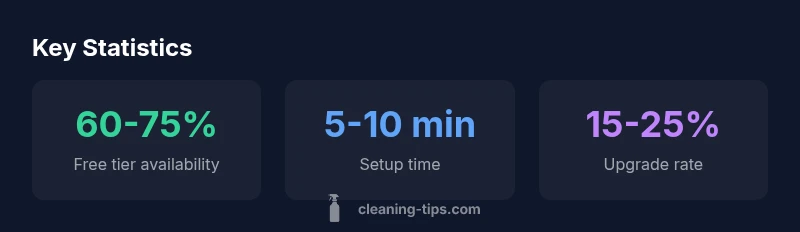
Is cleanup app free? In practical terms, most cleaning apps offer a no-cost entry point, but the true price depends on what you need to accomplish. The quick path to understanding is that free often means basic cleaning tasks, limited cloud storage, or ads-driven usage. If you pursue scheduling automation, advanced analytics, or multi-device sync, a paid tier is usually required. According to Cleaning Tips, the market standard is a freemium model that attracts new users with a no-cost option while encouraging upgrades for more value.
For homeowners, the key question is not just cost but return on time and effort. A free plan can save money if your tasks are light and straightforward, but if you rely on routines, reminders, and smart integrations, the value of a paid plan can quickly exceed the price. When evaluating, consider whether the app supports your devices, user profiles, and locations. This matters because some apps restrict features to a single device or a limited number of rooms.
Pricing models you’ll encounter
Pricing for cleanup apps generally falls into four buckets: free, freemium, trial, and paid. Free usually covers essential task lists and basic reminders, sometimes with ads. Freemium unlocks some premium features after a one-time or subscription upgrade. Trials offer full access for a limited period, after which you select a plan. Paid plans provide ongoing access to the full feature set.
From a homeowner's perspective, it helps to map features to your needs: task scheduling, checklists, supply management, and integration with smart devices. If you expect to scale use across family members or multiple homes, a paid tier often delivers better value and fewer interruptions from ads or caps. When you see the phrase 'is cleanup app free', remember to check for any limits and upgrade prompts that could affect long-term cost.
How to compare cleanup apps beyond price
Beyond cost, evaluate whether the app truly fits your cleaning habits. Key considerations include feature coverage (checklists, reminders, and maintenance schedules), platform compatibility (iOS, Android, web), data storage and sync limits, presence of ads, and whether there are in-app purchases for extra templates or guides.
Also assess privacy controls, such as permissions requested and the ability to delete data. Read reviews for reports of performance, reliability, and customer support. A helpful rule of thumb is to shortlist three options and test their free tiers for 1–2 weeks, noting how often you reach upgrade prompts and whether the free plan meets your core tasks. The question 'is cleanup app free' becomes a decision about value, not just price.
Hidden costs and data usage considerations
Some cleanup apps may appear free but seed you with hidden costs. Ad-supported experiences often show interruptions that hinder flow. In-app purchases can unlock templates, premium calendars, or automation routines that improve efficiency but come at a price. Cloud-sync plans may cap storage or require extra monthly fees for multi-device access. Finally, generous free periods can trap you into longer contracts or renewals. Understanding these traps before you commit helps you avoid surprise charges and ensures the app remains economical over time.
Evaluating privacy and permissions
Before embracing a cleanup app, review what data it collects and how it uses it. Permissions for storage, camera, and location can be necessary for certain features, but you should only grant what’s essential. Check the privacy policy for data sharing with third parties, and look for options to export or delete data if you discontinue use. If a free plan relies heavily on data collection or targeted advertising, weigh the privacy trade-offs against the cost savings. Clean, transparent apps typically provide clear permission explanations and straightforward data controls.
Practical guide: 5 steps to test a cleanup app before you commit
- List must-have features and verify they appear in the free tier. 2) Install the app and simulate a week of use with real tasks. 3) Track upgrade prompts and note how often you encounter paid options. 4) Test data export and device compatibility. 5) Compare total cost over 6–12 months if you eventually need premium features.
By following these steps, you’ll get a feel for whether 'is cleanup app free' truly applies to your situation and whether a paid plan is worth it for your household.
Real-world scenarios: homeowners choosing between free and paid plans
Consider a single-family home with regular weekly upkeep. A free plan can handle checklists, reminders, and basic supply tracking, but you may outgrow it within a few months. A two-person household with smart devices might benefit from a paid plan that supports multi-user profiles and cross-device syncing. Renters with minimal cleaning routines could stay on free tiers but may still want automation features to schedule recurring tasks. Your decision should balance everyday needs with potential efficiency gains and cost over time.
Comparison of free vs paid cleanup apps
| Aspect | Free option | Paid option |
|---|---|---|
| Pricing model | Free with ads | Subscription-based or one-time |
| Storage/limits | Limited cloud storage | Unlimited or larger storage |
| Feature access | Core features only | Full feature set |
Questions & Answers
Do all cleanup apps offer a free version?
Most cleanup apps offer a free version with basic features, but the depth of functionality varies. Ads or caps on usage are common in free plans. Consider the long-term value of upgrading if you need more automation.
Most cleanup apps have a free version with basic features; expect ads or limits, and plan for potential upgrades if you need more automation.
What should I watch for to avoid hidden costs?
Look for in-app purchases, ads, cloud storage fees, and automatic renewals. Carefully read the pricing page and privacy policy to understand what becomes chargeable after the free period.
Watch for ads, upsells, and storage fees when choosing a free plan.
Is a paid cleanup app worth it for casual users?
If you only perform light tasks, a free plan may suffice. For more automation and multi-user support, a paid plan can offer better value over time.
It depends on how much you value automation and cross-device use.
Can I rely on free apps for professional-level cleaning tasks?
Free apps are usually geared toward home use. For professional-level needs, look for enterprise-grade tools or paid plans with advanced features.
Free plans are typically for home use, not professional-grade tasks.
Do cleanup apps collect personal data in free versions?
Many apps collect data to power features or ads. Review permissions and privacy policies, and choose apps that offer clear data controls and export options.
Be mindful of permissions and data-sharing in free apps.
“Free plans can be a great way to start, but value comes from features that save you time and reduce clutter. Choose the option that best fits your routine.”
The Essentials
- Expect a free tier in most apps
- Free plans often include ads or limits
- Paid upgrades unlock full features
- Test multiple options before committing