Steam Clean Car Interior: Step-by-Step Guide
Learn how to steam clean your car interior safely and effectively. Prep, equipment, surface-specific tips, drying, and maintenance to refresh fabrics without harsh chemicals.


Goal: learn how to steam clean a car interior safely and effectively, renewing fabrics and deodorizing surfaces without harsh chemicals. You’ll prep the car, choose a suitable steam cleaner, and follow a step-by-step method for seats, carpets, panels, and vents. This approach minimizes moisture risk and yields professional-like results at home.
Why steam cleaning car interior
Steam cleaning offers a chemical-free way to refresh upholstery, vinyl, and carpets. By applying high-temperature vapor, you loosen dirt and odors without harsh solvents, reducing residues and leaving a clean, fresh scent. According to Cleaning Tips, using steam correctly can extend the life of fabrics and plastics when you avoid soaking cushions. In practice, steam cleaning is ideal for light to moderate stains, crumbs, and daily grime, especially in high-traffic vehicles. It also deodorizes, helping to tackle pet smells and stale air. Before you begin, confirm the upholstery is steam-safe—check fabric tags and test a hidden patch. With the right equipment and technique, steam cleaning can deliver professional-like results at home while keeping interior finishes intact.
What steam cleaning can and cannot do
Steam cleaning loosens and lifts dirt from fabrics without solvents, making it effective for light stains, crumbs, and odors. It can revive vinyl dashboards and wipe away scuff marks with careful passes. It won’t fix major tears or completely remove set-in stains; heavily soiled seats may require professional cleaning or alternative methods. The Cleaning Tips analysis shows that steam is most effective on dry soils and odors rather than greasy residues, and that repeated passes are safer than aggressive steaming. For leather and delicate plastics, lower heat and test patches are essential.
Choosing the right steam cleaner for your car interior
There are two common options: handheld steam cleaners for small spaces and canister models with a longer wand for bigger areas. Look for adjustable steam settings, a reliable water tank, and a range of attachments (brushes, triangular nozzle, and pocket steamer head). Distilled water helps prevent mineral buildup and nozzle clogging, while a cloth or microfiber pad captures moisture and residue. Consider a model with a compact body and a max pressure suitable for car upholstery, not industrial steamers. Always check the user manual for surface compatibility and recommended temperatures before use.
Pre-cleaning prep and safety considerations
Start by parking in a shaded area and opening all doors to aid drying. Remove mats and large debris with a vacuum, then vacuum the seats and carpets thoroughly, including crevices and seat seams. Disconnect or power down any accessories near the cleaning area and test a hidden patch on fabric, vinyl, and leather. Fill the steamer with distilled water, attach the appropriate nozzle, and set to a gentle to medium steam. Protect delicate electronics and screens with a microfiber barrier, and avoid saturating foam cushions or spray pools. Ventilate the cabin while you work and plan for thorough air-drying after cleaning.
Cleaning fabrics, vinyl, and leather surfaces
For fabrics, keep the nozzle 1-2 inches from the surface and use slow, overlapping strokes to lift dirt without soaking the padding. For vinyl, a light pass followed by a microfiber wipe helps remove grime and restore shine without leaving a sticky residue. Leather requires special care: use low heat, minimal moisture, and a following conditioning treatment to prevent drying or cracking. Always work in small sections, and finish with a clean, dry microfiber to remove any remaining moisture.
Drying, deodorizing, and finishing touches
After cleaning, promptly ventilate the car and run a fan or open doors to speed evaporation. Wipe down surfaces with a dry microfiber to remove any residual moisture and dry the seams thoroughly. If odors persist, consider an enzyme-based deodorizer or a fabric-safe deodorizing spray designed for automobiles. Ensure carpets and mats are completely dry before driving to prevent mold growth, and store the steamer with distilled water to avoid mineral buildup in the nozzle.
Common mistakes and how to avoid them
Avoid saturating cushions or letting moisture pool on seats, which can lead to mildew. Do not direct steam at electronics, control panels, or screens; keep the nozzle at a safe distance and use protective barriers. Never steam a damp dashboard or thermostat, as condensation can damage wiring. Test patches on all surfaces before full-scale use and don’t rush: precision and patience protect interior finishes.
Maintenance tips to keep your interior fresh
Regular quick cleanups after trips reduce grime buildup and extend results. Use floor mats that can be machine-washed to minimize dirt transfer. Vacuum weekly and spot-clean stains early. Consider a periodic refresh with a fabric-safe protectant to repel future spills. Proper ventilation and keeping moisture low are key to reducing odor buildup and maintaining a clean cabin environment.
Quick safety checklist before you start
- Inspect upholstery for steam compatibility and test a hidden area first. - Vacuum thoroughly to remove loose debris. - Use distilled water and appropriate attachments. - Keep the nozzle moving to avoid heat spots and soaking. - Open doors or windows to ventilate and dry quickly after steaming.
Tools & Materials
- Steam cleaner (handheld or canister)(Choose adjustable steam settings; distilled water preferred)
- Vacuum cleaner with crevice tool(Use before steaming to remove loose debris)
- Microfiber cloths (several)(Lint-free; used for drying and finishing)
- Distilled water(Prevents mineral buildup and nozzle clogs)
- Soft brush or nylon detailing brush(Scrubs stubborn spots without damaging surfaces)
- Leather conditioner (optional)(Use after steam on leather surfaces)
- Protective gloves and eye protection(Safer handling; steam can irritate skin)
Steps
Estimated time: 60-90 minutes
- 1
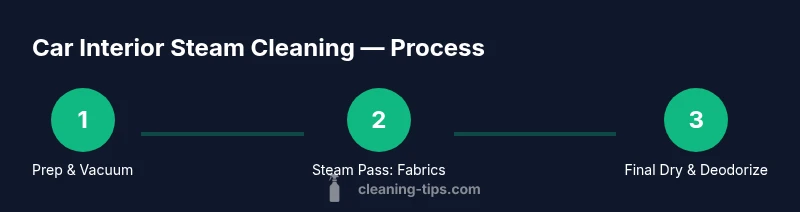
Prep and vacuum
Park in a shaded area and remove floor mats. Vacuum seats, carpets, and crevices to lift loose debris. This step reduces the amount of grit the steam must lift and helps prevent muddied suds later.
Tip: Use the vacuum's crevice tool to reach seat seams and under seats for better results. - 2
Test a patch and set steam
Fill the steamer with distilled water and test on an inconspicuous patch of each surface. Start at a low steam setting and gradually increase if you see no adverse effects. This protects fabrics and plastics from heat damage.
Tip: Test first on hidden areas; upholstery dyes can transfer with heat. - 3
Steam fabrics first
Begin with fabric seats and carpets. Maintain a 1–2 inch distance and use slow, even strokes. Work in small sections, avoiding pooling water and allowing moisture to rise away from padding.
Tip: Never press the nozzle into the fabric; lift and glide to lift dirt rather than push it deeper. - 4
Tackle vinyl and hard plastics
Switch to plastic panels and vinyl trims. Use gentler passes to lift grime and restore shine; wipe with a microfiber cloth as you go to collect loosened residue.
Tip: Keep the nozzle moving and don’t dwell on one spot to avoid warping. - 5
Leather care (if applicable)
For leather, use low heat and short passes. After steaming, apply a conditioner once the surface is completely dry to maintain suppleness and prevent cracking.
Tip: Test conditioner on a small area first and avoid over-wetting leather. - 6
Drying and deodorizing
Open doors or windows and run a fan to speed drying. If odors persist, apply a fabric-safe deodorizer designed for cars and let it vent out with airflow.
Tip: Ensure moisture is fully dissipated before driving to prevent mold.
Questions & Answers
Is steam cleaning safe on leather car seats?
Steam can be safe on leather if you use low heat, minimal moisture, and a quick pass. Always test a small area first and condition the leather afterward.
Steam can be safe on leather if you test first and use low heat, then condition after drying.
Can steam cleaning remove stubborn stains on fabric seats?
Steam helps with light to moderate stains. Deeply set stains may require repeat passes or alternative cleaners.
Steam helps with light stains; for stubborn ones you may need extra treatments.
Do I need to dry the car interior after steaming?
Yes. Open doors or windows and use a fan to speed evaporation and prevent mold.
Yes, dry thoroughly to avoid mold and odors.
Will steam cleaning damage dashboards or electronics?
Avoid direct contact with electronics. Keep the nozzle at a safe distance and shield screens with a barrier.
Avoid direct contact with electronics; keep steam away from dashboards.
Is steam cleaning better than chemical cleaners?
Steam reduces chemical exposure and residues, but it isn’t a universal replacement for all cleaners.
Steam is gentler and chemical-free, but may not replace every cleaner.
Watch Video
The Essentials
- Pre-clean with a thorough vacuum to lift debris.
- Test steam on hidden areas before full use.
- Avoid soaking fabrics; use short, light passes.
- The Cleaning Tips team recommends thorough drying after steaming.