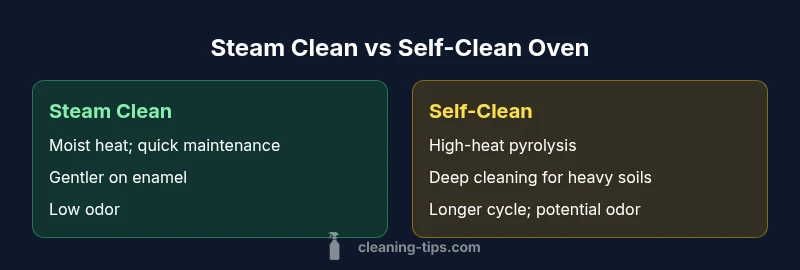
Steam Clean vs Self-Clean Oven: An In-Depth Comparison
Compare steam clean and self-clean ovens to decide which method fits your kitchen routine. Analyze how they work, safety, costs, and best-use scenarios in an objective, analytical guide.


TL;DR: Steam cleaning is a low-heat, moisture-based option ideal for light soils and routine maintenance, while self-cleaning uses high heat to burn off stubborn residue. For quick refreshes with minimal odor, steam cleaning works best; for deep, heavy soils, rely on the self-clean cycle. See our detailed comparison for nuanced differences, cycle times, and safety considerations.
What is steam clean vs self clean oven?
What is steam clean vs self clean oven? This version of the question helps homeowners decide which approach to use for routine maintenance and occasional deep cleans. Steam cleaning uses humid heat to loosen soils, typically with a water tray and a short cycle. Self-cleaning ovens rely on high-temperature pyrolysis (and sometimes catalytic cycles on specific models) to burn off soils until the interior is clean. The short version is that steam cleaning is gentler and faster for light soils and upkeep, while self-cleaning reaches deeper layers but requires a longer cycle and more heat. Both methods have safety considerations and maintenance requirements, and many modern ovens support both options, giving you flexibility in the kitchen. According to Cleaning Tips, selecting the right method depends on soil level, time available, and sensitivity to heat and odors. If you are asking what is steam clean vs self clean oven, the answer lies in cycle design and soil type. This section will set up a practical framework for comparing their effectiveness, cycle characteristics, potential impact on racks and seals, and the long-term health of your oven's interior.
How steam cleaning works in practice
Steam cleaning is designed for convenience and minimal disruption. The basic setup involves adding water to a small tray, selecting a dedicated steam setting, and running a short, moderate-temperature cycle. As the oven heats, moisture circulates to loosen dried-on splatters, grease film, and light residue from racks, walls, and corners. Because steam relies on humidity rather than extreme heat, this method tends to produce little or no strong odor and keeps the kitchen cooler during the operation. After the cycle ends, wipe away loosened soil with a damp cloth and dry the interior with the door ajar for a few minutes if possible. For best results, remove racks before starting and pre-treat stubborn spots with a gentle spray. Cleaning Tips emphasizes preparation as a key factor in achieving consistent results with steam cleaning.
How self-cleaning works and where it shines
Self-cleaning ovens use a high-heat cycle to burn away soils, transforming residues into ash that can be wiped away after cooling. Pyrolytic cycles reach temperatures well above typical cooking heat, while catalytic models use coatings that react chemically with grease over time. The self-clean option excels for heavy soils, lingering baked-on grease, and tasks that would require repeated manual scrubbing. However, the heat involved can cause some equipment wear, odor, and longer cooling periods. When used properly and according to manufacturer instructions, self-cleaning is a powerful deep-clean tool that minimizes manual labor and leaves surfaces relatively spotless. In practice, many ovens offer both methods, giving you a choice based on soil level and urgency. Cleaning Tips notes that occasional deep cleans can extend oven life when paired with a regular light-clean routine.
Pros and cons of steam cleaning
- Pros: Gentle on enamel and racks; low heat and short cycle times; minimal odor; simple water-based process that reduces chemical exposure; quick refresh between heavy cleaning sessions.
- Cons: Not ideal for heavy, baked-on residues; effectiveness depends on soil type and proper pre-cleaning; may leave some moisture if not dried; relies on the oven having a steam option and correct tray placement.
In short, steam cleaning is best for routine maintenance and light soils, offering a low-impact option that keeps the oven ready for frequent use.
Pros and cons of self-cleaning ovens
- Pros: Strong residue removal; effective on stubborn baked-on grease; can be done with minimal manual effort; helps reset the interior surface via high-heat pyrolysis.
- Cons: Higher energy use; longer cycle duration; possible odor during operation; potential wear on seals and gaskets if used too frequently.
For deep cleans or heavy soils, self-cleaning provides the most thorough interior rejuvenation, especially when scheduled between regular maintenance sessions.
Safety considerations and maintenance
Both methods carry safety considerations but in different ways. Steam cleaning requires heat and moisture while keeping the interior relatively cool, but you should avoid spraying cleaners directly into vents and ensure the water tray is in place to prevent overflow. Self-cleaning cycles generate intense heat and can trigger door locks and odor release; always follow the manufacturer’s guidelines, keep children and pets away, and ensure proper ventilation. After either method, check gaskets and racks for signs of wear, and wipe the interior clean to remove any ash or moisture. Regular inspection of door seals and hinges helps prevent future issues, and keeping the oven clean from the inside out reduces the need for aggressive cycles over time.
Energy use and cost implications
Steam cleaning uses less energy per minute than a high-heat self-clean cycle, and it avoids the long cooling periods associated with pyrolysis. While steam cycles are not cost-free, they generally have a smaller energy footprint, especially for routine maintenance. Self-clean cycles consume more energy due to high temperatures and longer durations, and customers should factor in the potential effects on door seals and insulation over time. If you run a single heavy clean per year, the incremental energy cost may be modest, but frequent deep-clean cycles can add up. When budgeting, consider equipment age, the size of the oven cavity, and the typical soil level in your kitchen.
When to choose steam clean vs self clean
Steam cleaning shines for light soils, quick refreshes after weeknight meals, and when you want to minimize heat and odors. Self-clean is preferable for heavy soils, days when you need a near-complete interior reset, or when you’ve just roasted a large, greasy meal. Your decision should also reflect oven age and the type of racks and interior coatings. For households with children or sensitive individuals, steam cleaning may be more comfortable, while busy households with infrequent maintenance may rely on self-cleaning for a deeper overall clean.
How to maximize results with either method
- Follow the manufacturer’s instructions for both methods and only use approved water trays and racks.
- Pre-treat stubborn spots before the cycle and remove racks if advised by the manual.
- Ensure the oven is cooled before wiping the interior and re-seating racks after the cycle.
- Maintain a regular cleaning schedule to prevent heavy soils from forming, which makes deep-cleaning cycles less necessary.
- Use a dry cloth after steam cleaning to remove any moisture, and run a brief fan-assisted dry cycle if your oven supports it.
Common myths and misunderstandings
- Myth: Steam cleaning can damage enamel. Reality: When used as intended, steam is gentler than aggressive scrubbing, but pre-clean and timing matter.
- Myth: Self-cleaning is always better. Reality: It’s powerful for heavy soils but not ideal for routine maintenance and can stress seals if used too often.
- Myth: All ovens support steam cleaning. Reality: Steam capability varies by model; check the manual before using.
- Myth: Both methods are the same. Reality: They differ in mechanism, energy use, time, and outcomes.
Practical step-by-step usage for each method
Steam clean:
- Remove racks and pre-clean loose debris.
- Add water to the tray and select the steam or humidity setting.
- Run a short cycle, then wipe surfaces with a microfiber cloth while warm.
- Dry interior thoroughly before use.
Self-clean:
- Clear racks and accessories; follow the manual for door lock and ventilation recommendations.
- Choose the self-clean cycle and set duration if adjustable.
- Let the oven cool completely before opening; wipe away ash after cooling.
- Return racks and wipe any residue from the interior surfaces.
As a rule, avoid leaving heat-sensitive items in the oven during either cycle.
Cleaning frequency and lifecycle considerations
Use steam clean for weekly or biweekly light maintenance, with a deeper cleanup every few months depending on soil level. Self-clean cycles can be scheduled quarterly or semi-annually for heavy soils or after large meals. Rotating between methods can extend the interior life by reducing repeated high-heat exposure while still delivering thorough cleaning when needed. Always monitor wear on gaskets and the door seals, and consult your appliance’s warranty terms if you notice unusual resistance or vibration during cycles.
Comparison
| Feature | Steam Clean Oven | Self-Clean Oven |
|---|---|---|
| Mechanism | Moist heat steam-based cleaning | High-temperature pyrolysis (with possible catalytic steps) |
| Cycle duration | Short, moisture-driven cycle | Longer, heat-intensive cycle with longer cool-down |
| Residue removal strength | Gentle, effective for routine soils | Effectively burns off heavy soils and baked-on residue |
| Racks/enamel impact | Gentler on enamel; reduced wear risk | Potential wear or discoloration with repeated cycles |
| Best for | Light maintenance and quick refreshes | Deep cleaning and heavy soils, periodically |
| odor/heat exposure | Lower odor and heat in the kitchen | Noticeable odors and heat during cycle |
Strengths
- Steam cleaning is gentler on enamel and racks while keeping moisture low
- Lower heat exposure reduces kitchen odor and hot spots
- Quicker cycles help with routine maintenance
- Minimal chemical exposure when using plain water
Weaknesses
- Not ideal for heavy, baked-on residues
- Requires water supply and proper tray placement
- May leave dampness if not dried properly
- Some ovens have limited steam capability or compatibility
Steam clean is best for routine maintenance; self-clean shines for deep, stubborn soils.
For light soils and quick refreshes, steam cleaning wins on convenience and gentleness. For heavy soils and a deeper clean, use the self-clean cycle, keeping safety and manufacturer guidance in mind.
Questions & Answers
What is steam cleaning in ovens?
Steam cleaning uses moisture and low heat to loosen soils from oven surfaces. It is designed for light to moderate soils and quick refreshes, offering a gentler alternative to high-heat cycles.
Steam cleaning uses moisture to loosen soils; it's great for light soils and quick refreshes.
Is steam cleaning effective for baked-on grease?
Steam can help with some baked-on soils, but very heavy, burnt-on grease may require a self-clean cycle or manual scrubbing. Plan multiple sessions if needed.
Steam helps with light to moderate soils, but heavy baked-on grease may need a deeper clean.
Are there safety concerns with self-cleaning cycles?
Self-clean cycles generate very high heat and can cause odors or stress seals. Ensure proper ventilation, follow the manual, and keep children away during the cycle.
Self-clean cycles use high heat; ventilate and follow the manual for safety.
Can I use both methods on the same oven?
Yes. Many ovens support both options. Use steam clean for routine maintenance and self-clean for deep cleaning when needed, while adhering to the appliance manual.
You can use both methods as needed, just follow the manual.
How long do steam clean and self-clean cycles take?
Steam clean cycles are shorter than self-clean cycles, which can take longer due to high heat and cooling-down times. Plan cleaning sessions accordingly.
Steam is faster; self-clean takes longer and needs cooling.
Will either method damage enamel or coatings?
Used correctly and per manufacturer instructions, both methods are safe. Misuse or excessive heat can cause wear or discoloration over time.
If used as directed, both are safe; follow the manual to avoid damage.
The Essentials
- Choose steam cleaning for frequent maintenance and low odor
- Reserve self-clean for stubborn residues and deep cleans
- Prepare surfaces and racks per manufacturer guidance
- Regular maintenance reduces need for aggressive cycles