What to Do If Cleaning Lady Breaks Something: A Practical Guide
Practical, progressive guidance for homeowners and renters on handling accidents when a cleaning service breaks an item, documenting damage, negotiating a fair settlement, and preventing future incidents.


By following this guide, you’ll confidently manage a cleaning-service mishap from safety to settlement. Learn how to assess damage, document it, communicate calmly, determine liability, and coordinate a fair recovery—without escalating tension. Key steps include stopping work safely, photographing the scene, reviewing your policy, negotiating with the cleaner or agency, and recording agreements in writing.
Understanding Expectations and Boundaries
Setting expectations before a cleaning session begins is the single most effective way to prevent mishaps. According to Cleaning Tips, clear written instructions and a shared list of fragile items minimize surprises and make it easier to handle accidents when they happen. Start by noting which rooms will be cleaned, items that require extra care (glassware, electronics, heirlooms), and the preferred methods and products. When both parties agree on these details, a small misstep feels like a straightforward error rather than a personal fault.
Boundaries also apply to timing, scope of work, and how the cleaner should pause work if an object is in immediate danger. Establishing these norms upfront creates a fair baseline for later conversations about damage and compensation. In practice, create a one-page checklist that you both sign before the first cleaning visit. Include emergency contact information for the agency, a brief description of the incident handling process, and expectations for documentation if something breaks.
This clarity helps reduce defensiveness if an accident occurs, and it gives you a framework for doing the right things quickly—protecting people, protecting property, and protecting your relationship with the cleaning service. A documented protocol also streamlines future disputes by showing both sides agreed to the same process from the start.
Immediate Steps When an Accident Happens
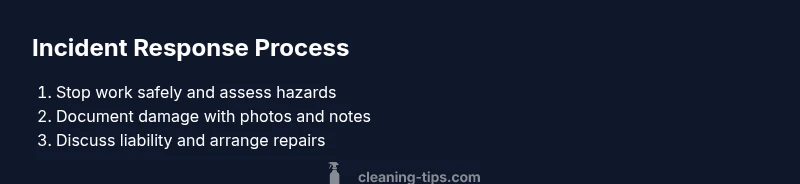
Stop work safely if there is a hazard, protect people from harm, and avoid making assumptions about fault. Calmly notify the cleaner or agency on-site, using neutral language like There appears to be damage to X; can we review what happened? Document the moment with notes and photos as soon as the scene is safe. If a supervisor is present, involve them so there is a clear point of contact. Use the moment to shift from blame to problem-solving: what needs to be done to secure the item, assess any risk, and determine next steps for repair or replacement.
Documenting the Incident: Photos and Notes
Take wide photos of the area and close-ups of the damaged item from multiple angles. Capture any relevant details: the item’s ownership, the condition of the surface, and the surroundings. Record the time, date, and who was present. If possible, obtain a short statement from the cleaner about how the accident occurred. Store everything in a dedicated incident folder—digital copies backed up in the cloud and a printed copy for reference. These records simplify later discussions and serve as evidence if a claim is needed.
Communicating Calmly and Effectively
Choose a calm, private setting for the dialogue, and focus on the problem, not personalities. Use I statements to describe what you observed and felt, e.g., I noticed X happened and I’m concerned about Y. Listen to the cleaner’s perspective, and avoid accusatory language. Propose a cooperative path: who will assess the damage, who will contact the agency, and what information is required to move forward. Document agreements in writing, including any timelines for repairs or reimbursement.
Evaluating the Damage and Costs
Identify whether the item is repairable or replaceable. Collect quotes from qualified professionals if repair is possible, and compare them to the item’s current market value. If the item has sentimental or historical value, consider replacement options that preserve memory as well. Check if you have receipts, warranties, or a homeowners or renters policy that may cover accidental damage. Note that depreciation, deductibles, and policy terms influence what you can claim.
Insurance and Liability: What Might Be Covered
Your homeowner or renter's insurance may cover accidental damage under certain circumstances, but coverage varies by policy and provider. Review your policy for damage-causing incidents and liability terms. If the cleaner or agency accepts responsibility, they may also carry liability insurance that could handle repairs or replacement. In some cases, you’ll settle directly with the cleaner or agency without involving insurers. Based on Cleaning Tips analysis, many households resolve small incidents through direct negotiation when documentation is solid. While insurance can help, it often requires timely reporting and clear evidence.
Negotiating a Fair Resolution
Approach negotiations with a clear target: fair replacement or repair cost, plus possibly a small goodwill gesture. Propose a written agreement that outlines the amount, who will pay, how repairs will be arranged, and a deadline. If the item is irreplaceable, discuss alternatives such as restoration by a professional or a suitable charitable donation with tax considerations. Keep the tone collaborative and avoid threats or ultimatums. A well-structured proposal increases the likelihood of a smooth settlement.
Writing a Clear Recovery Plan
Create a simple recovery plan: who contacts whom, the evidence needed, and a timeline for responses. Use a template letter or email to document the agreement. Include the incident date, item description, agreed amount, method of payment, and a follow-up date. Save all communications to avoid misunderstandings and to provide a paper trail in case the plan needs updating later.
Preventing Future Breakages: Best Practices
Implement preventive steps to reduce risk: remove fragile items from the cleaning area, use protective coverings, relocate valuables, and confirm equipment safety. Use a pre-cleaning checklist and a brief on-site walkthrough with the cleaner before work begins. Regularly review your policies with cleaners or agencies to reinforce expectations. The Cleaning Tips team recommends creating a simple, filmed safety briefing for frequent items to minimize repeat incidents.
AUTHORITY SOURCES
- https://www.ftc.gov
- https://www.consumerfinance.gov
- https://www.usa.gov
Tools & Materials
- Notebook or digital device for incident notes(Record times, people present, item details)
- Smartphone or camera(Take clear photos of the item, surface, and any hazards)
- Incident report form or template(Use a simple form to capture details)
- Policy documents: homeowner/renter policy and cleaning contract(Have ready to reference coverage and terms)
- Protective gloves and a soft cloth(Wear gloves when handling broken items and use a cloth to minimize further damage)
- Evidence storage folder or cloud storage(Keep copies of photos and notes)
Steps
Estimated time: 60-90 minutes
- 1
Assess safety and stop work
As soon as damage is noticed, pause cleaning only if it is safe to do so. Check for hazards like sharp edges or electrical risks, and keep children or pets away. If there is immediate danger, unplug equipment or move people to safety before proceeding. This step prevents injury and protects everyone involved.
Tip: Focus on safety first; never rush to inspect damaged items if there is a real hazard. - 2
Notify supervisor or agency
Inform the on-site supervisor or agency rep about the incident using neutral language. Document who you spoke to and the time of the notification. A clear point of contact helps accelerate a fair resolution and avoids miscommunication later.
Tip: Ask for a written acknowledgment of the incident from the supervisor. - 3
Document the scene with photos and notes
Take wide-angle and close-up photos to capture the area, the damaged item, and surrounding conditions. Note the date, time, people present, and any statements from the cleaner. Store these records securely for easy reference during negotiations.
Tip: Label photos with date and item name to avoid mix-ups. - 4
Identify ownership and item status
Determine whether the item belongs to you, a guest, or a prior renter. Locate any receipts, warranties, or provenance that help establish value. If the item is irreplaceable, document its sentimental value to guide replacement discussions.
Tip: Keep all ownership documents accessible during conversations. - 5
Review applicable policies
Check your homeowner or renter policy and the cleaning contract for coverage terms, deductibles, and liability limits. Identify whether accidental damage is covered and what steps are required to file a claim or negotiate repair.
Tip: Note policy numbers and contact methods for your insurer. - 6
Request quotes for repair or replacement
Obtain at least two reputable quotes for repairing or replacing the damaged item. Compare costs against the item’s current value, age, and any depreciation. Use written quotes to support negotiations.
Tip: Ask vendors to itemize parts, labor, and timelines. - 7
Discuss liability and settlement options
Have a constructive discussion about who pays, whether the cleaner or agency has liability coverage, and what form of settlement is acceptable. Document any agreed-upon dollar amount, replacement method, and deadlines.
Tip: If needed, propose a phased settlement to prevent delays. - 8
Draft and sign a written agreement
Create a simple, clear written agreement outlining the settlement, payment method, and timelines for repairs or reimbursement. Sign and date the document, and attach supporting quotes and photos.
Tip: Keep a signed copy for both parties and store electronically. - 9
Follow up and implement repairs
Coordinate the repair or replacement, ensuring the work is completed as agreed. Confirm receipt of payment and the completion of the repair, then update your records with final receipts and warranties.
Tip: Request final invoices and warranties after work completes. - 10
Review prevention measures
After resolution, review steps to reduce future risk. Update the cleaning checklist, reinforce fragile-item handling, and consider a safety briefing for frequent items.
Tip: Document the updated process and share it with the cleaning service.
Questions & Answers
What should I say first if something breaks during cleaning?
Begin with a calm, neutral description of what happened and avoid blame. State the observed damage and ask for clarification on next steps. This sets a collaborative tone for resolving the issue.
Start with a calm description of what happened and seek the next steps calmly.
Who pays for damages when a cleaning service breaks something?
Liability depends on the contract, policies, and who caused the damage. Many agencies cover accidental damage through their liability insurance or negotiate a settlement with the client.
Liability depends on your contract and the cleaner’s insurance; settlements are usually negotiated between parties.
What if the cleaner denies responsibility?
Rely on your documentation: photos, written statements, and policy terms. If needed, request an independent assessment or consult your insurer or small claims process.
If they deny it, rely on your records and policy terms to push for a fair resolution.
When should I involve a lawyer or small claims court?
If negotiations stall or the item is valuable, seek legal advice or consider small claims court. Gather all records to present a clear case.
If talks fail, seek legal guidance or pursue small claims with your documented evidence.
Can I withhold payment while resolving the damage?
Withholding payment can breach contracts. Discuss a written interim agreement and hold funds only after both sides sign off on terms.
Don’t withhold payment without a written agreement; negotiate first and document terms.
What safety steps should I take if there is broken glass?
Clear the area, wear gloves, collect shards carefully, and keep children and pets away. Use a sturdy container for disposal and check for hidden shards.
If glass is broken, stay safe and clear the area before handling shards.
Watch Video
The Essentials
- Document every detail with photos and notes
- Communicate calmly and in writing
- Know your policy and the agency terms
- Capture quotes and compare repair vs replacement
- Follow up with a written recovery plan