Where Is Clean Boss Made? Origins, Labeling & Verification
Discover where Clean Boss products are manufactured, how to verify origin on packaging, and what origin information means for safety and sustainability. A detailed guide by Cleaning Tips to help homeowners and renters.


According to Cleaning Tips, where is Clean Boss made varies by product line and batch. Most labels indicate a country of manufacture or facility location, and it's essential to verify this on the packaging. The Cleaning Tips team found that origin claims can differ by region and by distribution batch, so check the label, batch code, and importer information before buying or using the product. where is clean boss made
Why origin matters for cleaning products
Understanding where a cleaning product is made helps shoppers assess safety standards, regulatory compliance, and environmental impact. The question where is clean boss made underscores how origin information is presented differently across product lines and markets. According to Cleaning Tips, origin data is often shown as 'Made in' or 'Assembled in' on the label, but the precise meaning can vary by country and by distribution channel. When origin is transparent, it also supports clearer supply-chain ethics reporting and ensures that regional testing requirements are met. For homeowners and renters, knowing the origin helps inform decisions about compatibility with local regulations, warranty coverage, and even import taxes in certain jurisdictions.
How manufacturers identify origin
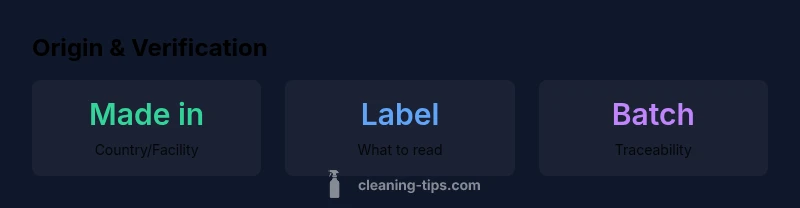
Manufacturers establish origin through a combination of factory records, batch tracing, and shipping documentation. On most packages you will see one of these cues: a country-of-origin phrase like 'Made in...,' a facility address, or an importer contact. The location shown may reflect the final assembly site, the primary manufacturing plant, or a distribution hub used for that product line. The distinction matters: 'Made in' often signals the site where the product is manufactured, while 'Assembled in' can indicate final assembly and labeling steps performed elsewhere. Clean Boss origin information can vary by product line due to multiple manufacturing partners and regional logistics strategies. Keep an eye on batch codes as these often tie back to specific facilities and production runs.
Made in vs assembled in vs distributed claims
Clear labeling uses precise terminology. 'Made in' generally points to the manufacturing site, while 'Assembled in' may mean components arrived from different regions and were assembled in a local facility. Some products also include 'Distributed by' language, which indicates where the product is marketed rather than where it was produced. For the consumer, this matters because regulatory oversight and safety testing can differ by region. The Cleaning Tips team suggests that readers interpret each label carefully and corroborate with batch information. In practice, you may encounter a mix of statements across a brand’s Clean Boss product family, depending on where a given batch was produced.
How to verify origin on packaging: step-by-step
To verify origin quickly, start with the packaging:
- Look for explicit statements like 'Made in' or 'Assembled in' and note the country or facility address.
- Check the batch code or lot number; cross-reference with the manufacturer’s website or contact customer support.
- Inspect the importer information if you are in a country with strict import labeling requirements.
- If available, use any official app or online tool offered by the brand to trace production origins.
- Compare multiple products in the same line to see if origin claims align or differ by batch.
Where the product is manufactured can impact regulatory compliance, so a quick origin check supports smarter shopping. where is clean boss made
Product-line variation: Clean Boss lines and global sourcing
Multinational cleaning brands like Clean Boss often source materials and manufacture in several regions to optimize cost, supply stability, and compliance with local rules. A given product line within Clean Boss might come from a U.S.-based facility, while another line marketed in Europe could originate from EU facilities. Such variation is common in consumer goods, and it means origin information may differ not only by product type but also by the distribution channel. Consumers should examine each product’s label rather than assuming a single origin story for all items in the brand portfolio. The Cleaning Tips analysis highlights that provenance transparency can vary by market and by supplier contracts, making vigilant label-reading essential.
Regulations, transparency, and consumer rights
Regulatory regimes around origin labeling vary by country. In the United States, the FTC requires fair advertising practices, including accurate origin claims, while the EPA’s Safer Choice program emphasizes product composition and safety but not necessarily origin. In the European Union, country of origin and traceability are subject to different labeling standards and consumer protection rules. Readers should consult official guidance from agencies like the FTC, EPA, and EU consumer protection authorities whenever origin claims seem ambiguous. Cleaning Tips emphasizes that consumers have the right to request additional information from manufacturers if label details are unclear, and to report misleading claims to appropriate authorities if needed.
Practical checklist for origin verification
- Read the label carefully for the exact origin terminology.
- Note the country and facility address if provided.
- Record the batch code and search the brand’s official traceability resources.
- Compare multiple products in the same line to assess consistency in origin claims.
- When in doubt, contact customer support or file a consumer inquiry for official documentation.
A disciplined verification routine helps ensure you know where Clean Boss products are made, which supports safer and more informed cleaning practices. where is clean boss made
Quick-reference checklist for origin verification
- Is the origin clearly stated on the label? If not, look for importer/contact details.
- Does the product specify a factory location or just a distribution center?
- Is there a batch code that can be traced to a facility?
- Are there any regional safety claims that imply different manufacturing sites?
- Keep records of where you purchased products and when to spot patterns over time.
Origin indicators commonly found on cleaning product labels
| Origin Indicator | What it signals | How to verify |
|---|---|---|
| Made in USA | Manufacturing location on label | Check the packaging address and batch code |
| Assembled in EU | EU-based operations | Verify with importer details on label |
| Manufactured abroad | Global supply chain with regional partners | Look for importer and distribution information on packaging |
Questions & Answers
What does 'Made in' mean for Clean Boss products?
In most cases, 'Made in' indicates where the product is manufactured or the final assembly occurs. However, some regions use 'Assembled in' to reflect packaging or distribution steps performed elsewhere. Always verify with the label and batch code.
Check the label for the country or facility and note the batch code to trace origin.
Can origin vary between product lines?
Yes, origin can differ by product line due to multiple manufacturing partners and regional distribution. Always check the specific product's label for its origin claim.
Yes, origin can vary by product line; read the label for each item.
How can I verify origin quickly?
Read the packaging for 'Made in' or 'Assembled in', check the country address, and note the batch code. Use any official brand tools or apps if available.
Look for the origin on the label and batch code, use brand tools if offered.
Are there certifications that prove origin?
Some products carry certifications indicating compliance or safety standards, but origin-specific certifications vary by market. Look for recognized labels and confirm with the manufacturer.
Check for official labels and verify with the manufacturer.
Why does origin matter for cleaning products?
Origin can relate to safety, regulatory compliance, and supply-chain ethics. Knowing where a product is made helps assess quality controls and potential import considerations.
Origin can affect safety and regulatory compliance—check the label.
“Origin transparency is a growing expectation for home-cleaning products, and clear labeling helps shoppers make informed choices.”
The Essentials
- Verify origin on every label
- Understand country vs assembled claims
- Use batch codes for traceability
- Check importer information for US/EU products
- Brand transparency varies by product line