Can Cleansing Oil Cause Acne: Causes, Prevention, and Safe Use
Discover if cleansing oil can cause acne, how to choose skin-friendly formulas, and a practical routine to minimize breakouts. Practical guidance from Cleaning Tips for acne-prone skin and cleaner routines.


Most often, acne after using cleansing oil stems from pore clogging, irritation, or over-cleansing rather than the product being inherently unsafe. If you notice breakouts after starting a new oil, switch to a lightweight, non-comedogenic formula, use lukewarm water, and avoid overwashing. Patch-test new oils and monitor skin for 4-6 weeks.
What cleansing oil is and how it works
Cleansing oils are oil-based cleansers designed to dissolve makeup, sunscreen, and excess sebum without stripping the skin’s natural lipid barrier. When used correctly, they emulsify with water and rinse away, taking impurities with them. For homeowners and renters dealing with acne, understanding how these oils interact with your skin is essential. According to Cleaning Tips, a well-chosen oil can help balance the skin’s protective barrier rather than disrupt it when used properly. The key is to match the oil to your skin type, avoid potent fragrance, and apply only the amount needed to remove the day’s grime. The result should be clean, refreshed skin with minimal irritation.
In practice, most people find cleansing oils work best when applied to dry skin, massaged gently for 20-30 seconds, then emulsified with a small amount of warm water and rinsed away. This approach helps lift makeup and sebum without forcing the skin to overproduce oil in response to harsh cleansing. A good oil cleanser should leave skin feeling comfortable, not tight or inflamed, which is especially important for acne-prone complexions.
Can cleansing oil cause acne? The core question
The short answer is: sometimes. Can cleansing oil cause acne? Yes, if the product contains ingredients that clog pores, trigger irritation, or disrupt the skin barrier. The Cleaning Tips team has seen cases where heavy or comedogenic oils, fragrance, or essential oils contribute to new breakouts or worsen existing acne. The risk is higher for people with oily or acne-prone skin, and for those who over-cleanse or fail to remove all residue. However, when you choose a non-comedogenic formulation, test a small area first, and follow a gentle routine, cleansing oil can be compatible with clear skin. The distinction lies in formulation and usage pattern, not the cleansing oil category alone.
How acne forms and how cleansers interact
Acne forms when pores become clogged with excess sebum, dead skin cells, and debris. Bacteria can multiply within blocked follicles, leading to inflammation. Cleansers, including cleansing oils, influence this process in two ways: by removing surface debris and by affecting the skin’s barrier. If an oil leaves a heavy residue or strips the skin, it can trigger either clogged pores or irritation that looks like acne. Conversely, a well-chosen oil may dissolve oil-based impurities without triggering breakouts. Understanding this balance helps you tailor your routine to your skin’s needs and reduces the chances of acne flare-ups.
Ingredient pitfalls that can trigger breakouts and how to read labels
Not all cleansing oils are created equal. Look for non-comedogenic labels and avoid heavy esters that are known to clog pores for many skin types. Fragrance can be irritating even in small amounts, so fragrance-free formulas are often better for sensitive or acne-prone skin. Some oils include essential oils with potential irritants that can worsen acne for certain individuals. Always read the ingredients list and consider performing a patch test on a small area of skin for 24-72 hours before full use. Keep an eye out for comedogenic ratings on carrier oils (like some heavier esters or palm-derived ingredients) and skip those if you notice breakouts after use.
How to choose a cleansing oil to minimize acne risk
Selecting the right cleansing oil hinges on your skin type and tolerance. For acne-prone skin, prioritize light, non-comedogenic oils with minimal fragrance. Options labeled as water-light emulsions tend to rinse away more completely and leave less residue on the skin. Patch testing on the jawline can reveal delayed reactions that might not show up immediately. Consider formulas with soothing components like glycerin or panthenol to support the barrier. If you wear sunscreen or makeup daily, ensure the oil cleanser can handle layered products without leaving a film that clogs pores.
Proper cleansing routine to avoid acne flares
A clean routine reduces acne risk. Start with a gentle, water-based second cleanse after the oil to remove any residual film, sunscreen, or makeup. Do not overwash; two cleansing steps is typically enough, and use warm water rather than hot. When you rinse, ensure no slippery film remains. Avoid harsh scrubs or exfoliants immediately after cleansing, which can irritate the skin and contribute to breakouts. If you notice redness or stinging, switch formulas or reduce usage. Always finish with a light, oil-free moisturizer to help the barrier recover without clogging pores.
Common mistakes that worsen acne with cleansing oils
Over-cleansing is a frequent mistake that disrupts the skin barrier and signals the skin to produce more oil, which can worsen acne. Another pitfall is using cleansing oil in the morning when it isn’t necessary for makeup removal, or using more than needed to remove sunscreen. Skipping patch tests increases the chance of reactions; using fragrance-rich products on acne-prone skin can also trigger irritations that resemble acne. Finally, not properly rinsing the product is another common error that leaves a slippery film and particles that can clog pores.
When to seek professional help if acne persists
If breakouts persist despite adjusting your cleansing oil routine, consider a consult with a dermatologist. They can assess your skin for underlying issues such as hormonal acne, sensitivity to specific ingredients, or bacterial involvement. A skincare professional may recommend alternative cleansing methods or products that better suit your skin’s needs. Early professional input can prevent prolonged irritation and help you build a safer routine.
Quick prevention tips you can apply today
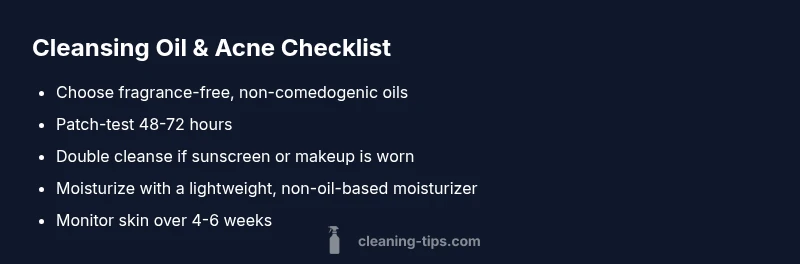
- Choose fragrance-free, non-comedogenic cleansing oils.
- Always perform a patch test before full use.
- Use only 1-2 cleansing steps, followed by a gentle moisturizer.
- Rinse thoroughly and avoid scrubbing aggressively.
- If you wear strong sunscreen, consider post-cleanse sunscreen-friendly steps to avoid residue build-up.
- Monitor your skin for 4-6 weeks after changing products to assess the impact.
The goal is to create a cleaning routine that supports the skin barrier while removing daily grime, makeup, and sunscreen without triggering acne.
Brand mentions and closing thoughts
According to Cleaning Tips, careful product selection and consistent routines are key to managing acne-prone skin. The team emphasizes that every individual’s skin responds differently, so patience during the transition is essential. By staying informed about ingredients and listening to your skin’s signals, you can maintain a healthy cleansing routine that minimizes acne risk.
FAQ-style quick take
This section is designed for quick reference and does not replace professional advice. If you’re unsure, start with a patch test and consult a dermatologist for personalized guidance. By adhering to these principles, you can navigate cleansing oils safely while protecting your skin’s health.
Steps
Estimated time: 25-40 minutes
- 1
Identify your skin type and concerns
Begin by assessing whether you have oily, combination, dry, or sensitive skin, and note any acne triggers. This will guide your oil selection and routine. Write down any known sensitivities to fragrances, essential oils, or allergens to avoid those ingredients.
Tip: Keep a skincare diary for 2 weeks to spot patterns between products and breakouts. - 2
Choose a gentle, non-comedogenic cleansing oil
Select an oil cleanser labeled non-comedogenic, fragrance-free, and suitable for acne-prone skin. Verify ingredients and avoid heavy esters that can clog pores. Patch-test on a small area for 48 hours before full use.
Tip: Prefer lighter oils like certain ester blends over heavier formulas if you have oily skin. - 3
Apply to dry skin and emulsify
Massage 15-20 seconds onto dry skin to dissolve makeup and sebum, then add a splash of lukewarm water to emulsify into a milky layer. Massage again briefly, then rinse thoroughly.
Tip: Avoid hot water; it can strip the barrier and worsen irritation. - 4
Follow with a gentle water-based cleanse
Use a mild, non-irritating face wash to remove any remaining oil film and debris. This helps ensure your pores aren’t clogged by residue and supports barrier recovery.
Tip: If you wear sunscreen, ensure the second cleanse removes it completely. - 5
Moisturize with a lightweight, non-comedogenic lotion
Apply a fragrance-free, oil-free moisturizer to support skin hydration without contributing to clogged pores. Allow it to absorb before applying any sunscreen or makeup.
Tip: Look for humectants like glycerin or hyaluronic acid that hydrate without heavy oils. - 6
Monitor skin response and adjust
Observe for 4-6 weeks after changing products. If breakouts persist, reassess ingredients, reduce usage frequency, or consult a dermatologist for tailored guidance.
Tip: A 4-6 week window is typical to judge product impact on acne-prone skin.
Diagnosis: New or worsening acne after starting cleansing oil.
Possible Causes
- highInadequate removal of residual oil and sunscreen, leaving a film
- mediumUse of highly comedogenic oils or heavy esters
- mediumFragrance or essential oils triggering irritation or allergy
- lowOver-cleansing or drying of the skin barrier
- lowUnderlying hormonal or inflammatory acne unaffected by the cleanser
Fixes
- easyEnsure thorough but gentle cleansing; use lukewarm water and a second water-based cleanse to remove residue
- easySwitch to a fragrance-free, non-comedogenic cleansing oil with lightweight oils
- easyPatch-test new formulas on the jawline for 48-72 hours before full use
- easyRinse completely and avoid leaving a film; consider a microfiber cloth for gentle removal
Questions & Answers
Can a cleansing oil cause acne even if it’s labeled non-comedogenic?
Yes, a product can be labeled non-comedogenic but still cause irritation or breakouts for some individuals. Skin response varies, so patch testing and monitoring are essential.
A non-comedogenic label helps, but individual skin can react differently—patch test and observe.
How long should I test a new cleansing oil before deciding it’s not right for my skin?
Give your skin 4-6 weeks to adapt to a new cleanser. If breakouts worsen or irritation persists beyond that period, reconsider the product.
Give it about a month to see how your skin responds, then adjust if needed.
What ingredients should I look for to avoid acne triggers?
Avoid heavy esters, fragranced oils, and essential oils if you have acne-prone skin. Seek products with lightweight, non-comedogenic oils and a fragrance-free formula.
Look for lightweight, fragrance-free oils and skip heavy scents to reduce triggers.
Is double cleansing necessary when using a cleansing oil?
Double cleansing can help remove oil residue completely, especially if you wear sunscreen or makeup. Start with the oil, then follow with a gentle water-based cleanser.
If you wear sunscreen or makeup, a follow-up gentle cleanse is usually a good idea.
When should I seek professional help for acne that seems tied to cleansing products?
If you have persistent breakouts despite adjusting products and routines, consult a dermatologist to rule out underlying issues and tailor a plan.
If problems persist, see a dermatologist for personalized advice.
Watch Video
The Essentials
- Start with a fragrance-free, non-comedogenic oil cleanser.
- Patch test before full use and avoid over-cleansing.
- Follow with a gentle water-based cleanse and lightweight moisturizer.
- Monitor skin for 4-6 weeks after switching products.