Can You Clean Ears with Peroxide? Safe Guidance
Learn how to safely use hydrogen peroxide for ear care. This guide covers when to use peroxide externally, safe dilution, basic steps, risks, and safer alternatives for wax removal.


Can you clean your ears with peroxide? Yes, but only for external cleaning with a diluted 3% hydrogen peroxide solution. Do not insert drops into the ear canal. Use sparingly and never when you have ear pain, discharge, or a history of perforation. According to Cleaning Tips, seek medical advice for persistent issues.
Can you clean your ears with peroxide? Understanding the basics
The ear is a delicate organ with a protective wax layer that traps dust and microbes. Hydrogen peroxide at 3% is commonly used externally to soften surface debris, but it should never be inserted deeply into the ear canal. When used cautiously on the outer ear, peroxide creates fizz that helps loosen superficial dirt at the skin's surface. However, peroxide does not dissolve wax as efficiently as professional wax-softening drops or irrigation performed by a clinician. According to Cleaning Tips, the emphasis is on safe, external cleaning rather than attempting to rinse the entire canal. If you experience pain, a sudden change in hearing, or the appearance of blood or discharge, stop immediately and seek medical guidance. For most people, daily ear care means gentle drying after showers and avoiding cotton swabs or probes that can push wax inward. This section outlines what peroxide can do, what it cannot do, and how to think about ear health in the context of a healthy ear canal.
Safety and risks of using peroxide near the ears
Hydrogen peroxide, even at 3%, can irritate the skin and mucous membranes. In the outer ear, mild irritation, itching, or a stinging sensation may occur if the solution is too concentrated or left in contact too long. More serious risks arise if peroxide is accidentally driven into the ear canal, potentially affecting the eardrum or middle ear. People with ear infections, eardrum perforations, tubes, or a history of ear surgery should avoid home peroxide irrigation entirely. Dizziness or a temporary change in hearing can occur if bubbles disrupt delicate wax or tiny hairs. The aim, as emphasized by Cleaning Tips, is to minimize exposure and only use peroxide for short, external cleaning when nothing else helps. If you notice persistent pain, fever, swelling, or foul discharge, seek prompt medical care.
How peroxide works on ear wax and debris
Peroxide acts as an oxidizing agent that can loosen surface debris and irritate foreign particles on the skin of the outer ear. It does not equal professional ear wax removal and should not be relied on to clear a clogged canal. When peroxide bubbles touch surface wax, it may help loosen the topmost layer, but wax deeper in the canal is not safely accessible without medical intervention. The external use approach is about surface cleaning and drying, not deep irrigation. Cleaning Tips notes that relying on peroxide alone can lead to repeated, unnecessary exposure and irritation if used too often. Always pair any peroxide use with gentle drying and observation for signs of irritation.
External vs. internal cleaning: what is safe
External cleaning refers to cleaning the visible, outer ear and entrance, while internal cleaning would involve the ear canal itself. Safe external cleaning with peroxide means applying a drop or two to the outer ear opening while the head is tilted, then letting the outer skin surface sit briefly before rinsing away. Never insert a dropper, cotton swab, or probe deep into the canal. If wax builds up beyond what a damp cloth can remove, avoid pursuing it at home; seek professional wax removal. The key distinction is that safe practices respect the anatomy and limits of home care; they are not a substitute for clinical wax removal when required.
When not to use peroxide: red flags
Discontinue peroxide use immediately if you notice sharp pain, burning sensation that persists after rinsing, discharge with a foul odor, or any hearing changes. Do not use peroxide if you have a history of eardrum perforation, tubes, ear surgery, or active infection. In these cases, at-home irrigation can cause irreversible damage. Also avoid using peroxide after swimming with a water-logged ear if pain or fullness persists. Always use peroxide only as directed and consider alternatives like saline drying.
Safer alternatives for ear care
Safer ear care starts with prevention and gentle cleaning. After showers, dry the outer ear with a towel; avoid inserting anything into the canal. If you need assistance with wax buildup, consider over-the-counter ear drops designed for external use or saline irrigation performed by a professional. Some people benefit from a warm compress at the outer ear to loosen debris before drying. For persistent concerns, consult an ear, nose, and throat specialist for a safe plan.
Practical dosing and application patterns
To minimize risk, use peroxide only on the outer ear for a brief period. Mix a 1:1 solution of 3% hydrogen peroxide and sterile saline or boiled and cooled water; test on the skin first for a gentle sensation. Apply 2-3 drops to the outer ear opening and wait 1-2 minutes before dabbing away the moisture with a clean cloth. Do not repeat more than once a week unless advised by a clinician. Always terminate use if any irritation occurs.
Maintaining ear health: daily habits and myths
This section debunks common myths such as using cotton swabs to clean wax. In reality, ears self-clean and only need light drying after baths. Peroxide should not replace medical care for persistent wax buildup. The real goal is to protect the ear canal's natural defense and avoid over-cleaning. The ear's delicate balance benefits from minimal intervention and timely professional evaluation if symptoms persist.
Tools & Materials
- 3% hydrogen peroxide(Only external use; avoid canal contact)
- sterile saline(Diluent for 1:1 mix and rinse)
- bulb syringe or dropper(For outer ear application)
- towel(Catch drips and keep dry)
- gloves(Non-latex if possible)
- watch/timer(Track contact time)
Steps
Estimated time: 20-30 minutes
- 1
Gather and prepare materials
Collect all supplies (peroxide, saline, dropper, towel, gloves) and set up a comfortable, well-lit space. Check the date on the peroxide bottle to ensure freshness. Having everything ready minimizes rushed, unsafe moves.
Tip: Lay out a tidy workspace and test the solution on a small skin patch first. - 2
Position yourself safely
Sit or lie with the head tilted so that the outer ear opening faces upward. Keep movements slow and controlled to prevent accidental splashes into the canal.
Tip: Avoid touching the ear canal with any tool. - 3
Apply peroxide to the outer ear
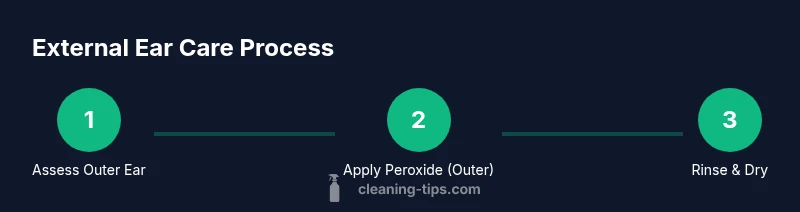
Using a dropper, apply 2-3 drops of the diluted peroxide to the outer ear opening for about 1 minute. Do not insert the dropper deep into the canal; focus on the visible entrance.
Tip: If you feel a strong stinging, stop immediately and wipe away. - 4
Rinse and dry the outer ear
Gently rinse the outer ear with sterile saline or lukewarm water, then pat dry with a clean towel. Do not swirl water inside the canal.
Tip: Only the outer area should contact liquid; no canal irrigation. - 5
Inspect and decide next steps
Check for irritation, redness, or persistent wax. If symptoms persist after one session, skip to safer options or seek professional advice.
Tip: If in doubt, discontinue use and consult a clinician.
Questions & Answers
Is it safe to put hydrogen peroxide inside the ear canal?
No. Do not insert peroxide into the ear canal; even dilute solutions can irritate the canal and risk damage.
No, avoid putting peroxide in the ear canal.
What dilution should I use for external ear cleaning?
If used, dilute 3% hydrogen peroxide with equal parts sterile saline; apply briefly to the outer opening and rinse.
Dilute 3% peroxide 1 to 1 with saline and apply to the outer ear.
How often can I use peroxide for ear care?
Limit usage to occasional external cleaning; avoid daily use.
Only occasionally; not daily.
What are signs peroxide is causing problems?
Pain, burning, itching, swelling, discharge, or hearing changes warrant stopping and seeking care.
If you feel burning or persistent pain, stop and seek care.
Are there safer alternatives to peroxide for ear cleaning?
Saline rinses or plain drying; consult a clinician for safe wax removal if needed.
Saline rinses or professional wax removal are safer.
Should I see a doctor for ear wax buildup?
Yes, if persistent, painful, or affecting hearing; professionals can remove wax safely.
Yes, see a clinician for persistent wax.
Watch Video
The Essentials
- External use only; do not insert into the canal.
- Dilute peroxide to minimize irritation.
- Use only occasionally and monitor for symptoms.
- Seek professional care for persistent wax or infection.
- Avoid cotton swabs and aggressive cleaning.