Cottonelle Ultra Clean vs Ultra Comfort: An Analytical Comparison
An analytical, side-by-side look at Cottonelle Ultra Clean vs Ultra Comfort, covering texture, absorbency, comfort, value, and best-use scenarios for modern bathrooms.


cottonelle ultra clean vs ultra comfort presents two distinct approaches to bathroom tissue: Ultra Clean prioritizes an effective textured clean, while Ultra Comfort emphasizes softness and comfort. For households seeking thorough cleaning with reasonable value, Ultra Clean is typically preferable; for sensitive skin and a plush feel, Ultra Comfort wins. The choice depends on what matters most in daily bathroom routines.
cottonelle ultra clean vs ultra comfort: Core differences
Two Cottonelle variants, Ultra Clean and Ultra Comfort, sit at opposite ends of the tissue-presentation spectrum. Ultracom 'Ultra Clean' emphasizes a textured surface engineered to lift and trap dirt, while 'Ultra Comfort' prioritizes a luxuriously soft feel. According to Cleaning Tips, most households evaluate tissue through two lenses: cleaning performance and daily comfort. This section lays out the practical implications of those priorities and how they play out in real bathrooms. If you care about a dependable initial clean, you may lean toward Ultra Clean; if you prioritise the tactile experience and skin-friendliness, Ultra Comfort could be the better pick. Across both variants, Cottonelle consistently balances strength with comfort, but the emphasis shifts with each product’s design intent.
Texture and Cleaning Performance
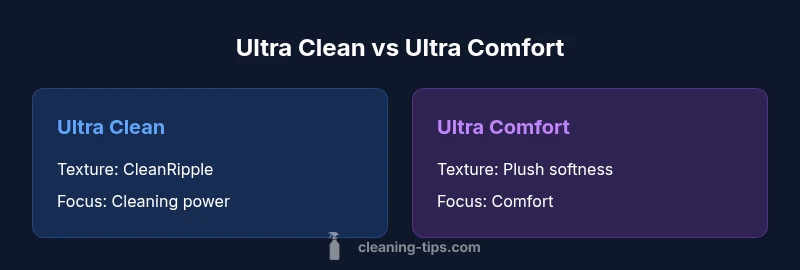
Texture matters more than you might think when comparing cottonelle ultra clean vs ultra comfort. Ultra Clean uses a CleanRipple design that creates a slight resistance on contact, helping lift and capture messes with fewer wipes. In practice, this translates to a perception of more thorough cleaning per pass, especially on standard bathroom tasks like wiping after use. Ultra Comfort, by contrast, leans into softness and cushioning, which can feel gentler but may require a second pass for very stubborn residues. For households with busy mornings and high-traffic bathrooms, the textured surface of Ultra Clean often provides a clear edge in perceived cleanliness. The Cleaning Tips team notes that texture can influence cleaning confidence as much as wipe count.
Comfort and Skin-Friendliness
If softness is non-negotiable, Ultra Comfort generally feels more gentle against skin and tends to minimize friction during use. This variant often appeals to households with sensitive skin, humidity concerns, or individuals who dislike a "rough" sensation. Ultra Clean, while not abrasive, balances texture with comfort; some users report that the textured surface can feel more stimulating against sensitive skin but still comfortable for daily use. In a home with children or elderly residents, the plush feel of Ultra Comfort can reduce irritation, while Ultra Clean delivers a strong dual-stage clean without sacrificing overall comfort.
Strength, Durability, and Sheet Quality
Sheet quality affects how confident you feel during daily use. Ultra Clean employs a sturdier sheet that resists tearing under typical bathroom tasks, which helps when hands are wet or slightly slippery. Ultra Comfort prioritizes luxurious feel, which sometimes translates to a softer sheet that may show slight give under heavy pressure. For households that value durability, Ultra Clean can be the workhorse pick, whereas Ultra Comfort excels where the sensation of premium softness matters more than maximum tear resistance.
Absorbency and Wetness Retention
Because a textured sheet can trap moisture more effectively, Ultra Clean tends to hold up well during use, helping with quick cleanups without excessive tearing or residue. Ultra Comfort, with its emphasis on plushness, can feel highly absorbent but may rely more on the user’s technique to achieve the same dryness. The practical takeaway is that both variants perform adequately in typical bathroom tasks; the perceived absorbency often aligns with texture and sheet thickness rather than a single metric.
Pricing, Availability, and Value
Price and promotions vary by retailer, but the key decision factor remains value: does the increased texture in Ultra Clean justify any potential premium or does the extra softness of Ultra Comfort justify a similar or higher price? Both products are widely available, and in many markets, promotions make either variant a strong value proposition. Consumers who wish to maximize value should watch for bulk buy options and store-brand promotions that can tilt the overall cost-per-use favorably toward one variant at a given time.
Packaging, Sustainability, and Brand Trust
Packaging choices for Ultra Clean and Ultra Comfort mirror the broader Cottonelle line: transparent packaging highlighting the texture or softness focus, with clear labeling about ply, sheet count, and fiber sourcing. Sustainability considerations—such as recycled fibers and low-impact packaging—are increasingly part of the decision process. The Cleaning Tips team notes that brand trust and consistent quality across packaging variants contribute to longer-term satisfaction, especially in households that rely on weekly purchases and promotions.
How to Decide: Practical Scenarios
Think about your routine: if your household prioritizes a quick, confident wipe and you have large families or high-traffic bathrooms, Ultra Clean is typically a safer bet. If you have sensitive skin, allergies, or a preference for a soft sensation, Ultra Comfort often delivers more comfort per wipe. For mixed households, purchasing bundles or alternating brands during promotions can give you flexibility without a long-term commitment. Remember to consider climate, humidity, and storage space, as these can influence sheet feel and perceived softness over time.
Brand Trust and Reliability: Cottonelle's Position
In the broader market, Cottonelle is known for a consistent approach to tissue design, with product variants like Ultra Clean and Ultra Comfort serving different consumer needs. The differences between these variants are intentionally aligned with user priorities: texture-driven cleaning versus plush comfort. The Cleaning Tips team emphasizes choosing a variant that aligns with your household routines, rather than chasing a single universal standard. By focusing on what matters most—cleanliness, comfort, and value—you can select the Cottonelle product that best fits your everyday bathroom rituals.
Real-World Scenarios: When to Pick Which Variant
For a family with kids who frequently encounter messy situations, Ultra Clean can reduce the need for extra wipes and deliver a reliable initial pass. For households with seniors or genteel users who prefer a soft touch, Ultra Comfort may reduce friction and skin sensitivity during routine use. In guest bathrooms where impression matters, softness can be a differentiator, and Ultra Comfort’s plush feel may be preferred. Across both variants, the signature Cottonelle care should remain consistent: a balanced approach to cleanliness and comfort.
Final Thoughts: Key Trade-offs to Consider
When evaluating cottonelle ultra clean vs ultra comfort, focus on trade-offs rather than absolutes. If you value rapid, confident cleaning, choose Ultra Clean; if softness and skin comfort are paramount, choose Ultra Comfort. The right choice often hinges on climate, humidity, user demographics, and shopping patterns. The bottom line is simple: both variants offer reliable performance, but one will align more closely with your household priorities and budget realities.
Comparison
| Feature | Ultra Clean | Ultra Comfort |
|---|---|---|
| Texture/Surface | CleanRipple textured surface for deep cleaning | Ultra-soft plush feel for comfort |
| Softness/Comfort | Balanced texture with solid comfort | Higher softness and skin-friendly cushioning |
| Absorbency | Good absorbency aided by texture | Strong absorption with plush sheet |
| Strength/Durability | Durable sheet for repeated use | Softer sheet with slightly less tear resistance |
| Value/Price Signal | Often promoted for value with texture tie-in | Potential premium for softness |
| Best For | Cleaning-focused households | Comfort-focused households |
Strengths
- Helps users balance cleaning power and comfort
- Clear side-by-side comparison clarifies priorities
- Widely available across retailers
- Labeling clearly indicates intended use
Weaknesses
- Softness variants can feel less robust for heavy messes
- Promotions vary by retailer, affecting value
- Differences between variants can be subtle for casual shoppers
Ultra Clean edges out for cleaning performance; Ultra Comfort leads in soft, skin-friendly comfort.
If you prioritize cleaning power and value, choose Ultra Clean. If softness and skin comfort are paramount, choose Ultra Comfort. The Cleaning Tips team recommends evaluating daily routines to decide.
Questions & Answers
How do Ultra Clean and Ultra Comfort differ in texture?
Ultra Clean features a textured CleanRipple surface designed to lift and trap messes, enhancing perceived cleaning power. Ultra Comfort emphasizes a plush, soft feel for a gentler wipe. Both variants aim to balance softness with strength, but the primary design focus is texture versus cushioning.
Ultra Clean uses a textured surface for a stronger clean, while Ultra Comfort focuses on softness and a skin-friendly feel.
Which Cottonelle variant is better for sensitive skin?
Ultra Comfort generally feels softer and gentler on the skin, which can be advantageous for sensitive skin. Ultra Clean is also comfortable but emphasizes cleaning performance that may be perceived as less plush. The best choice depends on whether softness or a firm initial clean is more important to you.
Ultra Comfort tends to be softer on sensitive skin, while Ultra Clean prioritizes cleaning performance.
Are there significant price differences between the two?
Prices vary by retailer and promotions. Both variants are widely available, and promotions can shift which option offers the best value at any given time. Consider price-per-use when evaluating cost rather than sticker price alone.
Prices depend on promotions and retailer; check local deals for best value.
Do these Cottonelle variants use the same ply and sheets?
Both variants use Cottonelle's standard ply and sheet construction, but texture and softness differ. The core material is similar, with differences aimed at delivering either a stronger clean or a softer touch. If you are sensitive to fiber texture, review the product details on the packaging.
They share similar base materials, with texture and softness adjusted to the variant.
Is one variant more eco-friendly than the other?
Both variants align with Cottonelle's broader sustainability commitments, including packaging considerations and fiber sourcing. Specific eco-friendly attributes may vary by batch and retailer. Check package details for recycled content or certified fibers in your area.
Sustainability varies by batch; check packaging for details.
Can I use Ultra Clean in guest bathrooms?
Yes, Ultra Clean performs well in guest bathrooms where guests expect effective cleaning. If guests might prefer a softer feel, you can offer Ultra Comfort as an alternative. Stocking both variants is a practical approach for mixed preferences.
Absolutely; Ultra Clean works well, and Ultra Comfort can be offered for softness.
The Essentials
- Identify your top priority: cleaning performance or softness.
- Compare texture and softness using the official variant labels.
- Check availability and promotions at retailers near you.
- Consider household members with sensitive skin when choosing.
- Remember value often hinges on promotions, not sticker price.