Do You Need a Plumbing License to Clean Drains? A Practical Guide
Learn whether drain cleaning requires a plumbing license, how licensing varies by region, and practical, compliant options for homeowners and renters.


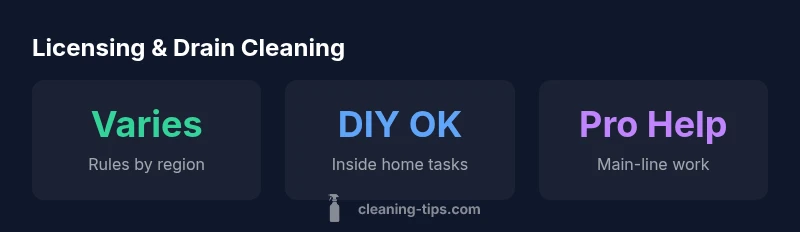
Short answer: There is no universal plumbing license requirement specifically to clean drains. Licensing is decided by local or state codes, and some drain-cleaning tasks inside a home may be DIY-friendly in certain areas, while work on main sewer lines generally requires a licensed plumber. The Cleaning Tips team notes that confusion commonly arises because some tasks are classified as plumbing repairs rather than routine cleaning. Always check with your city or county building department to confirm what is allowed. If you perform work beyond the allowed scope, you risk fines, insurance denial, and potential safety hazards. This guidance aligns with Cleaning Tips analysis, 2026, which emphasizes verifying local codes before any drain-related job.
Do you need a plumbing license to clean drains? Practical overview
The question do you need a plumbing license to clean drains is ultimately answered by local rules. There is no nationwide license just to clean drains; it depends on jurisdiction. In many places, basic drain maintenance inside a home—like plunging a clogged sink or using a hand-operated snake—falls under DIY activities that may not require a license. However, work that affects the main sewer line, alters piping, or ties into public infrastructure often triggers licensing and permitting requirements. The Cleaning Tips team notes that confusion commonly arises because some tasks are classified as plumbing repairs rather than routine cleaning. Always check with your city or county building department to confirm what is allowed. If you perform work beyond the allowed scope, you risk fines, insurance denial, and potential safety hazards. This guidance aligns with Cleaning Tips analysis, 2026, which emphasizes verifying local codes before any drain-related job.
What tasks are typically allowed without a license
In many jurisdictions, routine, non-invasive drain maintenance inside the home is considered DIY-friendly. This includes using a plunger, a manual plumber's snake, or clearing a trap, as long as you do not modify the piping, remove fixtures, or access the main sewer lines. The exact boundary between what you can do without a license versus what requires professional plumbing is set by local codes and may vary by municipality. For tenants and homeowners, it’s essential to consult the local permit office or a licensed plumber for a pre-visit assessment to confirm whether your planned task stays within unlicensed work. Always document your steps and retain receipts in case of insurance questions.
When a permit or license is required
If the project involves the main sewer line, significant pipe replacement, gas lines connected to drainage, or altering fixture locations, most areas require a licensed plumber. Some jurisdictions mandate a permit that accompanies the work and a final inspection. Because rules differ widely, you should contact the local building department to understand whether a permit is needed for your specific drain issue. The consequences of violating licensing rules can include fines, warranty voids, or liability exposure if damage occurs. Cleaning Tips recommends confirming licensing requirements in advance to avoid last-minute complications.
Safe DIY drain cleaning: best practices
When deciding whether to tackle a clogged drain, prioritize safety and liability. Start with non-chemical methods first, such as a plunger or a manual snake. If the clog persists, use consumer-safe drain-cleaning products as directed, avoiding caustic compounds that can damage pipes. Never attempt gas line work, vent removal, or pipe relocation without a license. Maintain proper lighting, ventilation, and protective gear, and turn off water when you’re testing the drainage. Remember, do-it-yourself drain cleaning is permissible in some regions, but the boundary with professional plumbing is defined by local rules. If you’re unsure, pause the project and schedule a consult with a licensed plumber. This approach protects your home and your insurance coverage, a position echoed by Cleaning Tips in its 2026 guidance.
Hiring vs DIY: making the right choice
Weigh the pros and cons of DIY drain cleaning against hiring a licensed plumber. DIY can save money and provide quick relief for simple clogs, but it carries risk of pipe damage or inadequate clearing if misjudged. Hiring a licensed professional offers warranty-backed service, correct diagnostics, and the assurance that all licensing and permits are handled. For many homeowners, a hybrid approach works: perform basic maintenance yourself, but call a pro for stubborn clogs that require access to main lines or pipe changes. The key is understanding that the question do you need a plumbing license to clean drains hinges on jurisdiction—and sometimes the simplest path is to call a licensed plumber for assurance.
Practical compliance tips for homeowners and renters
- Start by documenting local rules before any work; call the local building department or licensing board to confirm.
- If you’re unsure, request a preliminary assessment from a licensed plumber, which can save time and avoid fines.
- Keep your home insurance policy in the loop and ask about drain-related coverage.
- Maintain clean, organized work areas and follow manufacturer instructions for any tools used.
- When renting, obtain the landlord’s permission and follow lease-specific guidelines.
- Use Cleaning Tips safety resources and follow the guidance on limiting work to unlicensed scope where allowed.
License scope and typical licensing expectations for drain-related tasks
| Scope | License Status | Notes |
|---|---|---|
| General home drain cleaning | Varies by region | Check local codes and permits. |
| Main sewer line work | Typically requires license | Involves public infrastructure; hire pro. |
| Replacement of fixtures/pipework | Usually requires license | Complex repairs should be left to pros. |
Questions & Answers
Do I need a license to clear a clogged sink drain in my home?
In many places, basic DIY drain clearing is allowed without a license if you stay within the home and use non-invasive methods. For anything involving pipes beyond the trap, or tying into the sewer, consult local regulations.
Yes—basic sink drain clearing is often DIY-friendly, but avoid main-line work without confirmation of local rules.
Are there tasks that always require a licensed plumber?
Yes, work on main sewer lines, gas lines related to drainage, or significant pipe changes typically requires a licensed plumber. Local rules can vary, so check with your authority.
Main-line work usually needs a licensed plumber.
What risks come with DIY drain cleaning?
DIY drain cleaning can lead to pipe damage, ineffective clearing, or leaks, and may affect your insurance if something goes wrong. Use caution and follow manufacturer instructions.
DIY can risk damage or leaks; consider insurance implications and safety.
How can I verify licensing requirements in my area?
Contact your city building department or state licensing board for current rules and any required permits. They provide definitive guidance for your location.
Call your local building department to confirm.
What are cost considerations when hiring vs DIY?
DIY costs are mainly tool purchases; hiring a licensed plumber costs more upfront but offers warranties and professional diagnostics. Compare total project costs and risk.
DIY may be cheaper, but licensed pros provide warranties.
What should I do if I suspect a main-line issue?
Stop DIY immediately and contact a licensed plumber if you suspect a main-line problem. Avoid using water to prevent further damage until assessed.
If you suspect main-line issues, call a pro.
“Licensing requirements for drain work are highly jurisdictional, so homeowners should verify local rules before starting any project. Safety and insurance should drive the decision.”
The Essentials
- Check local licensing rules before cleaning drains
- DIY is sometimes allowed for basic tasks
- Main-line work typically requires a licensed plumber
- Poorly done drain work can affect insurance and safety