Do You Put Cleanser or Moisturizer First? A Practical Skincare Order Guide
A clear, analytical comparison of cleanser-first vs moisturizer-first skincare orders. Learn the best baseline routine, when to deviate, and practical layering tips for morning and night.


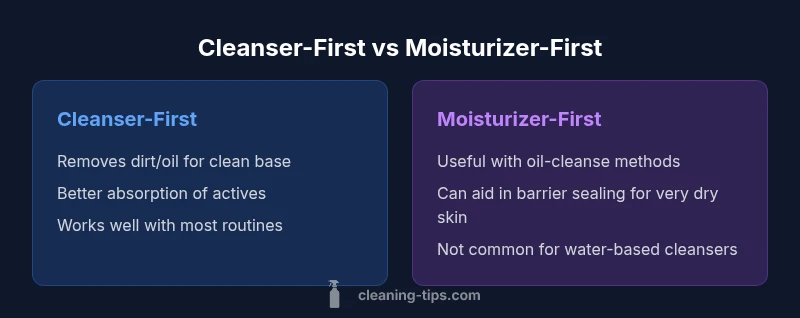
Do you put cleanser or moisturizer first? In most skincare routines, the cleanser comes first, followed by treatments and then moisturizer. This order helps remove dirt and makeup, balances skin pH, and optimizes absorption of serums, oils, and sunscreen. While there are exceptions, especially with oil-cleansing methods or very dry skin, sticking to cleanser-first provides a reliable baseline that works for most people.
Understanding Where Cleanser and Moisturizer Fit in a Routine
If you’re wondering do you put cleanser or moisturizer first, you’re not alone. The sequence you choose can influence how clean your skin feels, how well it absorbs hydration, and how effectively actives work. The baseline rule is simple: cleanse first to remove dirt, oil, and makeup, then layer hydrators and treatments, finishing with sunscreen in the morning. This order reduces barrier irritation and helps products sink in more evenly. As you read, keep in mind that individual needs vary with skin type, climate, and product formulas. According to Cleaning Tips, beginning with a clean slate sets up all subsequent steps for success. The following sections unpack why this order matters, when exceptions are reasonable, and how to tailor it to morning and night routines.
Cleanser-First: The Default Path for Most People
In most skincare routines, starting with a cleanser makes sense. Cleansing removes daily debris—dirt, sweat, makeup residues—and resets the skin’s surface so that any serums or moisturizers can work on a clean canvas. When you cleanse first, the skin’s pH can return toward its natural level after washing, helping subsequent products adhere better. After cleansing, many people apply a toner or essence to hydrate and prep, then apply serums, moisturizers, and sunscreen. Cleanser-first supports barrier integrity by avoiding trapped oils beneath moisturizers. For those with combo or oily skin, this path also helps control shine, reduce clogged pores, and improve texture over time. Cleaning Tips notes that a simple 60-second cleanse is often sufficient, followed by lightweight applications in the correct order.
Moisturizer-First: When It Can Be Appropriate
Moisturizer-first sequencing is far less common, but it has a place. Some skincare routines use an oil-cleanse approach or the so-called ‘water-in-oil’ layering for very dry or compromised skin. In these cases, applying a moisturizer or oil before cleanser is not typical for water-based cleansers, but it can be part of an oil-cleanse method where the cleansing oil carries away impurities while the moisturizer-type layer helps lock in moisture. For extremely dry skin or barrier disruption, some people prefer occlusives early to seal moisture, then finish with a gentle cleanse to remove buildup later. It’s essential to respect product textures—thick creams should be applied after lighter serums, and you should still wash away residues at the end of the day. As with any adjustment, test one product at a time and observe how your skin responds.
How to Layer: Serums, Toners, and More
Layering should follow a logical progression from lightest to heaviest textures. In general, start with cleansed skin, then apply water-based toners or essences, followed by lightweight serums (like hyaluronic acid or niacinamide), then heavier moisturizers, and finally oils if you use them. If you’re following an oil-cleansing method, the order may differ slightly: rinse, cleanse, then apply water-based products before oils. The key is to allow each product to absorb before applying the next, typically waiting 30 seconds to a minute between steps. Do not mix heavy occlusives with an active cleanser; instead, use a mild formula that won’t strip the surface. For sensitive or reactive skin, simplify to a few well-chosen products and patch-test new combinations before expanding your routine.
Practical Morning and Night Differences
Morning routines often emphasize sunscreen and protection, while night routines prioritize repair and hydration. In the morning, start with cleanser, then apply any acids or vitamins in the recommended order, finish with moisturizer and sunscreen. At night, you may add richer moisturizers or occlusives, followed by a final cleanse in some double-cleanse routines if makeup or sunscreen buildup is heavy. If you’re using products with lighter textures, maintain 2-3 layers to avoid overloading the skin. Cleanser-first remains the backbone for both times of day, but you can adapt by swapping serums or adding a targeted treatment between hydration steps. The exact order should reflect your skin’s state and climate; a humid environment might justify lighter layering, whereas a dry climate could support extra hydration beneath a protective layer.
Product Pairing Scenarios: Acne, Dry, Oily
Acne-prone skin benefits from cleansing first to remove oil and debris that can clog pores; follow with a salicylic acid serum or benzoyl peroxide as directed, then hydrate. Dry skin often needs a hydrating toner, ceramide-rich moisturizer, and possibly an occlusive at night; cleanser-first still applies for base cleanliness, followed by richer creams. Oily skin may show improvement with a gentle cleanser, then a lightweight gel moisturizer to balance hydration without heaviness. Remember that some products interact: heavy silicones may form a barrier that can impede absorption if layered in wrong order; patch-test combinations that include actives like retinoids or vitamin C and adjust based on tolerance.
Common Mistakes that Hurt Absorption
Rushing through steps or skipping cleansing undermines absorption. Applying moisturizer to a dirty surface traps debris and can lead to breakouts. Using multiple serums with conflicting pH can reduce efficacy; always check product directions regarding order and compatibility. Don’t apply sunscreen before moisturizer, as this can reduce protection and reactivity. Another mistake is using a mismatched toning step; some toners are designed to balance pH after cleansing, not to replace cleanser. If you’re uncertain, opt for a core routine with 4-5 steps and add more products gradually. As the Cleaning Tips team notes, consistency beats complexity for most people.
The Role of pH and Skin Barrier in Order
Skin pH influences how well products interact with the surface. Cleansing can temporarily disrupt pH, so applying a balancing toner or allowing a moment before applying actives helps. When you layer, the thinner, water-based products should go on before thicker moisturizers and oils. If you have a sensitive barrier, begin with a mild fragrance-free cleanser and a humidity-balanced moisturizer, ensuring you don’t strip essential oils during cleansing. The goal is to restore natural moisture without over-stripping or over-saturating. For people who prefer simpler routines, a single cleanser and moisturizer can cover most days while adding a targeted treatment a few nights per week.
Special Cases: Retinoids, Vitamin C, AHAs/BHAs
Active ingredients require careful sequencing. Retinoids are typically applied after cleansers and toners but before moisturizers; vitamin C serums are often applied after cleansing and before moisturizer, unless the product directions specify otherwise. AHA/BHA exfoliants usually come before serums and moisturizers but after cleansing. If you’re using multiple actives, consider alternating nights to avoid irritation. Always perform patch tests on new active products and monitor for redness or sensitivity. In most scenarios, the cleanser-first rule still provides a reliable baseline; follow each product’s labeling and recommendations.
Tools and Techniques for Consistency
To keep orders straight, create a simple checklist: 1) Cleanse, 2) Tone/essence, 3) Serum, 4) Moisturizer, 5) Oil (if used), 6) Sunscreen. If you use a double cleanse, start with an oil-based cleanser to remove oils, then a gentle water-based cleanser before the rest of the routine. Keep textures in mind; apply thin liquids first, then heavier creams. Use a timer or routine app to prevent skipping steps, and patch-test any new pairings before integrating them into daily use. The key is stable sequencing you can repeat daily, not a perfect one-time permutation.
Quick Start Guide: A 5-Step Template
Step 1: Begin with a thorough cleanse using a mild formula. Step 2: Apply a hydrating toner or essence if desired. Step 3: Layer lightweight serums that address your concerns. Step 4: Apply a moisturizer suitable for your skin type. Step 5: If you wear sunscreen, finish with SPF during the day. You can adapt steps by season, product textures, and skin condition, but maintain the cleanse-first principle for reliable results.
Debunking Myths About Skincare Order
Myth: The order of application doesn’t matter. Reality: The order affects how products absorb and how well they work together. Myth: You must use many products to see results. Reality: A focused routine with effective products in the right order often beats a lengthy routine. Myth: You should always wait between steps. Reality: In many cases, you can apply steps in quick succession, especially with lightweight formulations.
Final Take: Putting It All Together
The cleanser-first approach remains the most reliable baseline for most people. The occasional exception is when you’re following an oil-cleanse method or dealing with severe dryness or barrier issues, where a different order might be preferable. In all cases, keep your routine simple, listen to your skin, and adjust gradually. The Cleaning Tips team stands by a consistent, cleanser-first framework as a practical foundation.
Comparison
| Feature | Cleanser-first routine | Moisturizer-first routine |
|---|---|---|
| Primary Benefit | Thorough cleansing and prep for actives | Moisturization-first approach for certain oil-cleanse methods |
| Best For | Most skin types and mainstream routines | Very dry or barrier-compromised skin using oil-cleanse methods |
| Texture/Layering | Lightest to heaviest layering after cleanse | Occlusive or oil-first layering in select cases |
| Potential Drawbacks | May require more products for complex routines | Can feel heavy if not paired with appropriate products |
| Product Compatibility | Generally compatible with toners, serums, moisturizers, and sunscreens | Requires careful pairing with oils and occlusives |
| Ideal For | Routine clarity and reliable results | Oil-cleansing enthusiasts and very dry skin cases |
Strengths
- Promotes a simple, repeatable routine
- Supports consistent absorption of hydrators and actives
- Aligns with skin’s natural barrier repair processes
- Works well for most skin types and climates
Weaknesses
- May feel limiting for some who prefer experimental layering
- Oil-cleansing variants require careful sequencing and patience
- Not every product plays well with every other in all orders
Cleanser-first wins as the baseline for most people
For the majority of users, cleansing first resets the skin and maximizes hydration and active ingredient effectiveness. Moisturizer-first can be appropriate only in specific contexts like oil-cleansing methods or severely dry, barrier-weak skin. Use cleanser-first as your default, then adapt if a particular method or product demands a different sequence.
Questions & Answers
Do I always need to cleanse before applying moisturizer?
Yes. Cleansing removes dirt, oil, and makeup so moisturizers can penetrate effectively. If you skip cleansing, residues can trap debris and reduce hydration. If you use an oil-cleanse method, you may adjust the order, but a cleanser step remains essential at the start of most routines.
Yes. Cleansing first ensures your skin is clean and ready for hydration, which helps moisturizers work better. If you use an oil-cleanse method, you may adjust the order, but don’t skip cleansing altogether.
Can I skip cleanser if I don’t wear makeup?
Even without makeup, skin accumulates sweat, oils, and environmental pollutants. Cleansing helps remove these and prepares your skin for serums and moisturizers. A gentle, non-stripping cleanser is usually sufficient for daily use.
Even without makeup, your skin collects oils and sweat. A gentle cleanser helps keep it clean and ready for hydration.
What about toners between cleanser and moisturizer?
If you use toner or essence, apply it after cleansing and before moisturizer. Toners can rebalance pH, add light hydration, and improve the uptake of serums. If you skip toner, proceed directly to serums and moisturizer.
If you use toner, apply it after cleansing, then serum, then moisturizer.
Does the order change with sunscreen?
Sunscreen should be last in your morning routine, after cleansers, toners, serums, and moisturizers. If you’re layering actives with sunscreen, let each layer absorb first, then apply sunscreen. At night, sunscreen is not used.
Sunscreen goes last in the morning. If you wear actives, wait for absorption before applying sunscreen.
Is moisturizer-first ever recommended?
Moisturizer-first can be appropriate for oil-cleanse routines or when skin is extremely dry. Generally, cleanser-first remains the reliable baseline, with exceptions based on how your products behave and your skin’s needs.
Moisturizer-first is rare but can be used with oil-cleansing methods or very dry skin.
How should I adjust order for actives like retinoids or acids?
Apply actives after cleansing and before moisturizer, unless the product directions specify otherwise. If using multiple actives, consider alternating nights or applying those with compatible pH first. Always patch-test new actives.
Apply actives after cleansing, then moisturizer. Patch-test new actives before full use.
The Essentials
- Start with a gentle cleanse to reset the skin
- Layer from light to heavy textures after cleansing
- Use moisturizer after serums and actives
- Reserve oil-first or moisturizer-first approaches for specific methods
- Sustain a consistent routine for best results