Does Cleaning Burn Calories? A Practical Guide to Home Chores and Energy Use
Explore if cleaning burns calories, how energy expenditure is estimated, and tips to maximize movement during chores with weight-based guidance and real-world examples.


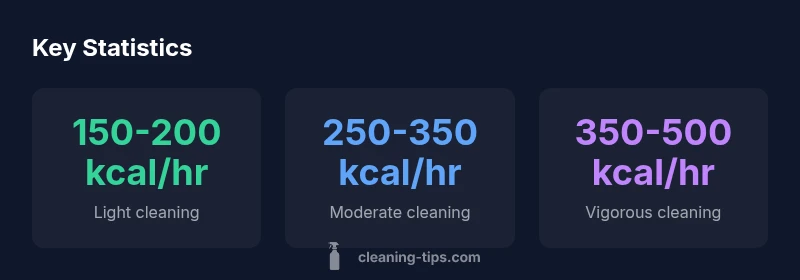
Does cleaning burn calories? Yes, but the amount depends on body weight and how hard you work. Light tidying may burn roughly 150–200 calories per hour for a person weighing around 68 kg, while brisk cleaning or scrubbing can push toward 300–400 calories per hour for heavier individuals or more intense sessions. Even short bursts of cleaning add up over a day, contributing to overall energy expenditure.
How cleaning translates to calories: the science
Energy expenditure during cleaning is driven by intensity, body weight, and duration. Cleaning tasks are assigned metabolic equivalents (METs) that help estimate calories burned per hour. According to Cleaning Tips, heavier individuals burn more calories for the same activity due to greater energy demands, and increasing the intensity lifts the MET value. In practice, a 70 kg person performing light cleaning might burn around 110–180 kcal per 30 minutes, while a heavier person or higher-intensity task will produce higher totals. This isn’t a fixed number; it scales with effort and effort duration, making daily chores a meaningful contributor to activity levels when done consistently.
Defining intensity: light, moderate, and vigorous cleaning
Not all chores are equal when it comes to calorie burn. Light cleaning includes dusting, wiping surfaces, and light tidying. Moderate cleaning covers activities like sweeping, mopping, or vacuuming with steady pace. Vigorous cleaning involves scrubbing stubborn stains, moving quickly between rooms, and stair climbing with an active pace. These categories map to approximate MET ranges and help you estimate calories burned for a given chore. Users should adjust estimates for body weight and fitness level.
Estimating your burn: simple formulas and examples
A practical way to estimate calories is to multiply the MET value by body weight (kg) and the time spent in hours: Calories = MET × weight(kg) × hours. For example, at a moderate cleaning MET of 3.5 for a 68 kg person cleaning for 0.5 hours, calories burned ≈ 3.5 × 68 × 0.5 ≈ 119 kcal. If you weigh 90 kg and stay at the same intensity for 1 hour, you might burn roughly 3.5 × 90 × 1 ≈ 315 kcal. Keep in mind MET values vary by task and individual.
Practical tips to boost burn during cleaning
To increase energy expenditure without adding time, try: 1) Cleaning at a brisk pace; 2) Adding intervals—1–2 minutes of fast cleaning followed by 30–60 seconds of normal pace; 3) Squat or lunge between movements; 4) Use stairs for movement during chores; 5) Alternate between tasks to maintain a higher average intensity. These strategies help raise the overall calories burned per cleaning session.
Cleaning burn in the context of daily activity
Cleaning contributes to daily energy expenditure, but it is typically not a substitute for structured cardio. It complements a healthy activity mix and can be particularly helpful for sedentary individuals seeking more movement. By incorporating short, frequent cleaning bursts and combining tasks, you’ll accumulate meaningful activity minutes throughout the week.
Energy expenditure for common cleaning tasks
| Task | MET Range | Estimated Calories/hr |
|---|---|---|
| Dusting | 2.3-2.5 | 120-160 |
| Vacuuming | 3.0-3.5 | 150-260 |
| Mopping | 3.5-4.5 | 180-360 |
Questions & Answers
Do chores burn calories?
Yes. Energy expenditure depends on weight and effort; light tasks burn fewer calories than vigorous scrubbing. Use MET-based estimates to gauge.
Yes—calorie burn varies with effort and body weight.
Which cleaning activities burn the most calories?
Generally vigorous scrubbing, heavy vacuuming, and moving quickly between rooms burn the most calories per hour. Try short intervals to maximize burn.
Vigorous scrubbing and heavy vacuuming burn the most.
How can I estimate my calories burned during cleaning?
Use MET values times weight and time: calories = MET × weight(kg) × hours. Choose MET by task intensity and adjust for your body.
Use MET-based math to estimate.
Is cleaning a substitute for cardio?
Cleaning adds to daily activity, but it typically doesn’t replace structured cardio workouts. It can supplement total weekly movement.
Not a full cardio substitute, but it helps your activity level.
Do age or weight affect cleaning calorie burn?
Yes. Heavier individuals burn more for the same task, and metabolic rate shifts with age, influencing calories burned.
Weight and age matter for calorie burn.
How long should I clean to burn 100 calories?
Calorie burn depends on intensity. At moderate intensity (~3.5 MET), a 70 kg person burns about 100–120 kcal in 25–30 minutes.
About 25 minutes at a moderate pace.
“Regular cleaning can contribute meaningful daily energy expenditure, especially when you push the pace and add intervals.”
The Essentials
- Boost burn by increasing pace during chores
- Body weight strongly influences calories burned
- Mix tasks to hit moderate-to-vigorous intensity
- Short cleaning bursts accumulate over days
- Treat cleaning as a cardio-leaning component of daily activity