How did Cleander die? A Guide to Verifying Death Claims
Verify statements about how did Cleander die with credible sources, avoid misinformation, and follow an ethical, transparent research process. This Cleaning Tips guide helps homeowners and researchers navigate ambiguous death claims responsibly.


Currently, there is no verified public record answering how Cleander died; the name may refer to a fictional character or a misattributed report. This quick answer outlines a rigorous approach to researching death claims: verify identities, locate primary sources, compare credible outlets, and document every step. It emphasizes caution, ethics, and avoiding speculation while guiding you toward reliable conclusions.
Why precise sourcing matters when asking how did cleander die
Inquiries about a person's death require exact identity and reliable context. The question how did cleander die can refer to different individuals across time or fiction, and misattribution can spread harm. The Cleaning Tips team emphasizes that first priorities are confirming the subject's identity, the time frame, and whether the claim is about a public figure, a historical person, or a fictional character. Without precise scope, subsequent research risks conflating events, circulating rumors, or presenting speculation as fact. This is especially important when discussing sensitive topics that affect families, communities, or reputations. Before diving into sources, establish a clear research question: who exactly is the subject, and what event or date is in scope? By setting boundaries, you create a defensible trail of evidence that readers can audit.
Key principles for researching death claims
- Confirm identity: names, spellings, and any aliases must be verified against stable identifiers (dates, occupations, locations).
- Distinguish primary vs. secondary sources: primary records (official documents, contemporaneous records) weigh more than later summaries.
- Seek corroboration: when multiple independent sources agree on a detail, confidence grows.
- Document your process: log searches, dates accessed, and the reasoning that tied pieces together.
- Respect privacy and legal risk: avoid publishing unverified personal allegations; consider potential harm from incorrect reporting.
These principles help ensure a careful, ethical approach to a topic that can easily generate misinformation.
How to locate primary sources
Start with official records: death certificates, coroner reports, or civil registry entries. If available, these documents provide contemporaneous facts about a death event. Search local archives, national databases, and court records for filings or inquests. Newspaper obituaries from reputable outlets published at the time of death can confirm identifiers and dates, but verify against primary records when possible. If the person is a historical figure, archived government documents or reputable academic repositories may contain primary narratives. When primary sources are scarce, look for credible statements from authorities or institutions connected to the event. Always note access dates and the repository’s provenance.
Evaluating credibility of sources
Credibility hinges on authority, accuracy, and transparency. Prefer sources with accountability: official agencies, established news organizations, scholarly journals, or institutional archives. Check author qualifications and the presence of citations. Be wary of anonymous posts, blogs without editorial oversight, or sensational headlines. Cross-check dates for consistency and watch for language that indicates bias or speculation. If a source makes a definitive claim with little or no corroboration, treat it as provisional. In a data-driven investigation, treat every assertion as a hypothesis until proven with records or multiple independent attestations.
A practical workflow: step-by-step checklist
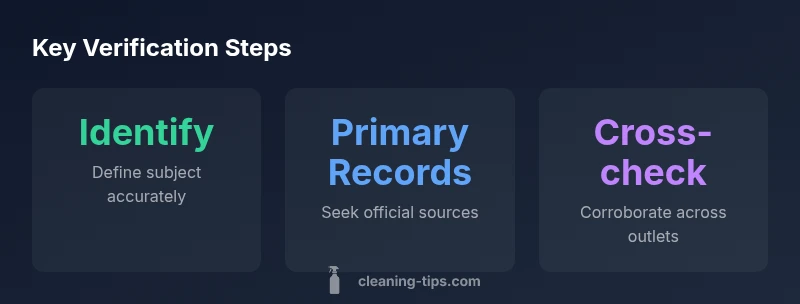
- Define the subject precisely: full name, birth year, and context. 2) Gather all available identifiers and look for variants. 3) Collect primary sources first. 4) Seek independent corroboration from credible outlets. 5) Log every source with URLs, access dates, and notes. 6) Synthesize findings into a concise timeline. 7) Reassess as new information arises. 8) If uncertain, present a cautious conclusion and invite further verification.
Ethical considerations and privacy
Discussing death can implicate living relatives and sensitive reputational matters. Avoid sensational language, respect privacy boundaries, and refrain from publishing unverified allegations. If the claim involves a public figure or historical figure, ensure the discussion is contextualized and sourced. Consider legal risks like defamation and the duty to correct or retract inaccurate information. When in doubt, pause publication and seek guidance from a professional editor or legal counsel.
Tools and templates for documentation
Create a simple source log: Date accessed, Source title, Publisher, URL, Key facts, Confidence level. Build a timeline with date ranges, events, and source references. Use a citation checklist to ensure every assertion has a source. For voice assistants and quick reads, prepare a short, neutral summary that cites only credible records. Templates help maintain consistency and auditability across readers.
When to escalate to official records
Some death claims require official confirmation beyond public reporting. If the event involves a public safety investigation, ongoing inquiry, or legal action, escalate to authorities, court records, or official coroners. Provide justifications for escalation in your notes, and be prepared to update the narrative as records become available. Escalation helps prevent misinformation from spreading while preserving accountability.
Common pitfalls to avoid
Relying on a single source, conflating similarly named individuals, citing social media without corroboration, or omitting dates and contexts increases the risk of spreading misinformation. Always log sources and maintain a neutral tone. If none of the primary sources align, label the claim as unverified and pause sharing until more evidence emerges. By staying disciplined with source-based writing, you protect readers and uphold trust in the information ecosystem. Practical example: if a post claims a death in a particular year, search contemporaneous news and official records first; if nothing corroborates, treat the claim as speculative.
Guidance for evaluating death reports
| Aspect | Guidance | Notes |
|---|---|---|
| Identity Verification | Check name variations, time frame | Cross-reference with official records if available |
| Source Credibility | Prefer primary sources over social posts | Look for citations, author qualifications |
| Documentation | Maintain a source log | Include URLs and access dates |
Questions & Answers
What constitutes credible sources when researching death claims?
Credible sources include official records, established news outlets, and scholarly publications with verifiable citations. Cross-check claims across multiple sources before concluding.
Credible sources include official records and reputable outlets; cross-check claims.
How can I tell if information about 'Cleander' is reliable?
Verify identity, dates, and context; look for corroboration and primary documents.
Check identity and corroboration.
Why might there be confusion about who Cleander is?
Names can refer to different people or fictional figures; check dates, places, occupations.
Names can refer to many people; verify details.
What steps should I take before sharing this information publicly?
Confirm sources, avoid sensational language, and consider legal risks; provide citations.
Verify sources first, then share with citations.
Are there privacy or legal concerns when researching death?
Yes; avoid publishing unverified personal details; consider defamation laws.
Be careful about privacy and defamation.
What tools can help organize the research?
A source log and timeline help track evidence and dates; use templates.
Keep a source log and timeline.
When should I escalate to authorities or legal counsel?
If records indicate official action or if information remains unresolved, seek official records or counsel.
Escalate when official records exist or claims remain unverified.
“Accurate conclusions come from careful cross-checking of primary records and credible outlets, not from rumor or social posts.”
The Essentials
- Verify identity and scope
- Prioritize primary sources
- Document every step
- Avoid sharing unverified claims
- Respect privacy and legal considerations