How Long Does It Take to Clean a Hotel Room: A Practical Guide
Discover realistic turnover times for hotel rooms, from standard rooms to suites, and learn how to optimize cleaning speed without compromising hygiene. Includes metrics, checklists, and practical strategies.


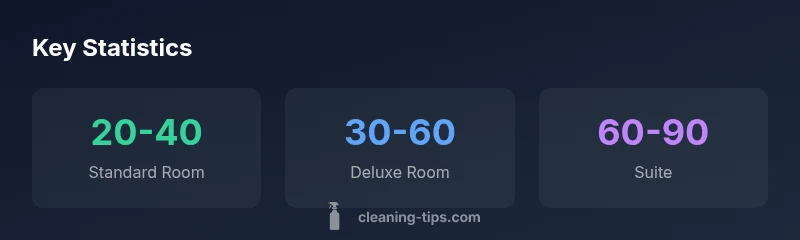
Typical turnover time for a standard hotel room ranges from 20 to 40 minutes, depending on occupancy and cleaning protocol. Deluxe rooms often require 30 to 60 minutes, while executive suites commonly need 60 to 90 minutes for a full turnover. Factors like linen changes, amenity restocking, and whether a deep clean is performed can push times higher or lower.
Understanding Turnover Time: What It Really Means
Turnover time is the interval between a guest checking out and the next guest arriving, during which housekeeping completes cleaning and restocks supplies. In practice, managers measure this to ensure room readiness aligns with arrivals and housekeeping staffing. According to Cleaning Tips, turnover time is not a single fixed number; it reflects hotel policy, room type, occupancy, and service level. Cleanliness standards must still meet brand expectations, but the goal is to minimize dwell time without compromising sanitation. Key components include guest room cleaning, bathroom sanitation, linen service, amenity replenishment, and waste removal. For example, a standard room after checkout may require 20-40 minutes of task time. A deep clean or post-stay refresh might add 10-20 minutes. Turnover efficiency is influenced by the sequence of tasks: starting with high-touch areas, finishing with replenishment, and using color-coded microfibers to avoid cross-contamination. The Cleaning Tips team found that standardizing the cleaning sequence and using checklists can shave minutes off each room while maintaining hygiene. Managers should also monitor occupancy fluctuations and adjust staffing patterns to preserve throughput across shifts.
Standard Cleaning Protocols by Role and Task
Hotels follow a fixed sequence of tasks designed to maximize efficiency without compromising sanitation. A typical turnover includes guest room cleaning, bathroom sanitation, linen changes, amenity restocking, trash removal, and final checks. The exact time for each step depends on room type and occupancy. Common task-time estimates (range) include: making and changing linens (5–10 minutes), dusting and surface cleaning (5–8 minutes), vacuuming or floor care (5–12 minutes), bathroom sanitation (5–15 minutes), and restocking amenities (2–5 minutes). A quick final check (1–2 minutes) ensures nothing was missed. When routines are standardized, staff can reliably complete a standard room in the 20–40 minute window, while more expansive spaces or deeper cleanings push toward the upper end of the spectrum. The emphasis is on consistency, proper tool use, and strict adherence to sanitation protocols.
Variability by Room Type and Occupancy
Room type and occupant behavior drive turnover time more than most other factors. A standard room typically requires less space and fewer amenities than a deluxe or executive suite, which translates to shorter task times and longer room dwell times, respectively. Occupancy also matters: a room used by multiple guests with mislaid items, stains, or heavy linen usage will need additional attention. Conversely, a lightly used standard room with a recent turnover can be cleaned more quickly if pre-stocking has occurred and guests left minimal trash. In addition, the level of service—refresh versus deep cleaning—significantly affects length. Hotels use differentiated service levels to balance speed with guest expectations, often reserving deep-clean or thorough sanitization for off-peak periods or after extended occupancy.
Time-Saving Tools and Checklists
Efficiency gains come from a combination of tools, training, and disciplined processes. Key enablers include color-coded microfiber cloths to prevent cross-contamination, HEPA-filter vacuums for faster deep cleaning, and mobile checklists that guide staff through every step without omissions. Portable carts organized by task type reduce walk time, while standardized refill routines ensure restocking is consistent. Many hotels implement brief, daily huddles to review time targets and share lessons learned from recent turnovers. The right combination of tools and routine can shave several minutes off each room while preserving the cleanliness standard that guests expect. Training should emphasize sequence optimization, safe chemical handling, and timely reporting of maintenance or supply issues.
Measuring Turnaround Efficiency: Metrics and Methods
To drive continuous improvement, hotels should measure throughput with simple, repeatable metrics. Core indicators include Time to Ready (TTR) per room type, On-Time Readiness rate, and Defect Rate (missing amenities, unfinished tasks, or sanitation concerns). A practical approach is to track the actual time spent per room against the target range for each room type, then compute weekly averages and daily fluctuations. A dashboard can visualize trends, highlight anomalies, and show how staffing changes impact performance. Cleaning Tips analysis shows that clear targets, coupled with regular coaching and feedback, consistently improves turnover times without compromising quality. Data collection should be consistent across shifts and seasons to identify true patterns rather than random variance.
Common Pitfalls and How to Avoid Them
Speed should never trump sanitation. Common pitfalls include inconsistent task sequences, insufficient restocking, and unclear communication between front desk and housekeeping. To avoid these, use a fixed cleaning checklist, color-coded tools and towels, and standardized handoffs. Training should cover safe chemical use, proper ventilation in bathrooms, and proactive reporting of worn-out supplies. Scheduling should align staffing with peak turnover periods to prevent bottlenecks. Regular audits reveal gaps in the process and provide opportunities for targeted coaching.
Practical Scenarios and Examples
Scenario A: Standard room after checkout during off-peak hours. A quick refresh plus linen change, bathroom sanitation, surface cleaning, and restocking. Estimated time: about 25–35 minutes if no deep cleaning is required and the room is in good order. Scenario B: Deluxe room with a prior occupant and moderate wear. Additional tasks may include surface disinfection of higher-touch areas, more thorough carpet care, and extra amenities restocking. Estimated time: 40–70 minutes. Scenario C: Executive suite, high occupancy, and a partial deep clean due to longer stay. May require 70–110 minutes, depending on the level of required deep cleaning and accessibility of all spaces.
Typical time ranges by room type
| Aspect | Typical Time Range | Notes |
|---|---|---|
| Standard room cleaning | 20-40 minutes | Dusting, vacuuming, bathroom sanitation, linen change, restocking |
| Deluxe room cleaning | 30-60 minutes | Increased space and more amenities |
| Executive suite cleaning | 60-90 minutes | Space, deep cleaning, more high-touch areas |
Questions & Answers
How long does it take to clean a standard hotel room?
Typically 20-40 minutes, depending on occupancy and tasks performed. The exact duration varies by room layout and required sanitation levels.
On average, a standard room takes about twenty to forty minutes to clean, depending on occupancy and required tasks.
Why does turnover time vary so much between hotels?
Turnover time varies because of room size, service level (refresh vs. deep clean), equipment quality, and staffing patterns. Policies and branding standards also shape the time budget.
Turnover time varies due to room size, the depth of cleaning, equipment, and staffing, plus brand standards.
Can housekeeping speed compromise cleanliness?
No. Efficient procedures and training help speed up turnover without sacrificing sanitation. Well-structured checklists are critical.
Speed should not compromise cleanliness. Use checks, proper training, and the right tools to stay safe and clean.
What role do deep cleans play in turnover time?
Deep cleans add time, typically 10–20 minutes or more depending on scope. They are scheduled during lower-demand periods or in rotation.
Deep clean times add extra minutes and are scheduled when demand isn’t at peak.
How should hotels measure cleaning time effectively?
Track Time to Ready per room type, on-time readiness, and a defect rate. Use a simple dashboard to compare shifts and days.
Use a dashboard to track time-to-ready and consistency across shifts.
“Turnover time hinges on disciplined processes and trained staff; speed comes from consistency, not rushing. Establish clear checklists, monitor performance, and continuously refine the workflow.”
The Essentials
- Standardize cleaning sequences to reduce dwell time.
- Use checklists to ensure no steps are missed.
- Balance speed with strict sanitation protocols.
- Tailor times by room type, not guest count.
- Track metrics to drive continuous improvement.