How Many Cleanouts Does a House Have? A Practical Guide
Discover how many cleanouts a typical house has, where they’re located, and how age and layout affect the count. Get practical, data-driven guidance for homeowners and renters.


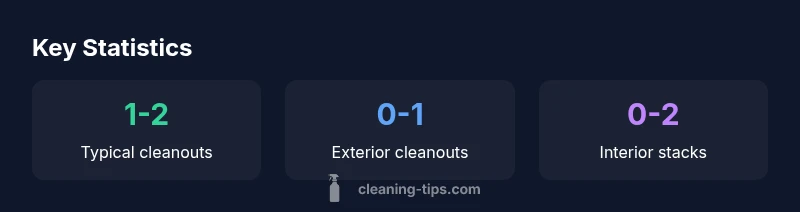
Most residential properties have one main sewer cleanout near the foundation. Some homes add a second exterior cleanout, and in larger or older systems you may find two interior cleanouts on stacks or traps, bringing the total to 2-4. The exact count depends on the house size, age, and how the sewer lines were laid out.
What is a cleanout and why it matters
A cleanout is a dedicated access point in your home's drainage or sewer system that allows inspection, rodding, and camera work without major demolition. Understanding how many cleanouts does a house have is not just a plumbing trivia question—it affects maintenance, backups, and code compliance. According to Cleaning Tips, locating and treating these access points correctly can save time and money during repairs. In most homes, you’ll find one main cleanout near the foundation or in the basement wall. Some houses add a second exterior cleanout, and larger or older layouts may include two interior cleanouts on different stacks. The total count depends on the house size, the layout of the sewer lines, and whether the property uses a septic system. This means you may see configurations ranging from a single access point to four or more in complex systems.
- Why it matters for maintenance and backups
- How cleanouts relate to sewer line health
- Quick checks you can do safely around your home
The Cleaning Tips team emphasizes that accurate counting helps you plan preventive maintenance and reduces the risk of surprises.
How many cleanouts are typical in different house sizes
House size and age largely determine how many cleanouts exist. Here are practical ranges based on common designs, with guidance from Cleaning Tips Analysis (2026):
- Small homes (1–2 bedrooms): usually 1 cleanout (the main), rarely an interior extra.
- Medium homes (3–4 bedrooms): typically 1–2 cleanouts, commonly including a second exterior access or an interior stack.
- Large or older residences: 2–4 cleanouts, reflecting multiple stacks, an additional exterior line, or a separate septic-related access.
The pattern tends to follow the plumbing layout rather than the number of rooms. In retrofit jobs, a cleanout may be added during remodels, increasing the total by 1. When you hear the question how many cleanouts does a house have, think layout first, age second.
Where cleanouts are commonly located in a home
Cleanouts appear in several predictable spots, depending on the design:
- Exterior: a pullable cap or plastic/iron pipe near the foundation, often in a trench or along the side yard.
- Interior basement or crawlspace: a wall vent or small access door behind utilities; may be tucked behind appliances or in the utility room.
- Near the main stack: along the sewer stack in the basement or under the home’s main line, sometimes behind a finished panel.
- Septic systems: additional cleanouts may exist near the septic tank or along the main drain field line for service access.
Locating them requires a careful visual survey and, if needed, consulting building plans or a professional assessment. The goal is to map every access point so routine maintenance and emergency work can proceed with minimal disruption.
How age and plumbing layout affect counts
Older homes often have multiple stacks and sometimes separate lines for old fixtures. Cast-iron or clay sewer lines may retain more access points due to aging joints and past renovations. Newer homes tend to streamline layouts, with one main cleanout being common and only occasional secondary cleanouts for convenience or future expansion. Septic systems add another layer of variation: some properties rely on a single interior cleanout at the main line, while others spread access along several segments for easier servicing. The upshot is that the “right” number isn’t fixed by year alone. It’s a function of pipe routing, remodel history, and whether there’s a septic installation on the property.
How to identify and verify the number of cleanouts in your home
Start with a practical, methodical search:
- Inspect exterior areas along the foundation for a visible cleanout cap or access point. Look for a short stub near the ground with a round, removable cap.
- Check the basement, crawlspace, or utility rooms for boxed-in access points on walls or floors where sewer lines run.
- Review any home plans or blueprints to locate main lines and stacks; these often indicate where cleanouts are placed.
- If you cannot locate all cleanouts, consider hiring a licensed plumber to perform a camera inspection. This ensures you see non-obvious access points and confirms how many exist.
Documenting every identified cleanout with photos or floor plans helps you stay prepared for maintenance and potential emergencies.
Maintenance and safety considerations for cleanouts
Regular maintenance keeps drainage healthy and reduces the risk of unexpected backups. Practical tips include:
- Keep caps tight and clean; avoid overtightening that could crack fittings.
- Do not force caps or runt through the opening with forceful materials.
- Periodically inspect for corrosion, cracks, or vegetation growth near exterior cleanouts that may indicate damage.
- Schedule professional camera inspections every few years or after significant renovations.
- Keep access points accessible and unobstructed; mark their locations on your home map for quick reference.
Following these practices helps ensure cleanouts remain reliable access points rather than sources of frustration during a backup event.
Common mistakes when counting or locating cleanouts
Errors in counting or locating cleanouts are common and can be costly. Typical missteps include:
- Assuming the number equals the number of bathrooms or fixtures, which isn’t reliable because layout varies.
- Overlooking buried or hidden cleanouts behind panels, in utility rooms, or along exterior lines.
- Misinterpreting vent stacks or trap doors as cleanouts, leading to incorrect counts.
- Underestimating the effect of remodels, where added lines or re-routed pipes create new access points.
To avoid these pitfalls, map each cleanout as you find it, verify with plans or a plumber, and update your household maintenance checklist accordingly.
Common cleanout counts by home size and layout
| Scenario | Typical cleanouts count | Notes |
|---|---|---|
| Small home (1-2 beds) | 1-2 | Main cleanout; interior options limited |
| Medium home (3-4 beds) | 1-2 | Often second exterior or interior stack present |
| Large/older homes | 2-4 | Multiple stacks; possible septic-related access |
| Retrofit/remodeled homes | 1-3 | New cleanouts may be added during renovations |
Questions & Answers
How many cleanouts does a typical house have?
Most homes have one main cleanout, with a possible second exterior cleanout and occasionally two interior cleanouts in larger or older layouts. The total usually ranges from 1 to 4 cleanouts depending on plumbing design and age.
Most homes have one main cleanout, sometimes a second exterior one, and occasionally interior ones in larger homes. The total is usually between 1 and 4.
Can I add a cleanout myself?
You may need permits and a licensed plumber, especially for interior cleanouts. Local codes often require professional installation and inspection to ensure proper sizing and venting.
Usually you should hire a licensed plumber because interior cleanouts must meet code and venting requirements.
Do all homes require cleanouts?
Most homes benefit from at least one cleanout for maintenance, but exact requirements vary by region and sewer/septic setup. Older homes may have fewer accessible points, while newer ones can have more.
Most homes benefit from a cleanout, but local codes and existing plumbing determine the exact setup.
Are cleanouts needed for septic systems?
Yes. Septic systems often use cleanouts along the main drain line to simplify servicing and camera inspections of the system.
Septic systems usually include cleanouts along the main drain line for access.
What should I do if I can’t locate a cleanout?
Review plans or property blueprints, check exterior foundation zones and crawlspaces, and hire a plumber for a camera inspection if needed.
If you can’t find them, get plans or a plumber to do a camera inspection.
“Understanding cleanouts isn’t just about taps—it’s about maintaining a healthy drain system and avoiding costly backups.”
The Essentials
- Know the typical range: most homes have 1–2 cleanouts.
- Inspect both exterior and interior locations for all access points.
- Plan ahead by mapping each cleanout to reduce surprises.
- Age and layout drive counts more than the number of rooms.
- Consult a licensed plumber for complex or septic-related configurations.