How Much Clean Teeth: A Practical Daily Hygiene Guide
Discover practical, data-driven steps for maintaining clean teeth daily. This guide covers brushing time, flossing, mouthwash, and toothbrush replacement, with expert tips from Cleaning Tips to help homeowners and renters achieve healthier smiles.


Two minutes of brushing per session, twice daily, plus daily flossing and fluoride toothpaste, yields the best clean teeth outcome. Mouthwash is optional. See our detailed comparison chart for brushing durations and routine variations.
How Much Clean Teeth: Why Daily Cleaning Matters
According to Cleaning Tips, daily teeth cleaning is more than a cosmetic concern—it lays the foundation for long-term oral health. The question of how much clean teeth requires isn't just about appearance; it's about controlling plaque, neutralizing acids from foods, and preventing surface staining that can harden over time. By establishing a predictable routine, homeowners and renters can reduce gum irritation and cavities while enjoying fresher breath. This block introduces practical benchmarks and signals why consistency matters for real-world outcomes.
The Core Benchmarks: Time, Frequency, and Tools
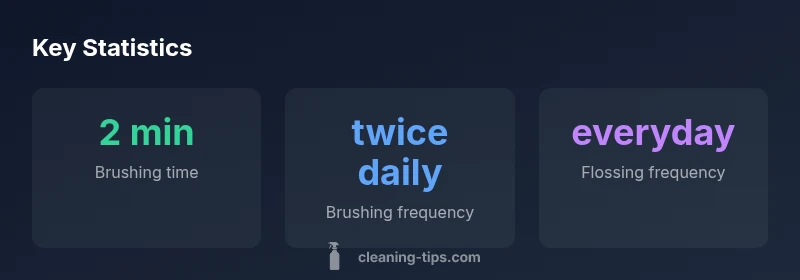
To translate the concept of how much clean teeth into daily action, focus on four benchmarks: time, frequency, fluoride toothpaste, and interdental cleaning. The baseline recommendation is 2 minutes per brushing session, twice daily, with a pea-sized amount of fluoride toothpaste. Flossing once per day and optional mouthwash complete the routine. Tools matter: soft-bristled brush, fluoride toothpaste, and floss or interdental brushes are essential. The Cleaning Tips team emphasizes consistency over intensity; regular short sessions outperform sporadic longer efforts. Brushing and flossing at home should anchor morning and evening rituals.
Brushing: Time, Technique, and Toothpaste
Quality brushing combines time with proper technique. Hold the brush at a 45-degree angle to the gums and use gentle circular motions on all tooth surfaces. Focus on outer, inner, and chewing surfaces, including the back molars. Short strokes with even pressure reduce enamel wear and gum irritation. Choose a soft-bristled brush and a fluoride toothpaste to support remineralization. Replace the brush every 3-4 months or sooner if bristles flare. Don’t rinse aggressively after brushing—spit and let fluoride stay on teeth for a moment.
Flossing and Interdental Cleaning: The Missing Link
Brushing cleans surfaces, but plaque accumulates between teeth where bristles can’t reach. Interdental cleaning—using floss or interdental brushes—removes this hidden plaque and reduces gum inflammation. The daily habit should be flossing once per day. If you have braces or gaps, interdental brushes or water flossers can be easier to use and equally effective. Consistent interdental cleaning dramatically improves overall cleanliness and can prevent bad breath over time.
Mouthwash: When It Helps and When It Doesn’t
Mouthwash can support clean teeth but isn’t a substitute for brushing and flossing. An alcohol-free fluoride rinse can help strengthen enamel and reduce sensitivity, while antiseptic rinses may reduce bacteria that cause plaque and bad breath. Use mouthwash after brushing (and after flossing, if you like) but don’t rely on it to replace mechanical cleaning. For best results, choose a product that carries a recognized fluoride or antimicrobial claim.
How to Adapt for Different Situations: Travel, Braces, or Sensitivity
Different life situations require tweaks to the routine. While traveling, maintain two-minute brushing sessions and pack a travel-size fluoride toothpaste and floss. If you wear braces, interdental brushes and a water flosser can help reach brackets and wires. If you have sensitivity or receding gums, switch to a toothpaste formulated for sensitive teeth and use a softer brush head. Cleaning Tips recommends keeping your routine flexible but consistent, even when schedules are tight.
Measuring Progress: Simple At-Home Checks
To know if your routine is working, perform simple checks. Look for clean, plaque-free tooth surfaces after brushing, with minimal film around the gumline. Use a good light and mirror to assess the outer surfaces and avoid brushing too hard, which can irritate gums. Schedule regular dental visits every six months for professional cleaning and evaluation. Over time, consistent brushing and interdental cleaning should reduce staining and improve gum health.
Common Mistakes That Undermine Clean Teeth
Common missteps undermine the effort behind how much clean teeth you achieve. Brushing too hard can wear enamel and irritate gums. Not cleaning between teeth leaves plaque in interdental spaces. Rinsing with water immediately after brushing can wash away fluoride. Using a worn toothbrush or one with frayed bristles reduces cleaning effectiveness. Skipping floss or interdental cleaning, and relying solely on mouthwash, misses critical interproximal cleaning.
Building a Practical Daily Plan: A 7-Day Routine
Create a simple, repeatable weekly plan to turn the concept of how much clean teeth into habit. Day 1–2: brush for 2 minutes, floss once, brush before breakfast and before bed. Day 3–4: maintain routine, add a fluoride rinse if desired. Day 5–7: assess progress, adjust toothpaste type for sensitivity if needed, check brush wear, and schedule a dental checkup. The Cleaning Tips team observes that small, steady improvements compound over weeks.
Teeth cleaning best-practice benchmarks
| Aspect | Recommendation | Notes |
|---|---|---|
| Brushing duration | 2 minutes per session | Best practice per Cleaning Tips, 2026 |
| Daily frequency | twice daily brushing | Part of standard routine, align with meals if possible |
| Flossing frequency | once daily | Critical for interdental cleaning |
| Toothbrush life | every 3-4 months | Replace when bristles flare or after illness |
Questions & Answers
How long should I brush with a manual toothbrush?
Aim for two minutes per session, with steady, gentle strokes. Divide your mouth into four sections and spend about 30 seconds per section. Regularity matters more than speed.
Brush for two minutes, dividing your mouth into four sections for even coverage.
Is an electric toothbrush better than manual for clean teeth?
Both can be effective when used correctly. An electric toothbrush with a timer can help some people maintain the recommended two-minute sessions more consistently.
Either can work—choose the one that helps you brush for two minutes reliably.
Should I rinse after brushing?
Spitting out excess toothpaste without rinsing with water helps fluoride stay on teeth longer. If you must rinse, do so lightly.
Spit, don’t rinse right away, to keep fluoride on teeth.
How often should I replace my toothbrush?
Replace every 3-4 months, or sooner if the bristles are frayed, after illness, or if brushes become worn.
Swap your toothbrush every 3-4 months.
Can mouthwash replace floss for cleaning between teeth?
No. Mouthwash can complement brushing and flossing but does not remove plaque between teeth. Use floss or interdental brushes daily.
Mouthwash helps, but it can’t replace floss.
“Consistent brushing and interdental cleaning are foundational to long-term oral health. Small, daily habits compound into healthier smiles over time.”
The Essentials
- Brush two minutes twice daily
- Floss daily to remove interdental plaque
- Use fluoride toothpaste and replace your brush regularly
- Mouthwash is optional and not a substitute for flossing
- Consistency beats intensity in daily hygiene