How to Clean Shower Glass Doors
A practical, 6-section guide to remove soap scum and hard-water stains from shower glass doors using safe cleaners, simple tools, and a maintenance routine.


By following these steps, you will learn how to clean shower glass doors effectively, removing soap scum, mineral deposits, and water stains. Gather simple supplies, ventilate the bathroom, and work methodically from edges to center. This guide emphasizes safe cleaners, non-abrasive tools, and a prevention routine to keep doors clear between cleanings.
Why clean shower glass doors matter
Keeping shower glass doors clean isn't just about aesthetics; it protects the glass from mineral buildup, soap scum, and etching that can become permanent over time. Soap residues and hard minerals clump in edges and corners, making future cleaning harder. A clear door visually expands a smaller bathroom and signals a well-maintained space. Regular cleaning also reduces the need for harsher chemicals later, which benefits indoor air quality and the longevity of metal frames and hinges. According to Cleaning Tips, a simple, repeatable routine minimizes buildup and keeps surfaces looking new longer. Establishing a weekly ten-minute clean routine can transform how your bathroom feels and functions over time.
Common causes of soap scum and mineral buildup
Soap scum forms when soap residues mix with minerals in water, creating a filmy, sticky layer that clings to glass. Hard water marks from calcium and magnesium leave white or gray deposits that dull clarity and invite further buildup. Over time, the glass can look hazy or speckled, especially around hinges, door tracks, and the bottom edge. Environmental factors like humidity, inadequate ventilation, and infrequent cleaning accelerate these processes. Understanding the culprits helps you choose the right cleaner and technique for each problem area. Regular, targeted cleaning prevents spots from becoming baked-on.
Daily maintenance routine to prevent buildup
Make daily upkeep part of your shower routine to prevent soap scum from taking hold. After each shower, spray a light cleaning solution on the glass and wipe with a microfiber cloth to remove water droplets and mineral residue. Use a squeegee on the pane from top to bottom to push water toward the drain and minimize new deposits. Leave the door slightly ajar or run the exhaust fan to improve air flow, helping surfaces dry faster. Keep a dedicated microfiber cloth and spray bottle near the shower so quick cleanups are easy and consistent. This habit reduces the frequency of heavier cleanings and extends the life of your glass doors.
Deep-clean methods: chemical cleaners, natural options, and when to use them
For a powerful clean, start with a vinegar solution—equal parts white vinegar and distilled water—sprayed generously on the glass and left to sit for 5–10 minutes. Scrub with a non-scratch sponge or microfiber cloth, then rinse with warm water and dry with a lint-free towel. For stubborn spots, sprinkle a baking soda paste (baking soda + water) on the area, let it sit a few minutes, and gently scrub in a circular motion. If you prefer natural options, lemon juice can boost cleaning power due to acidity, but avoid combining acids with bleach. Commercial glass cleaners are effective when used per label directions. Always test a small, inconspicuous area first and avoid abrasive pads that can scratch tempered glass.
Troubleshooting stubborn stains and hard water deposits
Stubborn hard-water deposits require a longer soak. Apply a vinegar spray and cover the area with plastic wrap or a damp cloth for 15–20 minutes, then scrub gently and rinse. For mineral buildup along edges or in door tracks, use a soft toothbrush to reach crevices, followed by thorough rinsing. If stains persist, repeat the soak and scrub pattern, or switch to a commercial glass cleaner formulated for hard water; never mix cleaners with bleach or ammonia. Dry the glass completely afterward to prevent new spots from forming.
Safety considerations and product choices
Ventilate the bathroom well during cleaning to avoid inhaling fumes from stronger cleaners. Wear gloves to protect skin, especially when using acidic solutions or bleach, and keep cleaners away from metal trims that can corrode. Choose non-abrasive tools and avoid metal scrapers that can scratch glass. Store cleaners in a cool, dry place and label them clearly. By selecting appropriate products and following proper technique, you maintain clarity while extending the life of seals and frames around the shower enclosure.
Long-term prevention plan for glass doors
To sustain crystal-clear doors, combine a weekly light cleaning routine with a monthly deep clean. Maintain ventilation, dry after each shower, and use a squeegee as your daily ally. Rotate between simple vinegar-based solutions and gentle, glass-friendly cleaners to minimize buildup without harsh chemicals. Regular inspection of door seals and tracks helps catch issues early, preventing leaks or misalignment that could complicate cleaning. A consistent approach reduces time spent on heavy scrubbing and keeps your bathroom looking fresh for longer.
Tools & Materials
- White vinegar(Household strength (5%). Use full-strength for tough buildup, otherwise dilute 1:1 with water)
- Distilled water(Mix for sprays; avoid minerals)
- Spray bottle(Clean, reusable; 16 oz size recommended)
- Microfiber cloths(Lint-free; at least two for rinse and dry)
- Non-scratch sponge(Use for scrubbing without scratching glass)
- Squeegee(Rubber blade 12-14 inches works well)
- Baking soda (optional)(For gentle abrasive paste on stubborn stains)
- Lemon juice or citric acid (optional)(Enhances cleaning power and scent)
- Gloves(Protect hands from harsh cleaners)
Steps
Estimated time: 20-30 minutes
- 1
Prepare the area and supplies
Clear the shower area and assemble all tools within arm's reach. This minimizes drips and keeps you focused on the task. A ready setup also reduces the chance of leaving cleaners on surfaces for too long.
Tip: Lay an old towel or mat to catch drips and protect the floor. - 2
Ventilate and protect
Open a window or run the exhaust fan to keep fumes away from living spaces. Put on gloves if you’re using stronger cleaners, and keep cleaners away from metal fixtures.
Tip: Ventilation reduces irritation and helps surfaces dry faster. - 3
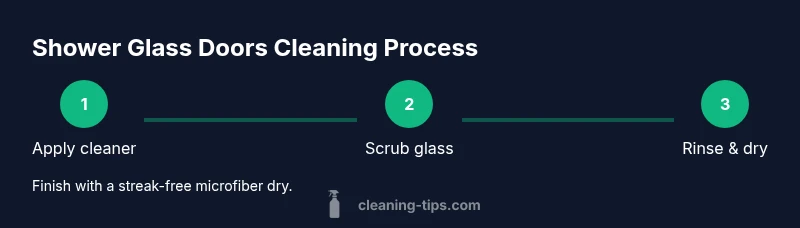
Apply cleaner to glass
Spray a vinegar solution or commercial glass cleaner evenly across the door surfaces. Avoid soaking frame details to prevent residue buildup in tracks.
Tip: Apply in sections from top to bottom to prevent drying streaks. - 4
Scrub gently
Scrub in small circles with a non-scratch sponge or microfiber cloth. Focus on areas with visible soap scum or mineral hints, not just the center.
Tip: Use a toothbrush for tight corners and along seams. - 5
Rinse thoroughly
Rinse with warm water, making sure all cleaner residue is washed away. Residue can attract more buildup if left behind.
Tip: Rinse from top to bottom to push residue down and off the door. - 6
Dry and polish
Dry with a clean microfiber cloth to prevent water spots. A final pass with a squeegee helps keep doors crystal clear between cleanings.
Tip: Always dry in a single downward motion for best streak prevention. - 7
Seal and maintain
Inspect edges and tracks for residue buildup and wipe clean. Establish a maintenance cadence to reduce heavy scrubs in the future.
Tip: Schedule a 10-minute weekly touch-up as a maintenance habit.
Questions & Answers
What is the best cleaner for soap scum on glass doors?
A 1:1 vinegar solution works well for most soap scum. For stubborn spots, use a commercial glass cleaner following label directions, and avoid abrasive tools.
A vinegar solution works for soap scum, with a glass cleaner for tough spots.
Can hard water stains be removed completely?
Most hard water stains respond to routine cleaning and descaling approaches. Persistent spots may require repeated treatments with vinegar or lemon-based solutions.
Most hard water stains can be removed with repeated cleaning using vinegar or lemon-based solutions.
Is lemon juice safe for shower glass?
Lemon juice is a safe, natural cleaner due to its acidity, but it can etch if left too long on certain surfaces. Always rinse well and test first.
Yes, lemon juice can help, but rinse thoroughly and test first.
How often should I clean shower glass doors?
Aim for a light clean weekly and a deeper clean monthly. Adjust based on water type and usage to prevent heavy buildup.
Clean weekly with deeper cleanups monthly, adjust for your water and usage.
Should I use bleach on shower glass doors?
Bleach is generally not recommended for glass doors as it can damage seals and metal frames. Use vinegar or approved glass cleaners instead.
Bleach can damage seals; use vinegar or glass cleaners instead.
Can I use a scraper on glass doors?
A plastic scraper can help with tough spots, but avoid metal scrapers that could scratch tempered glass. Use it gently and test first.
A plastic scraper helps with spots; avoid metal scrapers.
Watch Video
The Essentials
- Establish a weekly routine to prevent buildup
- Use non-abrasive tools and safe cleaners
- Rinse and dry thoroughly to avoid water spots
- Squeegee after every shower to minimize soap scum
- Choose products suitable for your glass and warranty