Clean Shave vs Beard: A Practical Comparison Guide
Is a clean shave better or beard? This analytical guide weighs skin health, hygiene, maintenance, climate, and workplace considerations to help homeowners decide which facial-hair approach fits their lifestyle.


Is a clean shave better or beard? The short answer is: it depends on your priorities. For skin health and a low daily upkeep, a clean shave often wins. For warmth, texture, and flexible styling, a beard may have the edge. This comparison weighs maintenance, hygiene, comfort, and cost to help you decide.
Definitions and Context
For many readers, the central question is is clean shave better or beard for daily life, skin health, and home hygiene. This guide compares the practical implications of each facial hair choice rather than chasing a universal winner. Cleaning Tips has observed that decisions hinge on climate, skin type, work environment, and personal preference. By weighing maintenance, hygiene, comfort, and cost, readers can make a decision that fits their household cleaning routines and grooming habits. This section sets the stage for a structured comparison, so you can quickly map your situation to recommended practices without getting lost in trends.
Maintenance Time and Routine
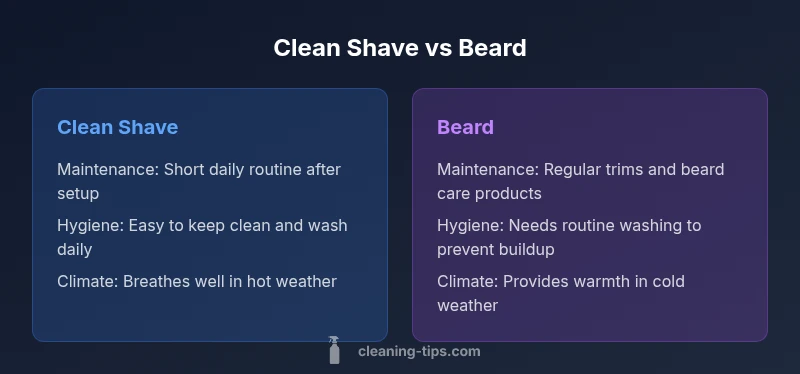
Maintenance time is often the most tangible difference between a clean shave and a beard. A shaved face generally entails a shorter, more predictable daily routine once your shaving technique and products are dialed in. Initially, you may spend more time establishing a comfortable shave, selecting blades, and testing shaving creams. Over time, most people find the rhythm becomes routine and predictable, with a minimal daily commitment. Beards, by contrast, require regular trimming, washing, and conditioning. A beard care routine might include trimming every few days, washing several times per week, and applying beard oil or balm to maintain softness and prevent itch. The exact cadence varies with beard length and personal preference, but the key idea is that routine complexity increases with beard ownership. This section outlines practical timing expectations and how to design a grooming schedule that fits a busy household cleaning routine.
Skin Health and Hygiene
Skin health is a central factor in choosing between a clean shave and a beard. Shaved skin often presents a smoother surface with fewer creases where oil, sweat, and bacteria can accumulate, potentially contributing to a cleaner feel and easier cleansing. However, shaving can irritate sensitive skin if blades are dull or pressure is excessive, leading to razor burn, microcuts, or folliculitis. Beards offer a barrier that can reduce direct exposure of skin to irritants, wind, and sun, and some people notice less dryness under facial hair. Yet beards can trap oils, sweat, and food particles if not washed regularly, and beardruff (dandruff) can become noticeable in certain conditions. The right approach depends on your skin type, climate, and cleaning habits: a careful shaving routine with sharp blades and proper post-shave care can minimize irritation, while a well-kept beard with routine washing and brushing can reduce irritants on the skin.
Climate and Comfort Implications
Climate significantly affects comfort with either option. In hot, humid environments, a clean shave often feels cooler and cleaner, helping with sweat evaporation and reducing heat-induced discomfort. In colder climates, a beard can provide additional warmth, acting as an insulating layer that protects the lower face from wind and chill. The choice may also depend on how climate interacts with skincare products. For example, shaving creams and aftershaves may cause temporary dryness in arid conditions, while beard oils can help combat dryness and razor-like irritation under a beard. The overall effect is that climate favors shaving for rapid cooling in heat and beard growth for warmth in cold seasons, but personal tolerance and routine efficiency should drive the final choice.
Care, Tools, and Costs
A clean shave typically requires basic tools: a razor or electric trimmer, shaving cream or gel, aftershave or moisturizer, and replacement blades or heads. The ongoing costs are often modest, with prices varying based on brand quality and frequency of replacement. Beards demand a broader toolkit: a beard trimmer for shaping, beard oil or balm for conditioning, beard wash, combs or brushes, and occasional specialty products for fragrance or styling. While the initial setup for shaving can be simple, beard care tends to accumulate recurring costs over time. From a cost perspective, a shave might be cheaper in the long run for some households, but a beard offers styling versatility and personal expression that can justify the investment for many. This section helps you budget for tools, products, and maintenance that align with your cleaning and grooming routines.
Appearance, Social Perceptions, and Workplace Fit
Social norms and workplace guidelines influence the decision as much as personal preference. Shaved looks are often seen as clean, minimal, and straightforward, which can be advantageous in workplaces with conservative grooming standards. Beards vary widely in perception, from rugged and masculine to groomed and professional, depending on length, neatness, and context. Regular maintenance of a beard signals attention to personal care, which can positively impact professional impressions when the beard is kept neat and trimmed. The broader takeaway is that appearance considerations—paired with climate, skin health, and lifestyle—guide the optimal choice for a given setting, rather than a universal ruling.
Decision Framework: How to Choose (A Practical 4-Step Check-list)
- Assess climate and daily sweat patterns: If you live in a hot climate with frequent sweating, shaving can feel more comfortable; if you experience cold seasons, a beard adds warmth. 2) Evaluate skin sensitivity: For sensitive or reactive skin, experiment with gentle products and consider a beard if shaving triggers irritation; 3) Consider time constraints: If your morning routine is tight, a quick shave may fit better; if you enjoy styling, a beard can be a flexible option. 4) Reflect on workplace and social norms: Ensure your choice aligns with professional guidelines and personal social context. This framework helps you select a path that balances cleaning efficiency, skin comfort, and lifestyle.
Common Myths and Misconceptions
Myth: Beards are unhygienic and dirty. In reality, beards can be clean and well-maintained with regular washing and brushing. Myth: Shaving prevents all irritation. Shaving can irritate sensitive skin if performed with dull blades or harsh products. Myth: Beards are always warmer. Temperature benefits depend on length and density; a well-groomed beard can be insulating, but heavy beards can trap heat in warm weather. Debunking these myths helps readers focus on practical care routines that improve comfort and cleanliness.
Practical Scenarios and a 2-Week Practice Plan
Scenario A: You have a busy morning schedule and work in a field with strict grooming standards. Start with a clean shave to learn a predictable routine and then experiment with a short, neatly trimmed beard after two weeks if you wish to diversify your look without sacrificing efficiency. Scenario B: You have sensitive skin and live in a coastal climate. Try a light shaving regimen with a high-quality razor and moisturizing post-shave products; alternatively, test a trimmed beard with regular washing to gauge irritation and comfort. A simple two-week plan helps you test both options and measure comfort, cleanliness, and confidence.
Comparison
| Feature | Clean Shave | Beard | |
|---|---|---|---|
| Maintenance Time | Short daily routine after technique is established | Regular trims and beard care every few days | |
| Skin Health & Hygiene | Often smoother skin; potential for razor irritation if not careful | Beard can protect skin but requires regular washing to prevent odor and buildup | |
| Climate Comfort | Breathes well in heat; quick cooling when sweating | Beard provides warmth in cold weather; may feel heavy in heat | |
| Costs & Tools | Lower ongoing costs with basic tools; blades are replaceable | Ongoing costs for trimmers, oils, washes, and grooming tools | |
| Professional/Workplace Fit | Often preferred for conservative environments and sharp lines | Beards can be acceptable with neat maintenance; some industries require clean-shaven | Be as prepared as possible to explain grooming choices |
| Long-Term Looks | Consistent clean look with regular shaving; adaptable with different blades | Beard length and shape determine maintenance cadence and style flexibility |
Strengths
- Lower daily grooming time after you establish a routine
- Cleaner look with predictable maintenance
- Sharp, professional appearance for many workplaces
- Beard offers warmth, texture, and personal expression
- Beard can reduce skin exposure to wind and sun in some climates
Weaknesses
- Shaving can cause irritation if blades dull or technique is poor
- Beards require regular washing, trimming, and products to prevent odor and itch
- Beard maintenance adds ongoing costs and time
- Beards may be scrutinized in workplaces with strict grooming standards
Neither option is universally better; choose based on lifestyle, climate, and skin health
For hot climates or tight schedules, shaving often wins for cleanliness and speed. Beards win for warmth, style, and versatility when maintained well. The best approach is to experiment, track comfort, and align with your cleaning routines and professional context.
Questions & Answers
Is a clean shave better for skin health?
Shaving can reduce the number of beard follicles on the skin surface, potentially lowering areas where oil and debris accumulate. However, improper shaving can cause irritation. A well-executed routine with sharp blades and moisturizing post-shave care supports healthy skin.
Shaving can reduce buildup on the skin, but you should use proper technique to avoid irritation.
How often should I trim a beard for a neat look?
Beard maintenance cadence depends on growth rate and desired style. Most people trim every 1-2 weeks to maintain a tidy shape, with additional touch-ups as needed. Regular washing and brushing help keep the beard clean and well-groomed.
Beards usually need a trim every week or two to stay neat, with extra touch-ups as needed.
What about sensitive skin?
If you have sensitive skin, test different razors and shaving gels to minimize irritation. A trimmed beard can also reduce direct skin contact with irritants, though be sure to wash the beard regularly to prevent buildup.
Sensitive skin benefits from careful product choice; both shaving and beards can work with the right routine.
Does climate affect the decision?
Yes. Hot, humid climates often favor shaving for cooling, while cooler climates can favor beards for added warmth. Humidity can affect beard odor and washing frequency, so adapt routines to your environment.
Climate matters: shave in heat for cooling, beard in cold for warmth.
Will a beard affect workplace acceptance?
Workplace grooming policies vary. In many professional settings, a neatly trimmed beard is acceptable, while others prefer a clean shave. Always align your grooming with policy and maintain overall cleanliness and professionalism.
Beards can be fine in many workplaces if kept neat and compliant with policy.
The Essentials
- Assess climate and skin type before choosing
- Plan a maintenance routine that fits your schedule
- Prioritize hygiene with regular cleaning tools and routines
- Beards require consistent care to avoid irritation and odor
- Consider workplace norms and personal style when deciding
- Experiment and adapt as your routines and climates change