Shower vs Bath: Is There a Cleaner Option?
Compare showers and baths for cleanliness, skin health, and resource use. This analytical guide weighs hygiene outcomes, practicality, and safety, with practical tips for households.


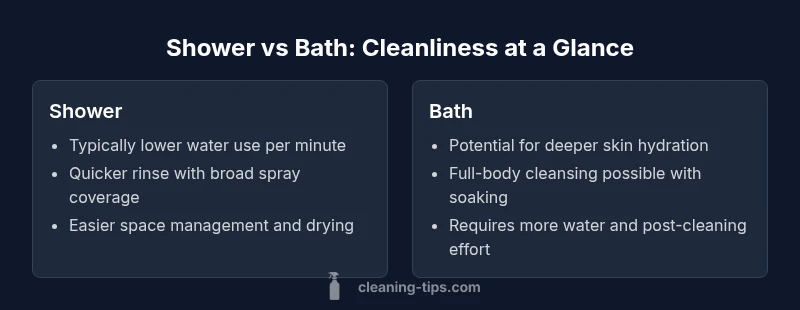
Is it cleaner to shower or bath? The short answer depends on technique, duration, and maintenance. A quick shower typically uses less water and rinses away sweat and oil efficiently when you scrub all areas, whereas a bath can provide thorough cleansing and skin hydration when the water temperature and time are controlled. Neither method guarantees superior cleanliness without proper technique and regular bathroom upkeep. Cleaning Tips emphasizes that the outcome hinges on execution, not the label of the method.
What cleanliness means in the shower vs bath
When people ask is it cleaner to shower or bath, the answer hinges on how we define cleanliness in everyday life. Cleanliness isn't just about removing visible dirt; it's about removing skin oils, bacteria, and residues from soap and detergents, and doing so without leaving your bathroom damp and mold-prone. According to Cleaning Tips, cleanliness in a routine is a function of technique, duration, and space maintenance, not a single act. A properly performed shower can rinse away sweat and oils quickly while minimizing residue on fixtures, provided the water is warm enough and the shower head covers all areas. A bath, on the other hand, can soften skin and dissolve certain deposits more completely when you soak, scrub, and rinse in sequence. The key is to ensure that both options are followed by thorough drying of the skin and surfaces, and that the bathroom is cleaned regularly to prevent buildup. This section sets the stage for a fair, evidence-informed comparison by focusing on the mechanics of cleansing rather than slogans about faster or longer routines.
How cleansing actually happens in each routine
Cleansing is a combination of water flow, soap contact, and mechanical action. In a shower, the spray coverage, temperature, and rhythm of scrubbing determine how effectively oils and dirt are removed from the skin. In a bath, soaking helps to loosen deposits, but you still need to scrub and rinse to remove residues. The Cleaning Tips team notes that the sequence matters: wet, lather, scrub, rinse, and dry. A bath can enhance cleansing when you move from soaking to targeted washing, but it requires more attention to avoid leaving soap film on tub surfaces. Both methods benefit from pre-wetting, thorough rinsing, and post-rinse drying to minimize residue and microbial growth.
Water usage and time considerations for cleanliness
Water usage and time are practical drivers of whether a shower or bath feels cleaner in daily life. Showers typically offer quicker cleansing and can be more water-efficient if kept concise and well-directed. Baths often involve filling a tub and soaking, which can feel thorough but may use more water overall. The key to cleanliness is not the duration alone but the coverage: ensuring every body area is scrubbed and all soap is rinsed away, followed by a dry towel and bathroom drying routine to prevent dampness that can foster mold. In this context, is it cleaner to shower or bath depends on how you structure the routine and how you maintain the bathroom environment. Cleaning Tips analysis shows that consistency and technique trump duration when it comes to hygiene outcomes.
Skin health and moisture balance in showers versus baths
Skin health can influence perceptions of cleanliness. Showers, especially with mineral-rich or hard tap water, can dry the skin if the water is hot or the rinse is long. Baths can promote hydration by keeping skin immersed and moist, but long soaks in very warm water may stripping natural oils if not followed by proper moisturization. The healthiest approach often combines temperate water, mindful duration, and aftercare such as applying a gentle moisturizer. The goal is clean skin without excessive drying or irritation, regardless of the chosen method.
Bacteria, mold, and surface hygiene in the shower vs tub
Bacteria and mildew thrive in damp spaces, so post-use hygiene matters as much as the cleansing itself. A shower stall or curtain can harbor soap scum and mold if not cleaned regularly, while a tub and its surround require routine scrubbing to prevent buildup. Regular cleaning reduces the risk of microbial growth and keeps surfaces sanitary. If you prefer shorter, drier periods between uses, a shower might contribute to lower mold risk in many homes, though both setups demand consistent cleaning schedules to support true cleanliness.
Practical scenarios: families, mobility, and space constraints
For active households with kids, a quick shower during busy mornings often wins on cleanliness and efficiency, while baths can provide soothing routines after sports or on weekends. For mobility-impaired individuals, showers with accessible features or walk-in tubs can offer safer, cleaner routines when properly planned. Small bathrooms benefit from shower-first designs that minimize damp surfaces, but if a bath is valued for relaxation, implementing a rigorous cleaning schedule can keep it just as hygienic. Your context—family needs, space, and preferences—shapes which route yields better hygiene results.
How to optimize cleanliness in both routines: best practices
Regardless of method, follow a consistent, technique-forward plan: pre-wet, apply soap to all body surfaces, scrub systematically, rinse completely, dry promptly, and ventilate the bathroom to minimize moisture. Use warm (not hot) water to protect skin, and avoid excessive durations that dehydrate or irritate. Clean the showerhead, doors, tiles, and tub after use to prevent soap scum and mildew. If you’re balancing efficiency with hygiene, changing a few habits—shorter showers with broader spray coverage, or a shorter, hotter bath with thorough rinsing—can improve outcomes without sacrificing comfort.
Safety, accessibility, and space considerations for cleanliness
Safety and accessibility influence how clean you can stay. Grab bars, non-slip mats, and shower seats support safer routines and reduce the risk of accidents, which in turn supports consistent hygiene practices. For homes with limited space, a well-planned shower setup can reduce damp corners and mold risk, contributing to a cleaner overall bathroom environment. In any case, routine maintenance—the regular cleaning of fixtures and surfaces—remains essential to realizing true cleanliness over time.
Comparison
| Feature | Shower | Bath |
|---|---|---|
| Water usage pattern | Typically lower per minute with shorter durations | Typically higher due to tub fill and soak |
| Time to complete routine | Generally shorter | Often longer due to soaking and tub prep |
| Surface hygiene effort | Less tub/shower-surround surface to clean after use | More surfaces (tub, surround) require cleaning after use |
| Skin health impact | Can dry skin if hot/long; mitigated by cooler temps | Can hydrate skin if temp is balanced and not overlong |
| Accessibility and safety | Generally easier to access; safer with grab bars | Stepping over tub edge increases fall risk without assistance |
| Environmental cost | Lower water use when kept short | Higher water and energy use if soaking is long |
| Best for | Active rinsing, quick cleanse, busy schedules | Relaxation, thorough cleansing, skin care routines |
Strengths
- Shower routines tend to be quicker and use less water when kept short
- Showers offer easy accessibility and safer entry for many households
- Baths provide relaxation and can hydrate the skin when water temperature is controlled
- Baths allow complete immersion that some users find more thorough for certain cleansing needs
- Both routines can be hygienic with consistent technique and post-use cleaning
Weaknesses
- Baths typically use more water and energy due to tub filling and soaking
- Long or hot baths can dry the skin or irritate conditions if not balanced
- Bathrooms require diligent cleaning after use to prevent mold and mildew regardless of method
- Showers can feel less spa-like and may not deliver the same skin hydration as a warm bath if not managed properly
Shower-based routines are generally cleaner and more efficient when done with good technique.
A well-executed shower often delivers the cleanliness you need with less water use. Baths can be equally clean when temperature, duration, and scrubbing are managed carefully, but they require more space and post-use cleaning to prevent mold and residue.
Questions & Answers
Is it always cleaner to shower or bath?
No. Cleanliness depends on how you wash, scrub, rinse, and dry, not solely on whether you shower or bathe. Proper technique, water temperature, and post-use cleaning determine hygiene outcomes.
No—cleanliness comes from technique and maintenance, not the method alone.
Can baths be as hygienic as showers?
Yes, baths can be hygienic if you scrub all body areas, rinse thoroughly, and clean the tub and surrounds after use. Temperature control helps prevent skin irritation.
Baths can be hygienic if you scrub, rinse, and clean the tub after soaking.
What factors influence cleanliness in bathing?
Key factors include water temperature, duration, lather quality, scrubbing technique, and post-use drying. Regular bathroom cleaning also minimizes residual grime.
Temperature, time, and how well you scrub matter most.
How can I maximize cleanliness regardless of method?
Apply consistent steps: pre-wet, lather all areas, scrub methodically, rinse completely, and dry skin and surfaces promptly. Keep the bathroom ventilated to reduce mold growth.
Scrub, rinse, dry, and ventilate for best results.
Are there safety concerns tied to bathing frequency?
Frequent hot baths can dry skin or irritate conditions for some people. Balance temperature and duration, and follow with moisturizer. Use safety accessories in the bathroom to prevent slips.
Watch water temperature and add safety gear to reduce slips.
Should I shower after using a hot tub?
Showering after a hot tub can help remove chlorine, minerals, and residue, reducing skin irritation and keeping surfaces cleaner.
Shower after a hot tub to rinse away chemicals and residue.
The Essentials
- Define cleanliness byOil and dirt removal, not time spent
- Shower routines are typically more water-efficient for busy households
- Bathing can hydrate and relax skin when temperatures are controlled
- Post-use bathroom cleaning is essential for both methods
- Adapt routines to health needs, space, and personal preferences