What can a cleaner do in 4 hours? A practical guide
Discover what a cleaner can accomplish in four hours with a focused plan, tools, and room-by-room strategy. This Cleaning Tips guide helps homeowners and renters maximize a 4-hour cleaning session.


With a clear plan, a cleaner can cover high-traffic zones, restore order, and finish in about four hours. This quick answer outlines a practical framework, essential tools, and a room-by-room approach to maximize impact in a single 4-hour session. Follow the step-by-step guide below to stay organized and safe.
What a 4-Hour Cleaning Session Can Do
If you’re wondering what can a cleaner do in 4 hours, the answer comes down to planning, focus, and efficient routines. A well-scoped session can refresh high-traffic areas, restore order, and leave visible spaces feeling markedly cleaner. According to Cleaning Tips, a 4-hour window works best when you start with a concise checklist and a timer. This guide explains how to structure that window for reliability, safety, and real results. The goal isn't perfection, but a noticeable uplift in cleanliness and comfort for the next several days. Keep in mind that every home has unique design and traffic patterns; adapt the zones and time allocation accordingly while staying within the four-hour frame. By following a deliberate plan, what can a cleaner do in 4 hours becomes a repeatable process you can apply in most homes. In many homes, a well-executed four-hour session can dramatically reduce clutter, improve air quality, and boost daily productivity, all without overwhelming the cleaner or the space.
Planning for Maximum Impact in Four Hours
Effective four-hour cleaning starts with planning. Before you touch a cloth, map out zones by room and prioritize high-visibility areas like the kitchen counters, living room surfaces, and bathroom sinks. Break the job into four focus phases that align with a 60-minute sprint rhythm: quick declutter, wipe and sanitize, surface cleaning, and floor care. Cleaning Tips analysis shows that structured short-clean sessions outperform ad hoc scrubbing because time is allocated to high-value tasks and to prevent backtracking. A well-planned session reduces backtracking, minimizes repeats, and ensures you hit the most important tasks within the 4-hour window. Additionally, gather all tools and supplies beforehand and designate a waste bag for items to discard or relocate. The plan should be flexible, but having a clear skeleton makes it far more likely you’ll finish with a tidy, refreshed home rather than a half-done schedule. Consider a lightweight checklist you can mark off room by room to stay motivated. This approach aligns with practical guidance from Cleaning Tips analysis shows that preparation reduces wasted minutes and improves outcomes in real-world homes.
Room-by-Room Strategy: Quick Wins
In a 4-hour cleaning window, you’ll focus on high-impact zones first, then finish with subtle polish. Start with the kitchen: wipe countertops, clean the sink, and give the exterior of appliances a quick shining. Move to the bathroom: wipe mirrors, sanitize the sink, and do a fast scrub on the toilet exterior. In living spaces, tackle clutter, dust flat surfaces, and vacuum or sweep floors. For floors, alternate between vacuuming carpets and mopping hard surfaces. The key is to choose two won’t-take-long tasks from each room that yield visible results; that approach keeps momentum high and prevents fatigue. As you work, document what’s left on your clipboard so you can assign quick touch-ups in the next session. Throughout the process, maintain a steady pace, use the right cleaners for the surface, and avoid cross-contamination by designating cleaning tools for each area. This focused approach makes clear, achievable progress in every room and helps you stay on target for the four-hour limit. The strategy is designed to deliver noticeable improvements even when time is tight, and it aligns with practical routines shared by Cleaning Tips.
Common Pitfalls and How to Avoid Them
Even with a solid plan, mistakes can sap time and reduce results. Don’t start with heavy damp cleaning when the floors are visibly dirty; you’ll end up leaving more water and streaks. Avoid mixing cleaners; read labels and follow ventilation guidelines. Do not skip safety gear—gloves and eye protection are worth the extra minutes saved later. Don’t neglect laundry or pet areas; these can spill into the main cleaning if ignored. Finally, resist the urge to chase perfection; four hours is enough to deliver a heftier maintenance clean that improves mood and hygiene. The Cleaning Tips team recommends performing a short post-clean audit, noting any areas you’d like to revisit next time, and updating the plan accordingly. Remember that a clean home is a healthier home, and intent matters as much as effort.
Tools & Materials
- All-purpose cleaner(Choose a versatile, surface-safe formula)
- Microfiber cloths (2–3 packs)(Lint-free; color-coded if possible)
- Bucket(For mopping prep and pre-wetting cloths)
- Mop or flat-floor broom(Choose depending on floor type)
- Vacuum cleaner(With brush attachment for upholstery)
- Broom and dustpan(Pre-clean debris from hard floors)
- Trash bags(One bag per waste stream)
- Sponge and scrub brushes(For stubborn grime)
- Glass cleaner(Apply to mirrors and glass surfaces)
- Disinfectant wipes(Use on high-touch areas)
- Nitrile gloves(Protect hands during cleaning)
- Duster(Optional for ceiling fans and shelves)
Steps
Estimated time: 4 hours
- 1
Survey space and plan zones
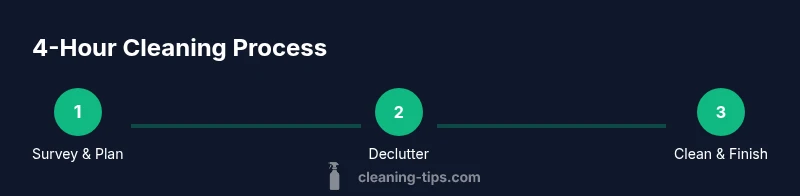
Begin by surveying all rooms included in the 4-hour window. Identify clutter hotspots, traffic patterns, and surfaces that benefit most from cleaning. Set a zone order to avoid backtracking; plan roughly 10 minutes per zone.
Tip: Set a timer for each zone to stay on track. - 2
Declutter surfaces
Clear surfaces of items that don't belong or obstruct cleaning. Relocate items to a staging area or a nearby room to keep work flow smooth.
Tip: Use a household basket to move items quickly without making multiple trips. - 3
Tackle high-traffic zones
Focus on the kitchen and bathrooms first where grime and fingerprints show most. Wipe reachable surfaces, clean the sink, and address exterior of appliances or fixtures.
Tip: Work top-to-bottom to avoid re-dirtying lower surfaces. - 4
Wipe kitchen surfaces
Disinfect countertops, wipe spills, and clean exterior of appliances. Pay attention to the microwave exterior and stovetop edges for a quick visual lift.
Tip: Use separate cloths for steel, plastic, and glass surfaces to prevent cross-scratching. - 5
Quick-clean bathrooms
Clean mirrors, wipe sink basins, and do a fast exterior scrub of the toilet. Rinse and dry surfaces for a streak-free finish.
Tip: Ventilate the room to minimize moisture and speed drying. - 6
Vacuum and mop floors
Quickly vacuum carpets and sweep or mop hard floors. Focus on edges and under furniture where dust accumulates.
Tip: Finish with a quick check for missed spots and re-clean any obviously dirty areas.
Questions & Answers
How long does a typical 4-hour cleaning take?
A well-structured 4-hour clean aims to cover high-impact areas first and uses planned time blocks. Actual duration varies with home size and clutter level, but following a zone-based plan helps stay on track.
A well-structured four-hour clean follows a zone-based plan. Duration varies with space, but planning helps you stay on track.
What tasks should be included in a 4-hour clean?
Include decluttering, wiping high-touch surfaces, kitchen and bathroom quick cleans, dusting, and floor care. Focus on tasks that yield visible results first.
Declutter, wipe surfaces, clean kitchens and bathrooms, dust, and clean floors, focusing on visible results first.
What should you prep before starting a 4-hour clean?
Gather supplies, set a zone order, and place a trash bag in reach. Check that cleaners are compatible with surfaces and ventilate the space during cleaning.
Gather supplies, set zones, and ensure cleaners suit surfaces; ventilate the space while cleaning.
Can the plan accommodate deep cleaning?
A 4-hour plan works best for maintenance and quick upgrades. Deep cleaning may require extra sessions or longer blocks, but you can fit high-impact deep-clean tasks into the first pass.
A four-hour plan is great for maintenance and quick upgrades; deep clean tasks may need extra time.
Is a four-hour clean suitable for renters or turnover?
Yes, especially when the goal is a presentable, ready-to-show clean. Prioritize surfaces germ-intense areas, and document issues for the next tenant or landlord review.
Yes, great for making spaces presentable quickly and noting any issues for turnover.
What mistakes waste the most time?
Starting without a plan, backtracking, and over-cleaning low-priority areas waste time. Avoid mixing products and skip unnecessary tasks that don’t offer immediate visual payoff.
No plan, constant backtracking, and over-cleaning low-priority areas waste time.
Watch Video
The Essentials
- Plan the session around 60-minute blocks.
- Prioritize high-visibility zones for quick wins.
- Use a room-by-room checklist to stay on track.
- Safety gear and ventilation protect well-being.
- Revisit leftovers in a follow-up session if needed.