Which Wash for Towels: The Best Washing Guide for 2026
Learn how to wash towels for optimal softness, absorbency, and hygiene. This guide covers temperature, detergents, drying, and long-term care with practical steps from Cleaning Tips.


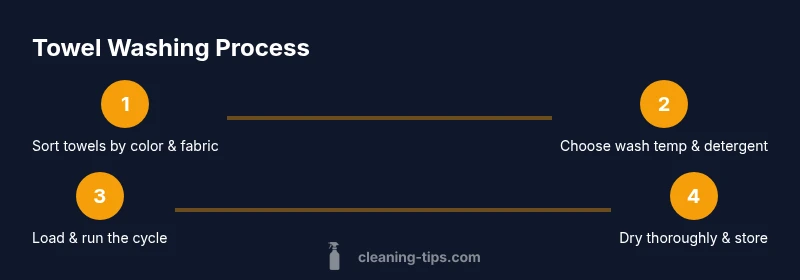
Quick answer: You will learn how to wash towels for best absorbency and longevity. Start by sorting towels by color and fabric, then choose wash temperature: hot for whites, warm for colors, with a sturdy detergent. Avoid fabric softeners, overdosing detergent, and dry towels fully to prevent mildew over time.
Why proper towel washing matters
According to Cleaning Tips, towels are an everyday essential, absorbing oils, skin cells, and residue from other laundry. If towels aren’t washed correctly, they can lose softness, become stiffer, and retain odors. Proper washing also improves hygiene, limiting the growth of mildew and bacteria in damp environments. By understanding basic towel science—how fibers release soils and how rinse cycles remove detergents—you can tailor each wash to keep towels fresh longer. In 2026, Cleaning Tips analysis highlights that routine, correct washing preserves absorbency and color better than ad-hoc methods, especially for cotton bath towels and microfiber options. Treat towel washing as a regular care task, not a once-in-a-while chore, so your towels stay plush and effective.
Tips: always read your towel labels for fabric care guidance and avoid assuming all towels behave the same.
Sorting towels by color, fabric, and use
Towels come in several fibers, from cotton and Egyptian cotton bath linens to quick-dry microfiber and plush terry. Different fibers handle heat, detergents, and agitation differently. Start by separating whites, light colors, and dark colors to prevent color transfer. Then, divide based on fabric: cotton towels tolerate hotter washes and heavier agitation, microfiber towels are more delicate, and bath sheets with decorative borders may have varied care. If a towel is used for infants, skin sensitivities, or gym workouts, wash separately to minimize odor transfer and contamination risk.
Practical approach:
- Whites in one load, colors in another, and separate any towels with trims or delicate fibers.
- Treat stained towels with a pre-wash stain remover before the main wash.
- Use mesh laundry bags for tiny microfiber towels to protect them during agitation.
Detergents, temperatures, and additives
Detergent choice matters as much as temperature. A sturdy, high-quality detergent designed for your washer type (HE or standard) helps lift soils without leaving residues that dull fibers. For whites, hot water (if the fabric label allows) helps sanitize and brighten. For colors, warm water reduces dye bleed while preserving color. Avoid fabric softeners on most towels; they can coat fibers and reduce absorbency, making towels feel slick and less thirsty. If odors persist, a cup of white vinegar added during the rinse cycle can act as a natural deodorizer without harming fibers. Bleach should be used with caution on white towels that tolerate it.
Key tips:
- Measure detergent according to load size; overdosing creates residue and stiffness.
- Use color-safe bleach only on approved fabrics.
- Reserve baking soda or vinegar for odor management, not routine overuse.
Load size and cycle selection
To maximize cleaning, don’t overload the washer. Overstuffed loads prevent towels from moving freely, resulting in uneven cleaning and trapped detergent. Choose a cycle appropriate for towels: a normal or cotton cycle with an extended rinse helps remove detergent residues. For heavily soiled towels or gym towels with sweat, consider a longer wash with extra rinses or a pre-soak if your machine supports it. When using front-load washers, ensure seals and gaskets stay dry between uses to prevent mildew buildup.
Operational notes:
- Leave a small gap between towels to allow water and detergent to circulate.
- If your machine has an eco-mode, pair it with a warm wash to balance energy use and cleaning performance.
- Add an extra rinse if you notice detergent residue after washing.
Drying strategies that preserve softness
Drying is as important as washing. High heat can shrink towels and degrade fibers, while too little heat leaves towels damp and prone to mildew. For most cotton towels, tumble-dry on medium heat until slightly damp, then finish air-drying if possible. Line drying in direct sunlight can help whiten whites naturally, but too much sun can fade colors over time. If you prefer softer towels, avoid dryer sheets that can coat fibers; instead, use a clean dry towel to modestly fluff during the final few minutes of drying. Microfiber towels should be air-dried or tumble-dried on low to avoid heat damage.
Pro tips:
- Use a moisture sensor setting if available.
- Shake towels before loading to maximize loft and absorption after drying.
Treating stains and mildew effectively
Stains on towels respond best to prompt treatment. For protein-based stains (sweat, blood), pretreat with cold water and a stain remover; avoid hot water on these stains before washing, as heat can set them. For stubborn greasy or makeup stains, a small dab of dish soap on the spot before washing can help lift oils. Mildew odors require thorough drying and may benefit from a vinegar rinse or baking soda wash. If mildew recurs, run an empty hot cycle with a splash of white vinegar to refresh the drum and fibers, then rewash with towels.
When to seek professional care:
- If stains don’t budge after pretreatment, or towels smell strongly of mildew after washing, consider replacing affected towels to prevent skin irritation or poor hygiene.
Long-term towel care and rotation for best results
A well-planned towel rotation avoids frequent, unnecessary washing and keeps towels fresh longer. Have enough towels to avoid constant wear on a single set; rotate sheets and towels seasonally to minimize buildup of musty odors. Regularly check washers and dryer lint filters; lint buildup can transfer odors and hamper drying efficiency. If you notice a persistent odor even after washing, clean the washing machine drum and gasket monthly and consider using a second rinse to remove trapped residues. Your routine should prioritize whiteness maintenance for Whites and color retention for colored towels, while preserving softness and absorbency over time.
Best practices:
- Keep towels dry between uses and store in a breathable basket or open cabinet.
- Wash gym towels separately from bath towels to reduce odor transfer.
- Consider a quarterly deep clean of washing machines and a mild stripping wash to remove built-up residues.
Common mistakes and quick fixes
Even seasoned laundry routines slip into habits that reduce towel performance. Common mistakes include mixing towels with heavily soiled items, washing at incompatible temperatures, and relying on fabric softeners. Quick fixes: always separate towels from other fabrics, use the correct temperature, and skip dryer sheets. If towels feel stiff after washing, add an extra rinse cycle or re-wash with a small amount of vinegar to reset the fibers. For persistent odors, run an empty hot wash with vinegar, then re-wash towels with detergent only.
Tools & Materials
- Washing machine(HE or standard; ensure capacity allows towels to move freely)
- Detergent (sturdy, suitable for towels)(Liquid or powder; measure according to load size)
- Oxygen bleach (optional for whites)(Only on towels that tolerate it; avoid on colored fabrics)
- Color-safe bleach (optional)(Follow label directions)
- Stain remover(Test on a small area first)
- White vinegar(Odor neutralizer and deodorizer; use in rinse cycle occasionally)
- Baking soda(Natural deodorizer; avoid with vinegar in the same cycle)
- Mesh laundry bags(Protect delicate towels or microfiber pieces)
Steps
Estimated time: 60-90 minutes
- 1
Sort towels by color and fabric
Separate whites, light colors, and dark towels. Divide by fabric type (cotton, microfiber, terry) to avoid damage from different wash temps and agitation.
Tip: Keep color-bleeding towels away from whites; use cold water for bold colors if unsure. - 2
Inspect and pretreat stains
Check for visible stains and pretreat with a dedicated stain remover or a little detergent before washing. For protein stains, rinse with cold water to prevent setting.
Tip: Treat stains while towels are dry for easier spot removal. - 3
Choose wash temperature and detergent
Use hot water for whites and warm water for colors, with a sturdy detergent. Avoid fabric softeners that can coat fibers and reduce absorbency.
Tip: Adjust detergent quantity to load size; overuse leaves residue. - 4
Load the washer properly
Place towels in loosely, ensuring they have space to move. Overloading reduces cleaning efficiency and rinsing effectiveness.
Tip: If your machine has a ‘towels’ or ‘heavy duty’ cycle, use it for better performance. - 5
Run the wash cycle with an extra rinse if needed
An extra rinse helps remove detergent residues that can dull fibers and reduce softness. For odor issues, add a vinegar rinse.
Tip: Avoid mixing with heavily soiled items in the same load. - 6
Dry towels thoroughly
Dry on medium heat until slightly damp, then finish air-drying to preserve softness. Line-drying improves color retention for some towels.
Tip: Fluff towels mid-cycle to restore loft and absorbency. - 7
Post-wash care and storage
Store towels in a dry, well-ventilated space. Rotate towels to prevent uneven wear and odors. Clean the washer monthly to prevent residue buildup.
Tip: Avoid stacking when warm to prevent mildew formation.
Questions & Answers
Can I wash towels with regular clothes in the same load?
It's best to wash towels separately or with other towels of similar color and weight to ensure effective cleaning and prevent lint transfer.
Wash towels with towels or similarly weighted fabrics to ensure proper cleaning and avoid lint transfer.
Is it safe to use bleach on colored towels?
Only use color-safe bleach and follow label directions. Regular chlorine bleach can fade colors and weaken fibers over time.
Color-safe bleach is okay if the label allows it; avoid chlorine bleach on colored towels.
How often should towels be washed?
Towels should be washed after 3-4 uses in typical home use, and more often for gym or spa towels that collect sweat and oils.
Wash towels after a few uses, especially gym towels, to prevent odor and bacteria buildup.
Do microfiber towels require special care?
Microfiber towels should be washed separately from cotton towels and air-dried or dried on low heat to prevent fiber damage.
Wash microfiber separately and dry on low or air-dry to protect the fibers.
Is hot water always best for towels?
Hot water helps sanitize whites, but not all towels tolerate high heat. Check labels and balance sanitation with fiber care.
Hot water helps with sanitizing, but always follow fabric care labels.
What can I do if towels still smell after washing?
Rewash with an extra rinse, consider a vinegar rinse, and ensure towels are fully dried after washing to prevent mildew odors.
Try an extra rinse and a vinegar wash, then dry thoroughly to remove odors.
Watch Video
The Essentials
- Sort towels by color and fabric before washing
- Use appropriate water temperature and detergent
- Avoid fabric softeners to preserve absorbency
- Dry thoroughly to prevent mildew
- Rotate towels and perform regular maintenance for longevity