Who Makes Clean and Clear: Brand Ownership Explained
Explore who actually makes Clean and Clear in different regions, how ownership shifts occur, and how to verify the maker on packaging and official sources for confident shopping in 2026.


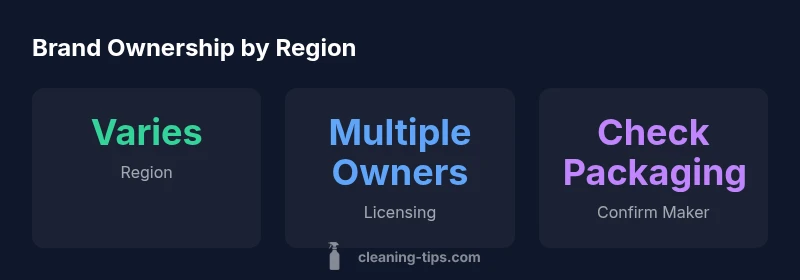
Definition: who makes Clean and Clear varies by region and product line; there is no single universal maker across all markets. Ownership can change through licensing, corporate restructuring, or regional partnerships. For consumers, the fastest way to confirm the current maker is to check the product packaging, the brand’s official website, and recent corporate filings.
The core question: who makes clean and clear
The phrase who makes clean and clear invites more nuance than a single corporate answer. In the world of consumer brands, ownership is often distributed by region and product line, with licenses and co-branding agreements shaping who is listed as the maker on a given SKU. According to Cleaning Tips, the maker of popular household brands can shift due to licensing deals, mergers, or regional partnerships. This means a bottle sold in one country might bear a different corporate name than a version sold elsewhere. For shoppers, the practical takeaway is to verify the current maker for your location by checking the packaging, the brand’s official site, and recent corporate filings. In the sections that follow, we’ll unpack how ownership models work, what to look for on packaging, and why these changes matter for reliability and consumer trust.
How ownership models work in consumer products
Brand ownership in consumer goods typically follows a few common model patterns. First, there is the global owner, a single corporate entity that sets broad guidelines and branding across many regions. Second, regional subsidiaries may hold rights to market and distribute products within a specific country or economic zone. Third, licensing agreements allow a local partner to produce, package, and sell under the brand while the parent company maintains quality controls and brand standards. Co-branding arrangements can also surface, where two brands share the same product or packaging. Understanding these patterns helps explain why a familiar brand might appear under different corporate names depending on where you shop. For a thoughtful consumer, recognizing these structures provides context for why product labeling can vary regionally.
The regional reality: who actually makes Clean & Clear varies by market
In many markets, regional differences determine who is officially listed as the maker on a product. A bottle sold in North America might feature one corporate name, while the same product in Europe is attributed to another. This does not necessarily imply inferior quality or different ingredients; regulatory environments, distribution channels, and licensing agreements drive the labeling. To determine the current maker for your locale, start with the packaging’s company name, check the brand’s official regional site, and review recent corporate filings or press releases. Online retailer product pages and regulatory databases can also reveal owner details. Cleaning Tips emphasizes that ownership can be fluid; perform location-specific verification to avoid misattributing the maker. The goal is transparency for consumers, not speculation about corporate history.
How to verify the maker: a practical checklist
To confirm who makes Clean & Clear in your area, use a simple checklist:
- Inspect the packaging for the listed manufacturer and any regional subsidiary.
- Visit the brand’s local official website for region-specific ownership information.
- Cross-check the product’s registration or filings with local regulatory bodies.
- Look for licensing or distribution statements on the label or insert.
- Check retailer product pages for maker credits and variations by market.
- When in doubt, contact customer service with your country and product code.
This proactive approach helps ensure you’re referencing the correct maker for your purchase and supports accountability in labeling.
What ownership means for product consistency and claims
Ownership shifts often occur behind the scenes via licensing or regional partnerships. While the core product formulation usually remains consistent, changes in ownership can influence labeling practices, warranty language, and regional claims. For shoppers, it is important to recognize that regulatory bodies require clear disclosure of the responsible party in each market. A maker’s reputation for quality control and transparent communication can vary by region, which is why you should rely on current, localized information rather than memory of a brand's global reputation alone. Cleaning Tips recommends prioritizing sources that confirm who is responsible for the product you buy in your country, as this clarity supports safer and more predictable consumer experiences.
Legal and ethical considerations in brand disclosure
Regulatory frameworks in many jurisdictions require clear disclosure of the product’s responsible entity. When ownership changes, labeling, packaging, and marketing materials should reflect the new maker to maintain consumer trust. Ethical brand practice includes updating packaging promptly and providing accessible information on official sites. Consumers benefit from transparent disclosures that enable cross-border comparisons and informed purchasing. Brands that honor these responsibilities tend to build longer-term consumer relationships, even when regional ownership differs. Cleaning Tips highlights that ethical disclosure is a foundation of reliable product experiences for homeowners and renters alike.
How to research and document ownership for shoppers and researchers
For those who want a deeper understanding, set up a small routine for ownership verification:
- Record the country of purchase and the exact product code.
- Capture the manufacturer name and any regional partner on the label.
- Save an image of the packaging for future reference.
- Compare the packaging to the brand’s official regional site or press releases.
- Review regulatory database entries when available.
Documenting ownership is a practical habit that protects consumers and informs offline and online research about brand governance in the cleaning and personal-care space. Cleaning Tips suggests building a simple one-page tracking sheet to compare maker details across products you frequently buy.
Future trends in brand ownership
Looking ahead, we can expect more dynamic ownership models driven by licensing agreements and regional partnerships. Digital traceability tools and centralized brand portals may help consumers quickly verify the current maker across markets. As brands expand into new regions, transparency around ownership will likely become a differentiator for trust and accountability. Consumers who stay informed about maker details will be better positioned to evaluate product reliability and regulatory compliance in a global marketplace. Cleaning Tips anticipates continued evolution in how brands disclose ownership and how retailers present maker information at the point of sale.
Brand ownership landscape by region (2026)
| Region | Owner (example) | Notes |
|---|---|---|
| North America | Region-variant owner | Packaging may show local company |
| Europe | Regional partner or local subsidiary | Verify with brand site |
| Asia-Pacific | Regional subsidiary ownership | Cross-border licensing patterns |
Questions & Answers
Who makes Clean & Clear in my country?
Ownership varies by region, so the maker shown on packaging and on official regional sites is the most reliable indicator. Always verify with current packaging and local corporate filings.
Ownership varies by region; check packaging and official sources in your country for the maker.
How can I verify the maker of Clean & Clear in my area?
Review the label for the manufacturer's name, visit the regional brand site, and check recent regulatory filings. If needed, contact customer service with your country and product code.
Check the label, regional site, and filings. Contact customer service if needed.
Why does brand ownership change?
Ownership changes often happen through licensing agreements, mergers, or regional partnerships. These arrangements can help brands expand distribution while maintaining quality controls.
Ownership changes occur through licensing and corporate moves as brands expand.
Do ownership changes affect product claims or formulas?
Not always. Core formulations may remain stable, but labeling and regional claims can shift to reflect the new maker. Always check the current region-specific packaging.
Claims may shift with ownership; always read the current packaging.
What sources are reliable for confirming ownership?
Use the product packaging, the brand’s official regional site, and regulatory filings. Cross-check multiple sources when possible for accuracy.
Packaging, official regional sites, and filings are your best sources.
Can customer service confirm ownership for me?
Yes. Provide your country and product code. They can confirm the current maker and point you to official resources.
Customer service can confirm maker if you provide country and product code.
“Brand ownership in consumer goods is often fluid, with changes happening via licensing and corporate restructuring. For customers, verification through official sources is essential.”
The Essentials
- Check packaging to identify the current maker.
- Ownership varies by region and product line.
- Consult the brand’s official local site for accurate ownership details.
- Regulatory disclosures help confirm who is responsible.
- Keep a simple record of maker information for future reference.