Why is my cleanser breaking me out? A practical troubleshooting guide
Discover why is my cleanser breaking me out and how to troubleshoot, with a practical, step-by-step plan to calm irritation and support a healthy skin barrier.


The most likely reason your cleanser is breaking you out is that it is too drying or contains irritants that trigger inflammation and clogged pores. Start with a patch test on your jawline, switch to a gentle, non‑comedogenic cleanser, and avoid heavy essential oils or alcohol. Finish with a lightweight moisturizer to restore barrier health.
Why is my cleanser breaking me out? A practical perspective
If you are asking, why is my cleanser breaking me out, you are not alone. The Cleaning Tips team has observed that many cleansing-related breakouts originate not from dirty skin but from barrier disruption, over-drying, or irritants in the formula. When your skin barrier is compromised, even gentle products can trigger redness, small pimples, or increased oil production as the skin fights to repair itself. In this guide we outline practical steps to identify culprits, switch to friendlier cleansers, and protect the skin barrier over time. This approach supports healthier skin in the long term and reduces the chance of reaction when you reintroduce products. According to Cleaning Tips, persistent irritation often signals a mismatch between ingredients and your skin’s needs rather than personal failure.
Below you will find a clear path to diagnose the cause, test solutions, and build a routine that minimizes future outbreaks while keeping your skin clean and comfortable.
Common ingredients that irritate breakout-prone skin
Breakouts from cleansers often come from a mix of ingredients rather than a single culprit. Fragrance and essential oils can irritate sensitive skin, while high levels of sulfates or alkaline pH can strip lipids and weaken barrier function. For many people, aldehydes, certain preservatives, and alcohol can provoke redness and tiny pimples after cleansing. In contrast, gentler surfactants (like cocamidopropyl betaine or decyl glucoside) and non‑fragranced formulas tend to calm irritation. When you see a product labeled as non‑comedogenic, it is a good sign that the formula is designed to minimize pore clogging. If you notice immediate irritation after cleansing, this block is a strong hint to re-evaluate your ingredients. Cleaning Tips analysis suggests starting with fragrance-free, gentle formulas and patch testing before full usage.
- Fragrance and essential oils
- Harsh sulfates and alkaline pH
- Alcohol-heavy toners or cleansers
- Occlusive, heavy oils that clog pores
- Strong exfoliants used too soon after switching
How to read cleanser labels to spot troublemakers
Looking at the label is the fastest way to identify potential triggers. Start by checking the cleansing agents: avoid strong sulfates like SLS and SLES if you have sensitive skin. Scan for fragrance, essential oils, and ya-include preservatives that irritate some people. Look for “non‑comedogenic,” “fragrance-free,” and “soap-free” claims, though remember that labeling is not always standardized. For active ingredients, note that niacinamide and panthenol can be soothing, while retinoids and strong acids require careful introduction. If you have persistent irritation, consult your dermatologist about patch testing and ingredient lists. Remember that your skin’s reaction will guide your choices, not marketing promises.
- Check for fragrance-free and non‑comedogenic labeling
- Identify fragrance and essential oils
- Note pH and surfactant type
- Watch for harsh preservatives and sulfates
Patch-testing and safe switching: a practical plan
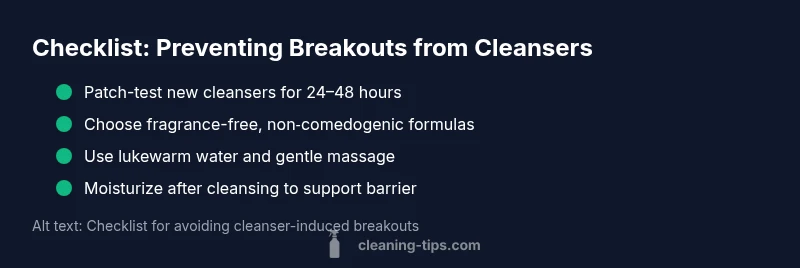
A safe cleanser switch should begin with a 24‑ to 48‑hour patch test on a discreet area like the jawline. If no irritation appears, you can begin a cautious full-application trial for 1–2 weeks to see how skin responds. Use a small amount, all at once, to minimize exposure. Track any changes in texture, redness, breakouts, or sensitivity. If irritation appears, revert to your previous product and give your skin a break for a few days before trying a new option. Patch testing helps you distinguish between a true reaction and a normal adjustment period.
- Patch test for 24–48 hours in a discreet area
- Start with a minimal amount and gradual application
- Record reactions with photos or notes
- If irritation occurs, stop the product and reassess
Step-by-step routine for a gentler, breakout-aware cleanse
A gentle cleanse is a foundational step in protecting skin health. Use lukewarm water and a small amount of product, massage for 10–20 seconds, then rinse thoroughly. Pat dry with a clean towel and apply a fragrance-free moisturizer to seal in moisture. Avoid over-washing, which can strip natural oils and trigger more oil production. If you wear sunscreen or makeup, ensure it is fully removed with a gentle remover before cleansing to prevent pore buildup. This approach helps minimize irritation and supports barrier repair.
- Use lukewarm water and minimal pressure
- Choose fragrance-free, non‑comedogenic formulas
- Rinse thoroughly and pat dry gently
- Apply a lightweight moisturizer immediately after
The role of moisturizers and barrier repair after cleansing
Maintenance of the skin barrier is crucial when dealing with cleanse-related breakouts. A lightweight, non‑comedogenic moisturizer with ceramides, glycerin, and fatty acids helps restore lipids and keep moisture in without clogging pores. Avoid heavy occlusives that can feel suffocating on acne-prone skin. If you are using actives like retinoids or hydroxy acids, apply your moisturizer after cleansing to buffer irritation. For best results, pair with a mild sunscreen during the day to protect the newly balanced barrier. According to Cleaning Tips guidance, when the barrier is healthy, the skin tolerates products better and breakout frequency tends to drop.
Exfoliation, actives, and timing: balancing your routine
Exfoliation can help with clogged pores, but overdoing it with aggressive scrubs or high‑strength acids immediately after a cleanse can worsen irritation and redness. Introduce actives slowly and monitor skin response. If you are new to actives, start with 1–2 times per week and use a gentle formula. Never cleanse aggressively and always follow up with a barrier-supporting moisturizer. The goal is steady, gradual improvement rather than quick fixes that irritate the skin.
Practical starter plan for the next 2 weeks
For most people, a two-week plan is enough to determine whether a cleanser is compatible with your skin. Begin by patch-testing, then switch to a fragrance-free, non‑comedogenic option. Establish a simple morning and evening routine: cleanse, moisturize, and apply sunscreen in the morning. Do not introduce multiple products at once; add one item at a time to precisely observe its impact. If breakouts worsen, revert to your original routine and consult a dermatologist for a tailored plan. Over the two weeks, you should notice less irritation and more balanced skin texture.
Steps
Estimated time: 30-60 minutes
- 1
Patch-test a new cleanser
Apply a small amount behind the ear or along the jawline and wait 24-48 hours. Watch for redness, itching, or a breakout in that area. If no reaction occurs, you can proceed with a full application on your face.
Tip: Document results with a quick photo log to spot subtle changes. - 2
Choose a gentle, fragrance-free cleanser
Select a product labeled ‘fragrance-free’ and ‘non‑comedogenic’ with mild surfactants. Read the label to confirm the absence of potential irritants. Patch-tests still apply when you switch.
Tip: Avoid products marketed for “deep cleaning” that can be too harsh for sensitive skin. - 3
Patch-test the new cleanser on your face
Apply a dime-sized amount to a small area for 24 hours to confirm tolerance. If irritation appears, discontinue use and revert to your previous routine.
Tip: Use a clean applicator and wash hands before touching the face. - 4
Adjust cleansing frequency and technique
Cleanse with lukewarm water, using a gentle massage for 10-20 seconds. Rinse thoroughly and pat dry; avoid aggressive rubbing that can inflame breakouts.
Tip: Limit washing to morning and night unless you wear heavy sunscreen. - 5
Layer barrier-supporting moisturizer
Apply a lightweight, non‑comedogenic moisturizer immediately after cleansing. Look for ceramides and glycerin to restore hydration without clogging pores.
Tip: If you use actives, apply moisturizer before or after, depending on the product instructions. - 6
Reintroduce actives slowly if appropriate
If you tolerate the moisturizer well, reintroduce any actives (retinoids, AHAs/BHAs) at low frequency and monitor skin response.
Tip: Never start new actives the same week you switch cleansers. - 7
Seek professional guidance if needed
If redness, swelling, or a spread of breakouts occur, consult a dermatologist promptly for personalized care.
Tip: Professional advice is essential for persistent or severe reactions.
Diagnosis: Cleansing-related breakout or new blemishes after cleansing
Possible Causes
- highOver-drying formula strips natural oils, triggering rebound oil production
- mediumIrritating fragrance or essential oils provoke inflammation
- lowHarsh sulfates or alkaline pH weaken the skin barrier
- lowUnremoved sunscreen or makeup residue clogging pores
Fixes
- easyPatch-test new cleansers on jawline for 24-48 hours before full use
- easySwitch to a fragrance-free, non-comedogenic cleanser with gentle surfactants
- easyLimit cleansing to once or twice daily and avoid aggressive scrubbing
- easyFollow with a lightweight moisturizer that supports barrier repair
- easyIf symptoms persist, seek guidance from a dermatologist
Questions & Answers
Why can fragrance in cleansers cause breakouts?
Fragrances and essential oils can irritate sensitive skin, triggering inflammation and visible breakouts. Choosing fragrance-free options reduces the risk and helps the skin recover.
Fragrance can irritate sensitive skin, causing breakouts. Fragrance-free cleansers are usually better for acne-prone skin.
Is it safe to wash my face twice a day during a breakout?
Washing twice daily is common, but over-washing can strip oils and worsen irritation. Use a gentle cleanser and lukewarm water, then moisturize.
Twice daily is common, but avoid over-washing. Use gentle products and moisturize well.
What ingredients should I avoid to prevent breakouts?
Avoid high-alcohol formulas, strong fragrances, and harsh sulfates if you have acne-prone skin. Look for gentle surfactants and non-comedogenic claims.
Avoid alcohol, strong fragrances, and harsh sulfates. Pick gentle surfactants and non-comedogenic products.
Should I stop actives like retinoids while my skin is irritated?
If irritation flares, reduce the frequency of actives and focus on barrier repair. Resume actives gradually once the skin stabilizes, under guidance if needed.
Limit actives during irritation and rebuild the barrier. Reintroduce slowly with professional input if needed.
When should I see a dermatologist for cleanser-induced breakouts?
If redness, swelling, or rapid spread occurs, seek dermatologist advice promptly. A professional can tailor a cleansing plan and check for underlying conditions.
If redness or swelling worsens, see a dermatologist quickly.
Can an allergic reaction cause breakouts from cleansers?
Yes, allergies can mimic breakouts. Look for itching, hives, or swelling and discontinue suspected products immediately.
Allergic reactions can look like breakouts; stop using the suspected product and check with a professional if needed.
Watch Video
The Essentials
- Patch-test before swapping cleansers
- Choose fragrance-free, non‑comedogenic formulas
- Moisturize to repair your skin barrier
- Avoid over-washing and harsh scrubs
- Consult a dermatologist if issues persist