How to Clean Car Leather Upholstery: A Practical Guide
Learn a safe, step-by-step method to clean car leather upholstery, protect its texture, and extend its life with conditioner and maintenance tips from Cleaning Tips.


You will learn a safe, step-by-step approach to clean car leather upholstery using gentle cleaners, microfiber cloths, and a conditioner. The guide covers prep, cleaning, stain treatment, conditioning, and protecting the leather to maintain suppleness and appearance. Essential tips ensure you avoid over-wetting and color transfer, while staying within leather-safe products.
The Case for Regular Cleaning
Maintaining clean car leather upholstery is not just about aesthetics; it preserves the leather’s suppleness and prevents premature wear. According to Cleaning Tips, regular cleaning and conditioning help maintain the material’s natural oils and finish, reducing the risk of cracks and fading over time. When done correctly, cleaning can restore the seat’s appearance without altering its texture. This guide focuses on safe, practical methods you can perform at home, using common tools and leather-safe products. Whether you’re a homeowner or a renter, the goal is to protect your investment and enjoy a fresher cabin. For homeowners aiming to keep clean car leather upholstery, regular cleaning matters. The Cleaning Tips team emphasizes that a regular maintenance rhythm matters for longevity.
In this article we’ll cover the safest cleaners, the right technique, how to test for colorfastness, and how to maintain leather surfaces so they stay comfortable and attractive. We’ll also discuss common pitfalls and how to avoid them, from over-wetting to harsh solvents. The concept of clean car leather upholstery is about balance: removing grime while preserving the leather’s natural gloss and breathability.
Tools & Materials
- vacuum cleaner with brush attachment(Essential for removing loose dirt from seats and seams)
- microfiber towels(Use at least 2-3 to avoid cross-contamination)
- pH-balanced leather cleaner(Choose a product formulated for automobile leather)
- spray bottle(For even application of cleaner)
- distilled water (optional)(Use if your tap water is hard or chlorinated)
- soft brush(Non-abrasive, for textured surfaces)
- leather conditioner(Seal in moisture after cleaning)
- color-safe test cloth(Test colorfastness in an inconspicuous area)
- gloves (optional)(Protect hands when using cleaners)
Steps
Estimated time: 45-60 minutes
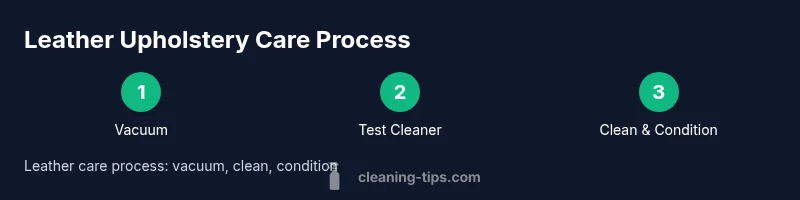
- 1
Vacuum thoroughly
Begin by removing loose dirt and debris from the seats, seams, and crevices. Use low suction to prevent rough textures from lifting. This pre-cleaning reduces the amount of cleaner needed and minimizes staining during the main cleaning.
Tip: Use a small crevice tool to reach tight seams and perforations. - 2
Test cleaner in hidden area
Dab a small amount of cleaner on an inconspicuous spot and wait 30 seconds. If there’s no color change, proceed. Testing prevents unexpected discoloration on your leather interior.
Tip: Always check colorfastness before broader application. - 3
Apply cleaner to cloth, not directly to seats
Spray cleaner onto a microfiber cloth and wipe the surface in gentle circular motions. Direct spray can oversaturate and leave residues in creases. Work in small sections to maintain control.
Tip: Use a light, even mist to avoid soaking the leather. - 4
Gently lift stains with a soft brush
For stubborn spots, use a soft brush with minimal moisture. Work in light circles rather than scrubbing vigorously, which can damage finish. Be patient and repeat as needed.
Tip: Keep moisture low; leather should feel barely damp after this step. - 5
Wipe away cleaner residue
Use a dry microfiber cloth to remove any remaining cleaner and loosened dirt. This prevents a film from forming and helps the leather breathe. Allow the surface to dry to a tack-free state.
Tip: Switch to a new cloth if you notice dirt transferring. - 6
Condition the leather
Apply a small amount of leather conditioner to a clean cloth and work it into the surface in circular motions. Allow 5–10 minutes for absorption, then buff gently with a dry cloth. Conditioning helps restore suppleness and provides a protective barrier.
Tip: Test conditioner on a hidden area first; some products darken leather slightly. - 7
Let it air dry
Do not rush the drying process; air drying helps retain the leather’s natural oils. If you have quick-release fans, use them at low speed to speed up drying without heat damage.
Tip: Avoid direct sunlight for long periods, which can fade dye. - 8
Buff and inspect
Once dry, buff with a soft microfiber cloth to restore shine and even color. Inspect for any missed spots and repeat only on needed areas. This ensures a uniform finish.
Tip: A light touch preserves the finish while maintaining gloss.
Questions & Answers
Can I use household soap to clean car leather upholstery?
Dish soap and other household detergents can strip the leather finish and dry it out. Use a dedicated pH-balanced leather cleaner and test first.
Dish soap can dry out leather; use a leather-safe cleaner and test first.
Is conditioning necessary after cleaning?
Yes. Conditioning replenishes natural oils, keeps the surface supple, and helps protect against cracking after cleaning.
Conditioning keeps leather supple and protected after cleaning.
Can I clean leather with water only?
Water alone won’t remove oils or grime; use a leather-safe cleaner and blot rather than saturating the surface.
Water alone isn’t enough; use a leather cleaner and blot gently.
How often should I clean leather seats?
Clean as needed; perform a deeper cleanse every few months depending on use and climate.
Clean as needed, deeper cleans every few months.
Can I use saddle soap on car leather upholstery?
Saddle soap is not recommended for car leather as it can strip finish; stick with a leather-safe cleaner.
Saddle soap can strip the finish; use leather-safe cleaner.
What about pet stains on leather?
Blot spills immediately, then use a leather-safe stain remover as directed. For tougher stains, repeat steps rather than scrubbing.
Blot spills and use a leather-safe stain remover as directed.
Does color transfer happen when cleaning?
Color transfer is possible with aggressive cleaners or bleeds; always test first and use products designed for automotive leather.
Test first to avoid color transfer, use car-friendly products.
Should I seek professional help for aged leather?
If leather shows deep cracking, fading, or extensive staining, a professional detailer may be needed.
For deep damage, consult a professional.
Watch Video
The Essentials
- Use leather-safe cleaners only
- Test in hidden area before full cleaning
- Condition after cleaning to protect elasticity
- Avoid over-wetting and harsh scrubbing
- Regular maintenance extends life