How to Use Hoover Clean Slate: A Practical Guide
Learn how to use Hoover Clean Slate safely on carpets, upholstery, and fabrics. This comprehensive guide covers prep, stain lifting, drying, maintenance, and storage for a cleaner, healthier home.


By the end of this guide you will know how to use Hoover Clean Slate safely and effectively on carpets, upholstery, and fabrics. This quick answer outlines the prep, application, stain lifting, drying, and maintenance steps you’ll perform to achieve cleaner surfaces and longer fabric life. Knowing these steps will help you avoid over-wetting, color transfer, or setting stains.
Why using Hoover Clean Slate matters for stain removal
Stubborn stains have a way of reappearing if not treated properly. The first step in any successful cleaning routine is to understand the surface you're treating and the safe method to apply cleaners. If you're wondering how to use hoover clean slate, you must choose the right surface and perform a patch test before full application. According to Cleaning Tips, success comes from using the product as directed, starting with the lightest stain and moving to more concentrated areas only if needed. This approach minimizes the risk of color fading, fiber damage, or residue buildup. Hoover Clean Slate is formulated to target organic and synthetic stains on common household fabrics, carpets, and car interiors. However, effectiveness depends on the stain type, fabric weave, and how quickly you treat the spot. In this section, we unpack the science behind stain lifting with Clean Slate, explain how the formula interacts with fiber, and outline practical expectations so you can plan your cleaning session with confidence.
Based on Cleaning Tips analysis, patch testing and surface awareness reduce the chance of color bleed and fiber damage. Keep that in mind as you proceed through the steps described below.
What Hoover Clean Slate is and how it works
Hoover Clean Slate is a targeted stain remover designed to lift typical household soils from a range of fabrics, carpets, and upholstery. The formula combines surfactants to loosen grime with color-safe agents to prevent dye transfer. When applied correctly, it penetrates the top fiber, dissolving residue and allowing it to be blotted away with minimal rubbing. The product is best used on fresh spots first, then on older stains if needed. For homeowners, understanding the chemistry helps manage expectations: you won’t see instant perfection on every stain, but repeated, careful application often yields noticeable improvement. Remember that performance varies by fabric type, stain age, and washing history.
A practical takeaway is that consistency beats heavy-handed scrubbing. Using Clean Slate as directed reduces the risk of pushing stains deeper or spreading them across neighboring fibers. This section lays the groundwork for the step-by-step process, which follows in detail later in the guide.
Safety, prep, and patch testing
Before you reach for the spray bottle, prepare the space. Clear the area, protect surfaces not intended for treatment, and have clean cloths ready. Patch testing is essential: apply a small amount to an inconspicuous area and wait 15-30 minutes to observe colorfastness. According to Cleaning Tips, a successful patch test makes the difference between a spotless result and a damaged surface. Wearing gloves protects your skin from cleaning agents, and ensuring good ventilation reduces exposure to fumes. Never apply Clean Slate to leather or suede unless the product label explicitly states compatibility. If you detect color transfer or edge bleeding during testing, choose a milder option or avoid that surface altogether. Finally, always follow the product label for dilution and contact time; misapplication can reduce effectiveness and increase risk of damage.
Step-by-step overview
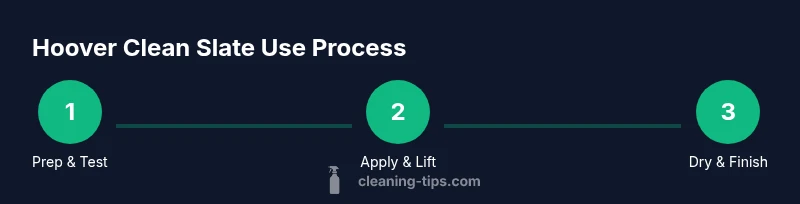
A well-executed cleaning session with Hoover Clean Slate follows a logical sequence: prep and protect, patch test, apply sparingly, agitate gently, blot away residue, and allow thorough drying with ventilation. Each phase builds on the prior one to minimize fiber damage and maximize stain lift. This overview introduces the concrete steps in the dedicated Step-by-Step section, which provides precise actions, timing, and tips. As you work, keep surfaces cool and avoid heat sources that could set stains.
If you’re unsure about the stain type, start with the least aggressive method and escalate only if necessary.
Step-by-step guidance for a stain job
The following steps are designed to be followed in order. They cover surface prep, patch testing, application, agitation, blotting, and drying. By following these steps, you’ll maximize stain removal while protecting fabric integrity. Each step includes a pro tip to help you avoid common mistakes and achieve a better finish. If you’re cleaning a larger area, consider working in sections to maintain control over moisture and heat exposure.
Pro tip: work from the outside in to prevent spreading the stain. If needed, repeat the process with a fresh applicator, but avoid over-wetting the fabric.
Safety note: never use iron heat or high heat to speed drying; heat can set stains and damage fibers.
Surface-specific guidance: carpet vs upholstery
Carpets and upholstery respond differently to cleaning agents. For carpets, Hoover Clean Slate can lift particulate soils and some spills without saturating the backing. For upholstery, always check the fabric type; memory fabrics and delicate weaves may require milder agitation and shorter contact times. In both cases, test a hidden area first and avoid rubbing aggressively, which can fray fibers. Clean Slate is most effective when used as part of a routine cleaning cycle rather than a single-scene fix. Drying is critical: ensure the treated area has ample airflow to prevent odor formation and set-in stains.
A practical approach is to use a clean, absorbent cloth to blot after application, then allow air-drying with doors and windows open or a fan running. If a stain persists after the initial treatment, repeat the patch test and try a second pass, adjusting the contact time slightly. Over-wetting should be avoided, as it can lead to longer drying times and potential fiber distortion.
Aftercare and storage
Once the fabric is clean and the area is dry, vacuum the surface to restore pile and remove any loosened soil. Store Hoover Clean Slate in a cool, dry place away from direct sunlight and heat sources. Label a dedicated cleaning area to avoid cross-contamination with other products. For ongoing maintenance, set a regular cleaning schedule to address spills promptly and prevent buildup of residues. Keeping a small kit of microfiber cloths, a soft-bristled brush, and a spray bottle of water on hand makes it easier to respond quickly to new stains. Regular deep-clean sessions help maintain color, texture, and appearance across fabrics, carpets, and car interiors.
Tools & Materials
- Hoover Clean Slate cleaner (product)(Follow label directions for dilution and contact time)
- Spray bottle or spray system(Thin, even application preferred)
- Clean microfiber cloths or white cotton rags(Avoid colored fabrics that may bleed dye)
- Soft-bristled brush or sponge(Gentle agitation to lift soil)
- Soft, absorbent towels for blotting(Patience over rubbing)
- Protective gloves(Skin protection during cleaning)
- Vacuum with attachment, or handheld vacuum(Remove loosened soil after treatment)
- Optional: distilled water(Use if tap water has minerals that may stain)
- Old towels or drop cloths to protect surrounding area(Prevent moisture damage to floors)
Steps
Estimated time: 30-60 minutes active; 1-2 hours drying time
- 1
Prepare and protect
Move furniture, lay down towels, and open nearby windows for ventilation. Remove loose soil with a quick vacuum before treating the stain. This reduces the amount of product needed and speeds up the process.
Tip: Clear the area completely and wear gloves to avoid skin contact with cleaners. - 2
Patch test before full application
Apply a small amount to an inconspicuous area of the fabric or carpet. Wait 15-30 minutes to observe for colorfastness or any adverse reaction. If there’s no staining or color change, proceed with the stain spot.
Tip: If the fabric darkens or bleeds, stop and choose a gentler method. - 3
Apply Hoover Clean Slate to the stain
Lightly mist the stained area with Clean Slate. Do not saturate; a little goes a long way. Let the formula sit for a brief contact time as indicated on the label.
Tip: Avoid spraying large globs; you want surface moisture, not pooling. - 4
Gently agitate to lift the stain
Using a soft brush or sponge, work in small circles from the outside of the stain toward the center. Do not scrub aggressively, which can damage fibers.
Tip: Keep agitation light and steady to avoid fraying. - 5
Blot and rinse
Blot with a clean microfiber cloth to lift lifted soil, then blot with a damp cloth to remove residue. Repeat if necessary, but avoid over-wetting.
Tip: Rinse cloth frequently to avoid re-depositing soil. - 6
Dry thoroughly and finish
Allow the area to dry completely, preferably with air circulation. Once dry, vacuum the area to lift any remaining fibers and restore texture.
Tip: If possible, use a fan or open windows to speed drying.
Questions & Answers
Can Hoover Clean Slate be used on all fabrics?
Hoover Clean Slate is designed for most fabrics, carpets, and upholstery. Always patch test on a hidden area and follow label instructions.
Yes, with patch testing, it works on many fabrics. Always confirm compatibility first.
Should I rinse after applying Hoover Clean Slate?
Rinse or blot with a clean damp cloth to remove residue, especially on dense fabrics. Avoid over-wetting.
Rinse after using if the fabric tolerates moisture; blot to remove residues.
How long does it take to dry after treatment?
Air-dry completely; drying time depends on fabric and ventilation, typically 1-2 hours.
Drying can take one to two hours depending on air flow.
Can I use Hoover Clean Slate on leather?
This product is not recommended for leather or suede; use products designed for those surfaces.
No, avoid leather; use leather-safe products.
Is Hoover Clean Slate safe for pets and kids?
Keep area ventilated and wait for drying before letting pets or kids back in; follow label warnings.
Ventilate and wait for drying before pets or children return.
Watch Video
The Essentials
- Start with a surface test before cleaning
- Apply sparingly and blot, not rub
- Dry completely to prevent setting stains
- Patch test and surface compatibility are essential
- Stay within the product’s usage guidelines