How Long Does It Take to Dry Clean: Turnaround Guide
Understand realistic dry-clean turnaround times, factors affecting them, and tips to speed up service without sacrificing quality. Learn what to expect and how to plan around events with Cleaning Tips.


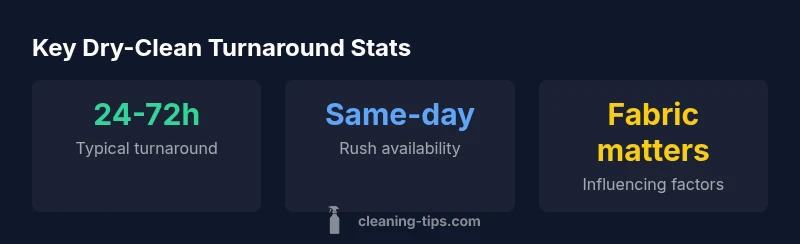
Most standard dry-cleaning jobs take about 24–72 hours at most shops, with rush options available at many locations. Turnaround depends on garment type, fabric, cleaning complexity, and workload. For same-day service, call ahead or choose locations offering express processing. Always confirm the expected date at drop-off to avoid travel plan disruptions.
How long does it take to dry clean? Understanding turnaround basics
The question "how long does it take to dry clean" is common among homeowners and travelers. In practice, turnaround is not a single number; it depends on fabric, garment construction, finishing needs, and the cleaner's current workload. According to Cleaning Tips, typical standard turnarounds span from 24 to 72 hours for everyday items like shirts or suits, with longer timelines for heavier coats or heavily embellished pieces. Public-facing estimates often list '1–3 days' or 'next-day' depending on the shop. If you have an event or travel, plan for a buffer day and ask about rush options. Some cleaners offer same-day service for uncomplicated items, especially at off-peak hours or with express processing. It's wise to drop off early in the week and verify the expected pickup date at drop-off so you can coordinate your schedule. Keep in mind that seasonal peaks (holiday periods, post-wedding rushes) can extend times, and any unpredictable stains may require extra attention. The Cleaning Tips Analysis, 2026, notes that clear communication between you and the cleaner reduces the risk of delays and misaligned expectations.
Typical turnaround ranges for common garments
- Suit jacket: 24–72 hours
- Evening gown or beaded dress: 48–96 hours
- Winter coat or heavy wool: 48–96 hours
- Delicate fabrics (silk, cashmere): 24–72 hours, sometimes longer for complex finishes
- Uniforms or heavily soiled items: 48–96 hours or more
Note: These ranges are typical; individual shops may vary based on queue length and special finishing needs.
The role of garment complexity and fabric
Fabric type and garment construction significantly influence turnaround time. Heavily embellished pieces, beaded gowns, leather, or items with embroidery require extra inspection, careful handling, and sometimes specialized solvents. Delicate fabrics like silk can be more prone to damage if rushed, so cleaners may allocate longer slots. Be mindful that dye stability and colorfastness factor into processing decisions, especially for bright or dark fabrics. Complex finishes such as matte or glossy coatings may require additional flat-pressing or hand-work after cleaning, which adds to total time. When you understand these nuances, you can set realistic expectations with your cleaner and plan accordingly.
How to optimize for speed without sacrificing quality
- Ask about rush or express services and any added fees.
- Drop off early in the week and avoid holidays to minimize queue time.
- Separate heavily soiled or uniquely finished items to prioritize special cases.
- Pre-treat obvious stains and bring care labels so the cleaner can plan the right approach.
- If time is critical, consider a recyclable garment bag to streamline handling at pickup.
Communication is key: confirm drop-off and pickup windows, and ask if there’s a standby option if the cleaner runs behind schedule.
What happens at the dry-cleaner: processes and stages
Most visits follow a series of stages: initial inspection and tagging, pre-treatment, washing/solvent cleaning, finishing (pressing, steaming, and sometimes hand finishing), and packaging for pickup. Each stage adds time, especially if special finishes or delicate fabrics are involved. Having the staff explain which stage your items require helps you understand delays and improves your planning. For intricate garments, the finishing stage may take longer due to pressing accuracy and sleeve alignment. If you’re unsure about a specific item, ask for a quick rundown of the steps and the approximate time allocated to each.
Choosing the right dry cleaner: what to ask
Ask about turnaround guarantees, rush options, and whether the cleaner accepts preferred fabrics (silk, wool, leather). Inquire about environmental practices (solvents used) and the shop's policy on re-cleaning for unsatisfactory results. Reading customer reviews can also reveal consistency in on-time delivery and quality. Request a written estimate and a pickup window to avoid miscommunication. A trusted cleaner will offer transparent timelines and honor your deadlines.
Typical turnaround ranges by garment type
| Garment Type | Estimated Turnaround | Notes |
|---|---|---|
| Suit jacket | 24-72 hours | Lining and structure may extend time |
| Evening gown | 48-96 hours | Beading or embellishments require care |
| Winter coat | 48-96 hours | Heavy fabrics; possible longer handling |
| Dress shirt | 24-48 hours | Depends on starching and stains |
| Delicate silk scarf | 24-72 hours | Colorfastness matters |
Questions & Answers
How long does it take to dry clean a standard suit?
A standard suit typically requires 24–72 hours, depending on the shop’s queue and any special finishing needed. For travel, ask about expedited options. Always verify the pickup date at drop-off.
A suit usually takes one to three days. Check for rush options if you’re in a hurry.
Can I get same-day dry cleaning?
Some cleaners offer same-day service for simple items and early drop-offs. Availability varies by location and workload. Call ahead to confirm eligibility.
Yes, some shops offer same-day service for certain items; call first to confirm.
What factors affect turnaround time?
Fabric type, garment complexity, embellishments, stains, and current queue all influence timing. Heavier fabrics or beads may require extra processing time.
Fabric type and complexity largely drive how long it takes.
Should I pre-treat stains before drop-off?
Yes, pre-treat obvious stains with guidance from the cleaner's care label, but avoid aggressive scrubbing or solvents. This helps the shop plan the right approach.
Pre-treat stains per care labels, but avoid aggressive scrubbing.
How far in advance should I schedule for travel or events?
Plan at least 2–3 days ahead if possible, and request a firm pickup date. For peak seasons, add extra buffer.
Schedule a few days ahead, and confirm pickup before travel.
Do some fabrics dry-clean faster than others?
Yes. Lightweight synthetics and simple weaves typically move faster than heavy wool or beaded embellishments. Always check with your cleaner for fabric-specific timelines.
Faster for lightweight fabrics; slower for heavy or embellished items.
“Dry-cleaning turnaround is influenced by fabric, garment construction, and shop workload; clear drop-off notes and selecting the right cleaner can dramatically speed up processing.”
The Essentials
- Expect standard turnarounds of 24–72 hours for most garments.
- Call ahead for rush or express services if you need faster processing.
- Prepare items and know the care labels to avoid delays.
- Confirm pickup dates to coordinate travel or events.