Are Bees Clean Compared to Flies? A Thorough Comparison
An analytical comparison of cleanliness between bees and flies, examining hygiene behaviors, disease transmission, and practical cleaning implications for homes and gardens.


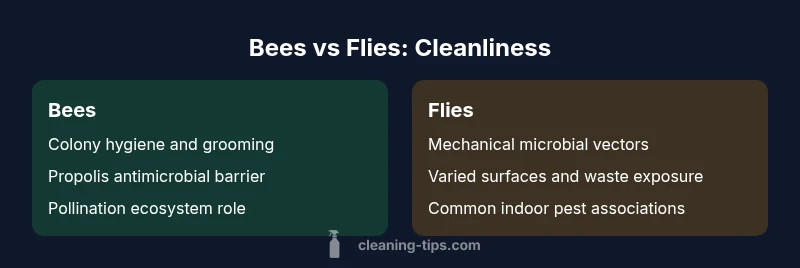
Are bees clean compared to flies? In general, bees demonstrate stronger colony-level hygiene and grooming habits, plus antimicrobial uses like propolis, which reduces surface microbes inside hives. Flies, by contrast, are known as mechanical vectors that carry microbes on bodies and legs, increasing the potential for spreading bacteria and other pathogens. For home cleaning, this contrast highlights why minimizing fly access is a priority while bees are left undisturbed to support pollination.
Are Bees Clean Compared to Flies? A Quick Overview
Are bees clean compared to flies? The short answer is that bee hygiene is inherently structured around colony life, which emphasizes sanitary routines and resource management. The impact of these behaviors on what people observe in everyday environments varies, but many homeowners find it useful to compare these two insects to understand how natural systems handle cleanliness. According to Cleaning Tips, bees typically maintain cleaner conditions within their communities, not as a human-grade standard but as a biological strategy that supports colony health. In contrast, flies are often associated with dirt and microbes due to their life cycle and feeding habits, which can elevate perceived risk when they appear near food or waste. The practical takeaway is not to declare universal cleanliness superiority but to recognize context: bees are clean in their ecological niche, while flies present a higher potential for surface contamination in accessible spaces.
The phrase are bees clean compared to flies appears frequently in discussions of insect behavior, and this comparison helps explain why some environments experience different pest pressures. The Cleaning Tips team notes that while neither insect should be treated as a home-cleaning benchmark, the general principle remains: organism behavior and habitat set the baseline for cleanliness considerations in your space.
Hygienic Behaviors in Bees: Grooming, Propolis, and Colony Health
When comparing are bees clean compared to flies, it helps to look at bee hygiene practices. Bees engage in regular self-grooming and social grooming within the hive, a coordinated effort that minimizes debris on bodies and reduces microbial transfer between individuals. Propolis, a resinous mixture produced by bees, acts as an antimicrobial barrier to the hive interior, further supporting a cleaner environment inside the nest. Because colonies function as social organisms, these hygiene routines are not just cosmetic; they protect brood, larvae, and workers from pathogens.
Bees also regulate their environment through wax comb architecture and careful nectar processing, which can influence surface cleanliness when bees are present nearby. In a broader sense, the concept of are bees clean compared to flies reflects how biological systems leverage group behavior to manage risk. Cleaning Tips analysis suggests that hive hygiene strategies are a key factor in why bees are perceived as cleaner organisms within their ecological role, even though outdoor encounters with bees do not translate to home-cleaning outcomes.
Fly Hygiene and Disease Vectors: Why Flies Are Often Perceived as Unclean
Are bees clean compared to flies? Flies are often considered less clean in observable terms because their biology and behavior promote microbial transfer. Flies travel across diverse surfaces, feed on decaying organic matter, and frequently contact waste and spoiled food. Their bodies can accumulate microbes from multiple environments, turning them into efficient mechanical vectors that carry bacteria and other pathogens to kitchens, bathrooms, and other living spaces. While not every fly carries disease, their ecology increases the likelihood of incidental contamination when flies land on food or utensils.
This perception of uncleanliness is reinforced by the flies’ ability to thrive in dirty settings and their rapid reproductive cycles. For households, it means that hosting flies near food and open waste can elevate germ exposure risks, even if are bees clean compared to flies is a simplification. Cleanliness in this context is about minimizing exposure and controlling access rather than judging the insects’ inherent worth. The Cleaning Tips team emphasizes that practical steps—like covering food, sealing trash, and using screens—are effective regardless of the theoretical cleanliness of the insects involved.
Implications for Home Hygiene: Environment, Surfaces, and Attractants
Are bees clean compared to flies when considering a typical home environment? The answer depends on the context. Bees that wander into gardens near flowering plants pose different concerns than houseflies that roam on kitchen counters. Bee presence near outdoor entry points is generally manageable with noninvasive, wildlife-friendly practices, such as planting bee-friendly flora away from doors and using gentle deterrents. Flies, however, are more likely to contribute to surface contamination if allowed to accumulate around food preparation areas or garbage, especially when sanitation is lax.
A practical understanding of are bees clean compared to flies is that home hygiene concentrates on preventing introductions and spreading, not on judging the insects’ ecological roles. Cleaning Tips recommends simple barriers, waste management, and airflow improvements to reduce fly activity. Meanwhile, encouraging pollinators by preserving outdoor habitats supports ecological balance without compromising indoor cleanliness. The key is to manage exposure while respecting the organisms’ natural behaviors and their roles in ecosystems.
Practical Cleaning Strategies that Respect Insect Health
Effective cleaning strategies that reflect the are bees clean compared to flies concept should balance pest control with ecological responsibility. For indoor spaces, ensure tight-fitting screens on windows, cover food, and promptly remove garbage to reduce fly attraction. For outdoor areas, create bee-friendly zones away from high-traffic entryways, provide shallow water sources, and avoid broad-spectrum pesticides that could harm pollinators. When dealing with outdoor areas that attract both bees and flies, opt for targeted, non-toxic management techniques such as motion-activated deterrents and proper sanitation routines. These approaches help maintain cleanliness while preserving beneficial insects.
The are bees clean compared to flies comparison serves as a reminder: natural systems have evolved specific hygiene mechanisms. Emphasizing non-harmful practices and supporting pollinators aligns with broader cleaning principles that protect human health and the environment.
Debunking Common Myths About Insect Cleanliness
Some people assume that all insects are equally dirty or clean by default. Are bees clean compared to flies? The truth is that cleanliness is context-specific, rooted in biological roles and environmental interactions. Bees maintain a high level of hygiene within their hives but are not a universal model for home cleanliness. Flies contribute to contamination in many settings due to their behavior and ecology, yet not every encounter results in disease. Debunking myths about insect cleanliness requires separating natural habits from human health outcomes and focusing on practical steps to minimize risk in daily life. Cleaning Tips emphasizes that knowledge of insect ecology should inform safe cleaning choices rather than fuel fear or misperception.
Contextual Factors: Ecosystems, Environments, and Comparative Cleanliness
To fully understand are bees clean compared to flies, one must consider ecological context, environmental conditions, and human activity. Bees thrive in structured colonies with built-in hygiene, while flies exploit diverse environments to spread microbes. In homes, are bees clean compared to flies translates into actionable guidelines: favor prevention, barrier methods, and humane coexistence with pollinators. Recognizing these distinctions helps homeowners implement cleaning practices that support health without compromising ecological functions. Cleaning Tips reinforces that the most effective cleanliness strategies respect natural processes while safeguarding people and pets.
Comparison
| Feature | Bees | Flies |
|---|---|---|
| Hygiene Behaviors | Strong colony-level grooming and hygienic routines | Limited self-cleaning; frequent contact with varied surfaces |
| Microbial Load on Body Surfaces | Lower microbial transfer within the hive context | Higher potential microbial carriage on bodies and legs |
| Role in Household Environment | Primarily outdoor; limited indoor contact near flowers | Common indoor pests; frequent contact with surfaces |
| Antimicrobial Resources | Propolis and wax contribute antimicrobial barriers in the hive | No intrinsic antimicrobial provisioning |
| Ecological Function | Pollination and colony health as a structured system | Decomposition and potential disease vectors in diverse settings |
| Home Cleaning Implications | Bees near homes require respectful handling and minimal disruption | Flies signal sanitation gaps; address waste and attractants |
Strengths
- Bees exemplify strong, organized hygiene within a colony
- Flies illustrate risks of mechanical transmission of microbes
- The comparison clarifies ecological hygiene concepts for readers
- Bees' natural hygiene strategies can inspire safer cleaning approaches around gardens
Weaknesses
- Generalizations may overlook species diversity within bees and flies
- Home cleaning should focus on human health and pest control, not insect 'cleanliness'
- Overemphasizing natural cleanliness can undermine practical sanitation measures
Bees are cleaner by design within their hive hygiene than flies, but neither insect is a home-cleaning model.
Bees maintain colony-level hygiene and antimicrobial defenses; flies pose higher surface contamination risks. For households, prioritize sanitation and pest-proofing while respecting ecological roles, per Cleaning Tips guidance.
Questions & Answers
Are bees cleaner than flies by instinct?
Bees exhibit structured hygiene within their colonies, including grooming and propolis use, which reduces internal microbial load. Flies rely on environmental exposure and tend to carry microbes on their bodies, leading to higher potential for contamination. This distinction helps explain why the two insects are perceived differently in terms of cleanliness.
Bees clean within the hive through grooming and propolis, while flies are more likely to carry microbes on their bodies because of their lifestyle.
Do bees carry fewer bacteria than flies on their bodies?
In many natural contexts, bees have mechanisms that limit microbial transfer inside the hive, but this is not a universal rule for every circumstance. Flies are more prone to carry microbe-laden particles because of their contact with waste and varied surfaces. The practical takeaway is to minimize fly access to food and surfaces.
Bees often have fewer microbes on internal hive surfaces, while flies can carry more microbes on their bodies due to their feeding and movement habits.
Can bees spread disease to humans?
Bees themselves are not common vectors for human diseases in typical household settings. They do not thrive on human habitats and their primary ecological role is pollination. However, any insect near food or trash can introduce contamination if not managed properly.
Bees are not typical disease vectors for people, but avoid letting any insect roam freely around food or utensils.
How can I reduce flies in my home without harming bees?
Seal openings, maintain clean surfaces, and use attractant-free traps away from gardens to minimize fly presence while protecting pollinators. Choose non-toxic deterrents and avoid broad-spectrum pesticides that could harm bees.
Seal entry points and keep areas clean to deter flies, and use bee-safe deterrents when needed.
What does the comparison of bees vs flies imply for daily cleaning practices?
Focus on hygiene fundamentals: prevent access to food by flies, clean surfaces regularly, and minimize attractants. Recognize that bees have ecological roles and should be treated with care, while human health benefits from standard sanitation practices.
Keep surfaces clean and covered and use screens to limit flies; support bees by avoiding pesticides near gardens.
The Essentials
- Understand that bee hygiene is colony-based, not individual.
- Flies carry microbes more readily on bodies and legs.
- Prioritize fly control in homes; protect pollinators outdoors.
- Learn natural antimicrobial strategies from bees like propolis.
- Use humane, bee-friendly cleaning practices to balance ecology and health.