Are M&S Cleaning Products Non-Toxic? A Practical Guide
Explore whether M&S cleaning products are non-toxic, how toxicity is evaluated, labeling and certifications to watch, and practical steps to choose safer cleaners for a healthier home.


Are m&s cleaning products non toxic? The short answer is nuanced: safety depends on the specific product, its ingredients, and how you use it. There is no universal label that guarantees non-toxicity across the entire M&S cleaning range. Always read the ingredient list and Safety Data Sheet (SDS), consider third-party certifications, and ventilate rooms during use. This article explains what 'non-toxic' can and cannot promise.
Are m&s cleaning products non-toxic? What the label means
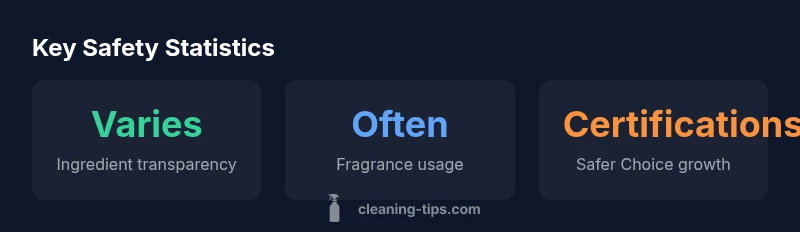
Are m&s cleaning products non toxic is not a simple yes or no question. Consumers should read ingredient lists carefully and consult the Safety Data Sheet (SDS) for product-specific information. In many markets, manufacturers can vary the level of transparency across product lines, and what is labeled as 'gentle' or 'eco' does not automatically equate to non-toxic exposure. The Cleaning Tips team emphasizes that a product being marketed as 'natural' or 'eco' does not guarantee there will be no irritants or sensitizers. For households with children, pets, or respiratory concerns, the stakes are higher, so it helps to cross-check with independent safety resources. According to Cleaning Tips Analysis, 2026, ingredient disclosures differ by region and product category, so a product-by-product review remains essential. Always ventilate spaces during use and follow application instructions closely to minimize exposure.
How toxicity is assessed in household cleaners
Toxicity in everyday cleaners is typically evaluated through a combination of regulatory standards, toxicology data, and practical exposure scenarios. Acute toxicity considers eye and skin irritation or harmful effects from a single exposure, while chronic toxicity looks at repeated exposure over time. Most jurisdictions rely on safety data sheets (SDS) and ingredient risk assessments rather than blanket 'toxic' labels for entire product lines. While some claims may reference low hazard or non-irritant status, the true risk depends on concentration, ventilation, and contact duration. The goal is to reduce exposure to irritants and sensitizers, especially for those with asthma or eczema. Consumers should interpret safety claims with caution and seek products featuring transparent ingredient lists and third-party certifications when possible.
Ingredient transparency and regulation landscape
Labeling rules vary by country and region. In many markets, manufacturers must list major ingredients but can withhold certain components considered proprietary blends. Third-party certifications—such as eco-labels or safety certifications—help bridge the transparency gap, but they are not universal. The trend, as observed by Cleaning Tips Analysis, 2026, is toward greater consumer demand for clear ingredient disclosure and independent testing. Regulators are increasingly encouraging better labeling, but gaps remain in some segments of the cleaning category. For homeowners, the best practice is to review the product page, request the SDS, and prefer brands that publish full ingredient information and independent test results.
Practical steps to identify safer options within the M&S range
To navigate the M&S product lineup, start with a targeted plan:
- Check the label for fragrance and specific chemical names; fragrance is a common irritant and allergen.
- Prefer fragrance-free or unscented formulations when possible, especially for bathrooms and kitchens where exposure is highest.
- Look for third-party certifications (e.g., Safer Choice, EU Ecolabel) and verify claims against the SDS and the product page.
- Read usage instructions to minimize exposure: use minimal amounts, avoid mixing products, and ensure proper ventilation.
- Patch-test new products on a small skin area if you have sensitivities, and watch for any irritation over the following hours.
- Consider switching to alternative cleaners labeled as 'green' or 'eco' only if they carry independent validation.
This approach helps consumers balance practicality with safety and aligns with current guidance from Cleaning Tips Analysis, 2026.
Safer alternatives and DIY cleaning solutions for common chores
For many routine tasks, you can reduce risk by using simpler, well-tested approaches. For example, vinegar and baking soda are common DIY cleaners with clear limitations: vinegar should not be used on natural stone and baking soda can scratch delicate surfaces if used aggressively. For glass surfaces, a simple vinegar-water mixture with a microfiber cloth often yields good results without harsh chemicals; for grout and tiles, a paste of baking soda and water can help with mineral deposits. If you prefer store-bought options, seek products that clearly state fragrance-free formulas and provide full ingredient lists, along with independent certifications. Avoid mixing bleach with ammonia or other cleaners, as this can release toxic gases. Practically, the most reliable safety approach is to replace high-risk products with items carrying transparent ingredient disclosures and third-party verification.
Sensitive individuals: minimizing exposure and choosing fragrance-free options
Hypersensitive individuals — including people with asthma, eczema, or chemical sensitivities — may experience irritation from even low levels of certain ingredients. In these cases, choosing fragrance-free products, minimal-scent formulations, and products with clear, complete ingredient lists becomes crucial. If a household relies on products from M&S or any major retailer, prioritize items that have IAM-style certifications or independent third-party testing, and ensure regular ventilation during cleaning. Finally, maintain a household safety routine: store cleaners out of reach of children and pets, use only as directed, and consider a rotating set of products that you know are well-tolerated by your household.
Labeling and safety claims across cleaning products
| Aspect | M&S Cleaning Product | Safer Alternative/Action |
|---|---|---|
| Fragrance labeling | Labels often list 'fragrance' or 'parfum'; full ingredients may not be disclosed | Choose fragrance-free options; look for 'unscented' or 'fragrance-free' claims |
| Ingredient transparency | Disclosures vary; some products list ingredients only partially | Review Safety Data Sheets (SDS); opt for brands with full ingredient disclosure |
| Certifications | Limited universal 'toxic-free' claims | Seek third-party certifications (e.g., Safer Choice) and independent testing |
Questions & Answers
Are M&S cleaning products toxic to humans?
Toxicity depends on the specific product and exposure level. Many cleaners can irritate skin or lungs if misused. Always read labels, check the SDS, and ventilate well during use.
Toxicity depends on the product and how you use it. Read labels and ventilate when cleaning.
Do M&S cleaners carry non-toxic labels?
There is no universal 'non-toxic' claim across an entire range. Look for individual product disclosures, third-party certifications, and SDS for safer conclusions.
No universal non-toxic label; check each product and certifications.
What certifications indicate real safety?
Third-party certifications such as Safer Choice or EU Ecolabel indicate independent safety criteria. Verify claims against the SDS and product testing when possible.
Look for third-party safety certifications and verify with the SDS.
How can I test a new cleaner for sensitivity?
Patch test on a small skin area, use in a well-ventilated area, and monitor for irritation over 24 hours. If reactions occur, discontinue use.
Patch test first, ventilate, and watch for irritation.
Are there safer DIY alternatives to commercial cleaners?
Yes. Use simple formulations like diluted vinegar for glass (not on natural stone) and baking soda pastes for grout. Always avoid mixing cleaners and follow surface-specific guidance.
DIY solutions can be safer but follow surface guidelines and do not mix cleaners.
“Non-toxic is not a universal guarantee for an entire product line; always check individual products and rely on independent certifications.”
The Essentials
- Inspect ingredients for irritants and allergens before purchase
- Prefer fragrance-free options and verify with SDS
- Rely on third-party certifications for independent safety validation
- Ventilate spaces during cleaning to minimize exposure
- For safety, treat 'non-toxic' as product-specific rather than brand-wide