Can You Build on Clean and Green Land? A Practical Guide
Discover how to evaluate buildability on clean and green land, including zoning, environmental reviews, soils, drainage, and permits. Practical steps for a compliant, sustainable project.


You can build on clean and green land when zoning, environmental, and soil requirements are met. This step-by-step guide helps you assess suitability, plan permits, and design sustainably. According to Cleaning Tips, early due diligence reduces risk and delays. This process also clarifies costs, timelines, and required specialists for projects.
Why Building on Clean and Green Land Is Complex
Building on land that is marketed as clean and green can seem ideal, but the reality is nuanced. Can you build on clean and green land? The answer depends on local rules, environmental safeguards, soil stability, flood risk, and long-term stewardship requirements. According to Cleaning Tips, high-standards cleaning and land care principles translate into stricter site evaluations when land-use changes are proposed. The concept of 'green field' development usually triggers broader planning reviews than urban infill, including habitat protection, drainage, and carbon footprint considerations. To begin, homeowners should assemble a basic factsheet on the site, including current land use, nearby water bodies, and any protected species or wetlands that might limit development. In practice, preparing a clean, defendable plan reduces back-and-forth with authorities and helps keep budgets realistic. The goal is a build that respects the land's ecological value while delivering a safe, durable home.
Legal and Planning Foundations: Zoning, Plans, and Prospects
Local zoning, master plans, and future land-use policies determine whether you can build and what you can build. This block outlines how to read zoning maps, identify overlays (conservation, wetlands, floodplains), and map alignment with neighborhood plans. You should document references to the official zoning designation, permitted densities, and any conditions attached to approvals. Early alignment with the planning department increases the chance of a smoother process and reduces redesigns later in the project. A transparent approach also helps with financing strategies, as lenders often require proof that the site complies with regional development goals.
Environmental, Soil, and Hydrological Assessments
Environmental considerations are central to building on clean and green land. Cleaning Tips analysis shows that environmental reviews often determine whether a site is eligible for development, and soil tests reveal contamination or stability issues. This block covers soil composition, contamination screening, groundwater depth, drainage patterns, and potential erosion risks. An Environmental Impact Assessment or a similar review may be required depending on jurisdiction and project scale. Engaging qualified specialists early ensures findings are integrated into design decisions, avoiding expensive retrofits. Document the scope of work, timelines, and expected deliverables in the contract with your consultants.
Infrastructure, Access, and Site Preparation
Before breaking ground, assess access routes, water and sewer connections, and road or driveway layouts. Drainage planning is critical on greenfield sites to prevent runoff issues and protect adjacent properties. This section walks through creating a utilities checklist, estimating connection costs, and evaluating on-site stormwater management options such as bioswales, permeable paving, or detention ponds. Consider the impact of topography on construction sequencing and equipment access. A well-planned site preparation phase minimizes surprises during grading and foundation work.
Sustainable Design and Mitigation Strategies
Sustainable design reduces long-term operational costs and environmental impact. This part discusses site-oriented strategies like preserving trees, habitat-friendly setbacks, low-impact development approaches, and energy-efficient building envelope choices. Strategies should balance buyer goals with regulatory requirements and ecological constraints. The design process should include contingency plans for unexpected site conditions and adaptive reuse concepts where feasible. Emphasize long-term resilience against weather extremes and consider lifecycle costs to justify upfront investments.
Permitting Timelines, Costs, and Contractor Roles
Permitting can be a major part of the project timeline on greenfield land. This section outlines typical permit categories (zoning clearance, environmental, grading, building), the roles of planners, engineers, and environmental consultants, and how to interpolate costs into the budget. Expect potential delays from environmental reviews, public notifications, or local council deliberations. Proactive communication with authorities and documented compliance reduce risk. Always maintain a transparent change-management process with your contractor and design team.
Real-World Scenarios: What Can Go Right or Wrong
Case studies illustrate how early due diligence, clear documentation, and adaptive design enable smoother builds, while delays often stem from overlooked wetlands, endangered species concerns, or unexpected soil issues. This section compares scenarios where land-use plans aligned with environmental protections versus cases where projects faced redesigns or outright denial. Learn from these scenarios to tailor your project plan, schedule, and budget.
Tools & Materials
- Local zoning and land-use maps(Obtain current designation and overlays; note future plan references)
- Environmental assessment access(Consult an environmental professional or agency; coordinate with permitting)
- Soil testing service(Soil composition, contamination screening, compaction, pH)
- Topographic survey equipment or service(Elevation, slopes, drainage paths, flood risk cues)
- Drainage plan and erosion control materials(Temporary and permanent erosion controls; Stormwater management plan)
- Permitting application forms(Building, environmental, and grading permits as applicable)
- Planning/architecture consultant(Specialist with greenfield development experience)
Steps
Estimated time: 6-12 months
- 1
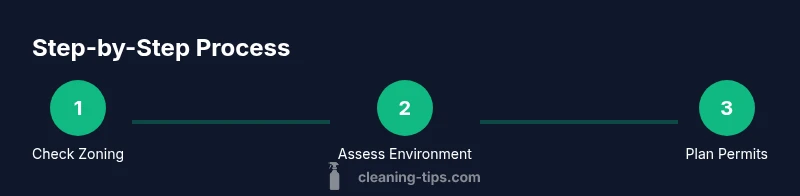
Check zoning and land-use eligibility
Review the latest zoning maps, overlays, and master plans to confirm whether your project type is allowed and if any special permissions are required. Document the designation and any conditions you must meet.
Tip: Bring a copy of the parcel ID, zoning designation, and any known entitlements to meetings with the planning staff. - 2
Hire environmental and soils experts
Engage qualified consultants to perform environmental screening and soil testing. Their findings will guide design decisions and permit requirements.
Tip: Ask for a phased engagement so findings can be incorporated into preliminary designs early. - 3
Order soil and groundwater testing
Coordinate soil sampling, contaminant screening, and groundwater assessment to identify remediation needs or limitations.
Tip: Ensure sampling covers representative zones like the proposed foundation and adjacent areas. - 4
Review drainage and flood risk
Assess surface and sub-surface drainage; map potential flood risks using site data and local hydrology reports.
Tip: Involve a civil engineer to model runoff scenarios and propose mitigation strategies. - 5
Consult with planning authorities early
Schedule pre-application meetings to align expectations, clarify required studies, and anticipate permit timelines.
Tip: Document guidance received and request written feedback to avoid misinterpretations. - 6
Develop a sustainable site plan
Create a design that preserves ecological value, minimizes disruption, and integrates energy-efficient building features.
Tip: Incorporate native vegetation and low-impact development principles wherever possible. - 7
Prepare and submit permit applications
Assemble all reports, drawings, and forms; submit to the relevant agencies and monitor for additional requests.
Tip: Set up a project calendar with milestones and reminder dates for all submittals.
Questions & Answers
What does 'clean and green land' mean in building terms?
It describes land with minimal contamination and valuable ecology, but suitability depends on zoning, environmental protections, and soil stability.
Clean and green land means land with low contamination and healthy ecology, but suitability depends on zoning, protections, and soil tests.
Do I need environmental impact assessments to build on such land?
Environmental impact assessments or similar reviews are commonly required for greenfield development; check local planning requirements.
Environmental impact assessments are often required; check with your local planning authority.
What are the early steps before purchasing land?
Review zoning, land-use plans, soil conditions, and flood risk; consult a planning professional before buying.
Check zoning, soil, and flood risk; talk to a planning professional before buying.
Are there cost differences building on green land vs urban sites?
Costs can include additional surveys, mitigation measures, and longer permitting timelines; vary by site.
Expect extra surveys, mitigation, and longer permitting; it varies by location.
What safety considerations should I plan for during construction?
Plan for erosion control, drainage, site access, and wildlife precautions; follow local regulations and PPE protocols.
Erosion control, drainage, and safe access are key; follow regulations and PPE.
Can I build on contaminated or protected land?
Contaminated or protected land often requires remediation or avoidance; obtain environmental clearance and expert remediation.
Contaminated or protected land usually needs remediation or avoidance; consult environmental experts.
Watch Video
The Essentials
- Verify zoning before design work.
- Conduct environmental and soil assessments early.
- Engage authorities early to avoid delays.
- Budget for longer permitting and possible remediation.
- Plan drainage and habitat protections to safeguard the site.