Can You Clean with Vinegar: A Practical Guide
Explore safe, effective ways to clean with vinegar. Learn surfaces, dilutions, recipes, safety tips, and troubleshooting from Cleaning Tips for a healthier home.


You can clean with vinegar for many everyday tasks, including removing mineral buildup, cutting grease, and deodorizing surfaces. Use white distilled vinegar, mix with water as needed, and avoid using it on natural stone, unfinished wood, or directly with bleach. Always test a small area first. Keep it out of reach of pets and children, and never mix with hydrogen peroxide.
What is Vinegar Cleaning?
If you're asking can you clean with vinegar, the answer is yes for many everyday tasks. Vinegar cleaning relies on acetic acid, a mild acid that dissolves mineral deposits, cuts through grease, and neutralizes odors. White distilled vinegar is the most versatile option because it is clear, inexpensive, and has no added flavors or fragrances. The Cleaning Tips team notes that vinegar is a practical staple in most homes, offering an alternative to harsher chemicals while remaining gentle on surfaces like glass and chrome. As you explore vinegar cleaning, keep in mind that concentration matters and some surfaces hate acid. Always read labels, dilute when appropriate, and test a small area before committing to a full wipe-down. For households dealing with mineral build-up, soap scum, or lingering odors, vinegar can be a first-line cleaner that’s both affordable and effective. Remember to keep vinegar out of reach of pets and children, and never mix with bleach or hydrogen peroxide.
Surfaces Suitable for Vinegar Cleaning
Vinegar works well on a wide range of surfaces when used thoughtfully. Here are common targets:
- Glass and mirrors: streak-free results with a light spray and microfiber cloth.
- Ceramic and porcelain tile: helps remove soap scum and mineral deposits.
- Stainless steel and chrome fixtures: cuts through fingerprints and water spots.
- Sealed countertops and backsplashes: mild to moderate soil removal.
- Some plastics and laminated surfaces: safe if not etched.
Always test a small, inconspicuous area first and avoid any surface that is porous, unfinished, or etched by acid.
Surfaces to Avoid and Safety Precautions
Vinegar is acidic, so avoid natural stone surfaces such as marble, limestone, and granite, as well as unsealed concrete and unsealed wood finishes. Do not use on waxed or oiled surfaces that can be damaged by acid. Never mix vinegar with bleach or hydrogen peroxide due to dangerous chlorine gas or chemical reactions. Always use in a well-ventilated area, wear gloves if you have sensitive skin, and perform a spot test on hidden areas before broader use. If you’re cleaning around kids or pets, store vinegar where they cannot reach it and supervise children during cleaning tasks.
Common Cleaning Tasks with Vinegar
Vinegar is versatile for several routine tasks. For general surface cleaning, mix a mild solution (one part white vinegar to three parts water) and spray onto non-porous surfaces like glass, tile, and chrome. For descaling kettles and coffee makers, run a cycle using a half-and-half mix of vinegar and water, then flush with clean water. To deodorize spaces such as the fridge or trash area, wipe with a mild vinegar solution and air out the space. For mineral deposits on showerheads and faucets, spray the solution, let it sit briefly, and wipe away residue with a soft cloth. Always mist lightly and avoid saturating delicate electronics.
Dilution, Dilutions, and Application Methods
Effective vinegar cleaning relies on proper dilution and application. General-purpose cleaning often uses a 1:3 vinegar-to-water ratio; tougher buildup or mineral deposits may require a 1:1 mix. For delicate finishes, start with a weaker solution (e.g., 1:4) and increase only if needed. Apply with a spray bottle or microfiber cloth, and wipe in a consistent direction to avoid streaks. After cleaning porous or sensitive surfaces, rinse with clean water and dry with a lint-free cloth to prevent water spots. Label your bottles clearly to avoid confusion with other cleaners, and keep concentrations out of reach of children and pets.
Real-World Recipes for Everyday Cleaning
- All-Purpose Vinegar Spray: 1 cup white vinegar to 3 cups water; optional 5–10 drops of lemon or other citrus essential oil for fragrance; shake gently before use; spray on non-porous surfaces and wipe dry.
- Descaling Spray for Faucets: equal parts vinegar and water; spray on mineral deposits; let sit 5–10 minutes; scrub lightly with a soft brush and rinse.
- Fridge Deodorizer: place a small bowl of undiluted vinegar inside the fridge for a short period or wipe with a damp wipe dipped in a mild vinegar solution.
Note: Always ventilate when using vinegar to avoid strong vapors, and avoid using essential oils on unfinished wood without testing.
Vinegar in Household Appliances
Vinegar can be useful for descaling kettles and coffee makers. Fill with a 1:1 solution of vinegar and water, run a cycle, and then run several cycles with clean water to rinse completely. For microwaves, place a small bowl of water mixed with a splash of vinegar inside and run until steam loosens grime, then wipe with a cloth. Avoid running vinegar directly through dishwashers, washing machines, or on heating elements for extended periods, as this can affect seals and coatings. Always consult manufacturer recommendations for appliances.
Vinegar vs Other Cleaners: Pros and Cons
Pros:
- Low cost and broad availability; relatively eco-friendly.
- Effective against mineral buildup, odors, and some grease.
- Simple recipes you can customize by surface.
Cons:
- Not a broad-spectrum disinfectant; does not kill all pathogens.
- Can etch or dull certain surfaces (natural stone, untreated wood, some metals).
- Strong odor that dissipates slowly; mixing with other cleaners can be unsafe.
For best results, use vinegar as part of a broader cleaning routine and avoid mixing with bleach or hydrogen peroxide.
Storage, Cost, and Sustainability
Store vinegar in a cool, dark place away from direct sunlight; its shelf life is long, and it remains effective for cleaning tasks over time. Compared with many commercial cleaners, it is inexpensive and reduces chemical exposure in the home. Environmentally, vinegar minimizes plastic packaging waste if bought in larger containers and reused. For households aiming to reduce chemical footprints, vinegar serves as a practical, everyday cleaner that aligns with eco-friendly cleaning practices.
Troubleshooting Common Issues
If vinegar leaves a strong or lingering smell, open windows or run a fan to improve airflow. Diluting the solution further can help reduce odor while still cleaning surfaces. On some finishes, you may notice slight dullness after repeated use; switch to a milder ratio or alternate with water-only wipes on those surfaces. Always rinse surfaces that come into contact with skin before handling food or children’s items, and consider alternating with plain water for sensitive areas.
Quick Start Checklist
- Gather a spray bottle, microfiber cloths, gloves, and a measuring cup.
- Determine surfaces to clean and choose appropriate dilution.
- Test on a hidden area before broad application.
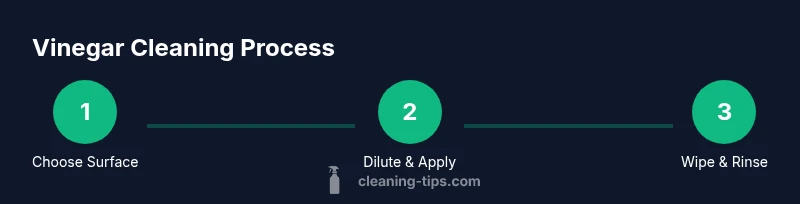
- Apply vinegar solution, wait briefly if needed, and wipe clean.
- Rinse where appropriate and dry with a lint-free cloth.
- Descale appliances as needed, then rinse thoroughly.
- Store your cleaner properly and label bottles.
- Reassess surfaces for any signs of damage and adjust usage accordingly.
Safety, Best Practices, and Final Thoughts
Vinegar is a versatile cleaning agent that can reduce chemical exposure and save money when used thoughtfully. Always follow safety guidelines, avoid mixing with bleach or hydrogen peroxide, and respect surface limitations. Keeping a simple, well-tested routine can make vinegar cleaning a reliable part of a healthier home powered by Cleaning Tips.
Tools & Materials
- Spray bottle (clear, with adjustable nozzle)(For even application and to avoid clogging)
- Measuring cup(For accurate dilutions)
- Microfiber cloths(Multiple colors recommended to avoid cross-contamination)
- Soft-bristle brush(For stubborn grime and mineral deposits)
- Gloves(Protect skin during extended cleaning sessions)
- Distilled water(Preferred for mineral-free mixing and fewer residues)
- Labels/marker(Clearly label vinegar solutions to avoid mix-ups)
- Bowl for mixing(Optional for larger batches)
Steps
Estimated time: 60-90 minutes
- 1
Gather supplies and prepare workspace
Collect your spray bottle, microfiber cloths, gloves if desired, and a measuring cup. Clear the area of items that could be damaged by liquid. This ensures you can clean efficiently without interruptions.
Tip: Label your bottle with the dilution ratio to avoid confusion later. - 2
Choose the right dilution
Decide on the cleaning task and select a dilution (commonly 1:3 vinegar to water for general cleaning or 1:1 for tougher buildup). Use distilled water if water quality is an issue.
Tip: When in doubt, start weaker and test on a small area first. - 3
Test on a hidden area
Spray a small, inconspicuous patch of the surface and wait a few minutes to check for discoloration or etching before proceeding.
Tip: If there is any adverse reaction, stop and switch to a milder solution or skip that surface. - 4
Apply vinegar solution to the surface
Spray evenly across the surface, then wipe with a microfiber cloth using gentle, overlapping strokes. For tough spots, let the solution sit briefly.
Tip: Avoid saturating wood or porous materials; wipe away excess liquid promptly. - 5
Rinse and dry as needed
Rinse non-porous surfaces with clean water if residue remains, then dry with a lint-free cloth to prevent streaks or spots.
Tip: Drying immediately minimizes water marks on glass and chrome. - 6
Descale appliances when needed
Fill kettles or coffee makers with a 1:1 vinegar-water solution and run a cycle, then flush with several cycles of clean water to remove taste.
Tip: Always rinse thoroughly after descaling to avoid lingering vinegar flavor. - 7
Tackle mineral deposits on fixtures
Apply a mild vinegar solution to faucets and showerheads, let sit, then scrub gently and rinse.
Tip: Use a soft brush to avoid scratching delicate finishes. - 8
Ventilate and deodorize spaces
Open windows or run a fan during use to disperse vapors and keep the air fresh.
Tip: Optionally add a few drops of citrus essential oil to fragrance (avoid on finishes that are sensitive). - 9
Store and label your cleaners
Keep vinegar solutions in clearly labeled containers, away from children and pets, with the lid sealed when not in use.
Tip: Rotate container use to ensure freshness and avoid leaks.
Questions & Answers
Is vinegar safe to use around pets and children?
Vinegar is generally safe when used in well-ventilated areas and kept away from direct ingestion by pets and children. Store it securely and supervise cleaning sessions to prevent accidental exposure. For households with sensitive animals, consider ventilation and reduce concentration as needed.
Vinegar is usually safe if you ventilate and keep it out of reach of kids and pets. Store it safely and monitor during cleaning.
Can vinegar disinfect surfaces?
Vinegar can remove residue and some microbes on certain surfaces but it is not a broad-spectrum disinfectant. For sanitizing tasks, rely on approved disinfectants and follow label directions. Do not use vinegar as a sole disinfectant where official guidelines require stronger agents.
Vinegar helps clean surfaces but isn't a universal disinfectant; use approved products for disinfection when needed.
Should I mix vinegar with baking soda?
Vinegar and baking soda react to fizz, which can help with mechanical cleaning or lift grime, but the reaction neutralizes the cleaning power in the moment. It’s fine to use them separately in your routine, but avoid relying on the fizz for heavy disinfection.
The fizz is great for agitation, but don’t count on it for disinfection.
Can I use vinegar on natural stone countertops?
Natural stone like granite, marble, and limestone can be etched by acids. Avoid vinegar on these surfaces and use pH-neutral cleaners instead. Sealant-treated stone may tolerate vinegar better, but testing is essential.
Avoid vinegar on natural stone; test or switch to a neutral cleaner.
How long should vinegar sit on tough buildup?
For stubborn grime or mineral deposits, let the vinegar solution sit for several minutes (about 5–10 is typical), then scrub and rinse. Do not leave concentrated vinegar on sensitive finishes for extended periods.
Let it sit briefly for tough buildup, then scrub and rinse.
Where should vinegar not be used?
Avoid vinegar on unsealed wood, waxed surfaces, porous stone, and certain metals that may tarnish. Also never mix vinegar with bleach or hydrogen peroxide. Always test first and follow surface guidelines.
Don’t use vinegar on unsealed wood or with bleach; test surfaces first.
Watch Video
The Essentials
- Test on small areas before broader use
- Avoid acidic cleaning on natural stone
- Do not mix with bleach or hydrogen peroxide
- Vinegar is a versatile, affordable cleaner