Steam Cleaning vs Dry Cleaning: A Practical Comparison
Compare steam cleaning and dry cleaning for home fabrics, carpets, and upholstery. Learn when moisture helps, stain limits, safety tips, and how to choose the best method.


Can you steam clean instead of dry clean? In many homes, steam cleaning can substitute for dry cleaning on everyday fabrics and hard surfaces, offering chemical-free cleaning and faster turnaround. However, not all fabrics tolerate moisture, and some stains may require professional dry cleaning. This comparison outlines when steam cleaning works and when dry cleaning is still the better option.
Can you steam clean instead of dry clean? Practical context
Can you steam clean instead of dry clean? The short answer is nuanced. The Cleaning Tips team often encounters households seeking a solvent-free alternative, and the answer depends on fabric type, stain nature, and how you plan to use the item. In many everyday contexts, steam cleaning can refresh cotton blends, synthetics, and some upholstery, delivering odor reduction and a near-instant dry time. It also aligns with a growing preference for fewer chemicals in domestic cleaning. However, moisture can cause issues with delicate items, certain dyes, or fabrics that shrink or craze when wet. Always consult care labels and test on a small, inconspicuous area before proceeding.
According to Cleaning Tips, starting with a clear assessment of fabric and stain conditions helps determine whether steam cleaning will meet your goals without compromising the material. If the item has a care label that forbids moisture or specifies dry cleaning only, it is safer to skip steam in favor of professional methods. This initial decision point sets the stage for a practical, damage-free cleaning plan.
How steam cleaning works: the mechanism
Steam cleaning relies on high-temperature water vapor to loosen dirt, lift odors, and sanitise surfaces without using harsh chemical solvents. The heat helps break down oils and soils, allowing them to be wiped away or evaporate more readily. For fabrics and surfaces that tolerate moisture, steam cleaning can offer effective spot treatment, gentle sanitisation, and a refreshed feel. The method is most successful when combined with proper technique: maintaining appropriate distance from the material, using the correct pressure, and ensuring the area is well-ventilated to avoid moisture buildup. Steam cleaners come in a range of models, from consumer-oriented units to more robust, professional-grade devices. When used correctly, they can supplement or substitute certain dry cleaning tasks, particularly for routine upkeep and odor control.
Fabric compatibility: what to steam and what to avoid
Steam works best on durable cotton blends, polyester, wool blends (carefully), and most upholstery fabrics that withstand moisture. It is not universally safe: silk, leather, velvet, rayon, and some wool products can suffer color fading, water spots, or texture changes if exposed to heat and moisture. Always perform a patch test in an inconspicuous area and consult the garment’s care label. For items with coatings or special finishes, moisture can degrade the finish or cause pilling. When in doubt, opt for dry cleaning for high-value garments or those labeled dry clean only.
Garments and textiles: what qualifies for steam refreshment
Many everyday clothes benefit from light steam refreshment between wears, especially cotton shirts, blends, and casual outerwear. Steam can reduce wrinkles and improve scent without applying strong solvents. For heavy fabrics like wool suiting or structured synthetics, steam can help with light wrinkle reduction but may not address set-in stains or complex fiber damage. If a fabric appears label-approved for steaming, proceed with caution: keep the nozzle moving, do not dwell on one spot, and allow the item to dry completely before wearing or storing. For delicate textiles, you’ll want to minimize moisture exposure and, where possible, rely on professional cleaning methods that are specifically designed for sensitive fibers.
Surfaces beyond textiles: steam on carpets, rugs, and hard floors
Steam cleaning isn’t limited to fabrics. Some hard surfaces and certain carpet fibers respond well to steam, particularly for sanitising, deodorising, and removing surface grime. However, wetting carpet backing and some dense pile can prolong drying times and cause rebound residues if not properly handled. For hardwood floors, sealed tiles, or laminate, follow manufacturer guidelines; excessive moisture can cause warping or swelling. When using steam on rugs or carpets, ensure the backing material tolerates moisture and avoid over-wetting. Spot cleaning with steam can remove odors effectively when used carefully.
Stains, odours, and the limits of steam cleaning
Steam can lift light to moderate surface stains and neutralise odours, especially when combined with gentle blotting and a clean cloth. It is less effective on oil-based or set-in stains that originate from heavy dyes or chemical residues. Some stains require solvent-based or dry-cleaning treatments to achieve full removal. Steam also has limitations on colorfastness: some dyes may bleed when exposed to heat and moisture. For any persistent stain, test a small area first and consider alternative approaches, such as dry cleaning, to protect the fabric’s integrity.
Safety and care tags: avoiding mishaps with moisture
Safety is essential when using steam. Wear protective gloves if handling hot surfaces, avoid direct contact with sensitive textiles, and ensure proper ventilation to prevent moisture buildup in enclosed spaces. Care tags provide the manufacturer’s guidance about moisture exposure and heat levels. If the label indicates dry clean only, do not proceed with steam cleaning. Keeping a log of which items were steamed and their results can help refine your approach over time and prevent repeated damage.
Cost, time, and environmental considerations
In many cases, steam cleaning can reduce chemical exposure and speed up the cleaning cycle, potentially saving time and energy on small items. However, air-drying times, operator skill, and the need for equipment all influence total cost. Dry cleaning, especially when performed by professionals, may offer deeper stain removal and garment protection for complex fabrics, with a different environmental footprint due to solvent use. Evaluating solvent disposal, energy use, and maintenance for steam equipment helps determine the most efficient and eco-friendly option for your home.
Step-by-step decision framework: choosing the right method
- Check the care label and fabric type. 2) Assess stain severity and moisture tolerance. 3) Test on a hidden area to gauge colorfastness. 4) Consider the item’s use: clothing, upholstery, or carpets. 5) Weigh solvent exposure, environmental impact, and cost. 6) Decide whether to steam, dry clean, or apply a hybrid approach. 7) Document results to guide future decisions.
This framework helps you decide quickly whether steam cleaning is appropriate or if dry cleaning remains the safer option for your specific item.
Implementing a hybrid approach: best practices for a healthier home
A practical strategy for many households is to combine methods. Use steam for routine refreshment of durable fabrics, upholstery, and certain carpets, while reserving professional dry cleaning for delicate items, high-value garments, or stubborn stains that steam cannot safely address. Regular maintenance, such as lint removal and fabric protection, can extend the life of clothing and home textiles. Keeping equipment clean and following safety guidelines will maximise effectiveness and reduce the risk of damage.
Comparison
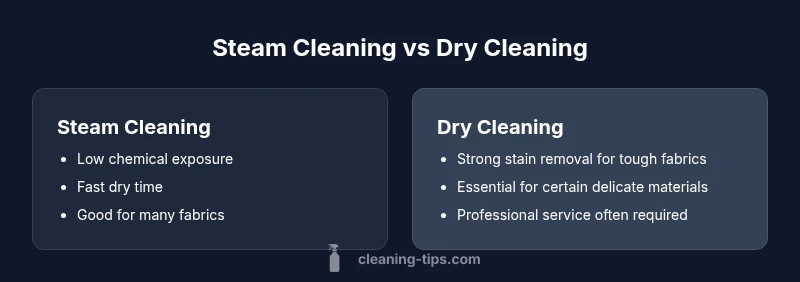
| Feature | Steam Cleaning | Dry Cleaning |
|---|---|---|
| Water usage | Water is heated to produce steam for cleaning | Solvent-based process without water |
| Chemicals used | Low chemical exposure; primarily water/steam | Solvents and additives used for stain removal |
| Dry time | Typically fast drying after treatment | Eliminates moisture; item dries in a controlled setting |
| Fabric compatibility | Broad range with testing; cautious on sensitive fabrics | Often best for delicate or specialty fabrics |
| Stain removal | Good for light-to-moderate stains; odor control | Strong performance for oils and set-in stains |
| Environmental impact | Lower solvent footprint; energy and water use vary | Solvent use requires careful disposal and handling |
| Best for | Everyday refresh, upholstery, and many garments | Dedicated dry-cleaning needs and professional garments |
Strengths
- Reduces chemical exposure at home
- Faster turnaround for many items
- Versatile for fabrics and some surfaces
- Odor removal without harsh solvents
- Can be used with common household equipment
Weaknesses
- Moisture can damage delicate fabrics
- Not all stains respond to steam alone
- Potential for heat damage if misused
- Some items still require professional dry cleaning
Steam cleaning is a strong option for many household fabrics, but dry cleaning remains essential for certain materials.
If you prioritize chemical-free refresh and quick drying, steam is effective. For delicate textiles or stubborn stains, dry cleaning provides safer and more thorough results.
Questions & Answers
Is steam cleaning safe for all fabrics?
No. Some fabrics are sensitive to heat or moisture. Always check care labels and test on a hidden area before proceeding.
Not all fabrics are safe for steam. Check labels and test a small spot first.
Can steam cleaning replace dry cleaning for clothing?
Steam cleaning can refresh many garments, but some fabrics require professional dry cleaning for stain removal or protection of fibers.
Steam can work for many clothes, but some fabrics need dry cleaning.
Can steam cleaning be used on carpets and upholstery?
Steam can refresh textiles and remove odors, but deep stains or heavy soils may require conventional cleaning or solvents.
Steam helps with odors, but deep stains may need other methods.
How should I test fabrics before steam cleaning?
Always test a small inconspicuous area, observe colorfastness, texture, and any signs of water spots before wider use.
Test a small area first, then proceed if it looks good.
Is steam cleaning more environmentally friendly than dry cleaning?
Steam reduces chemical usage but uses water and energy. Overall impact varies by method and frequency.
Steam can be gentler on chemicals, but watch water and energy use.
What equipment do I need for home steam cleaning?
A consumer-grade steam cleaner, appropriate fabrics, water, and safety precautions. Professional equipment may differ.
You need a steam cleaner and the right settings.
The Essentials
- Assess fabric type before choosing a method
- Steam is versatile but not universal
- Test on a hidden area before full cleaning
- Dry cleaning remains best for some fabrics
- Consider environmental impact and cost