Carburetor Cleaning Guide: Safe Step-by-Step for 2026
Learn how to clean a carburetor safely with our thorough, step-by-step guide. Gather the right tools, follow precise steps, and test the engine with confidence.


By the end of this guide, you will know exactly how to clean a carburetor safely and effectively, reducing engine hesitation and rich or lean running issues. You’ll learn when cleaning is required, what tools you need, and a clear, step-by-step method that minimizes fuel waste and protects engine components.
Why carburetor cleaning matters
A clean carburetor helps improve fuel efficiency, throttle response, and engine idle stability. For homeowners and DIYers, understanding carburetor how to clean is the first step toward diagnosing fuel-air mixture issues and preventing costly repairs. Regular, careful cleaning can extend engine life and minimize emissions. According to Cleaning Tips, a methodical approach reduces waste and protects gaskets and seals during service. In many engines, poor fuel delivery leads to hesitation or stumbles under load; cleaning can often restore smooth operation without more invasive repairs.
This section establishes why carburetor maintenance matters for everyday drivers and hobbyists alike, setting expectations for how a careful clean affects overall engine behavior and longevity.
Safety and prerequisites
Before you touch any engine components, work in a well-ventilated area away from sparks. Wear eye protection and nitrile gloves to protect skin from solvents. If you’re working on a vehicle, disconnect the negative battery terminal to avoid sparks and relieve any residual fuel pressure. Keep a dedicated, labeled workspace for screws, jets, and gaskets to avoid mix-ups. If you’re new to this task, start with a practice carburetor from a budget-friendly donor engine to get comfortable with the disassembly sequence before touching your primary unit. When in doubt, seek professional guidance. This ensures you don’t inadvertently compromise seals or fuel lines.
Safety first helps prevent injuries and fuel leaks from becoming a bigger repair bill later.
Tools and parts you’ll need
Gather a clean workspace and set up a parts tray. Essential tools include a carburetor cleaner solvent, small brushes, precision screwdrivers, a soft lint-free rag, compressed air can, and a digital caliper for judging passage sizes. A rebuild kit with new gaskets and O-rings is optional but recommended for older units. Have a torque wrench or small sockets on hand for reassembly, plus a labeled container for jets and metering rods. If you’re cleaning a two-barrel system, you’ll also need a jet pick and magnifying glass to inspect tiny passages. Keeping everything organized minimizes cross-contamination and speeds up the process.
Step 1: Prepare your workspace
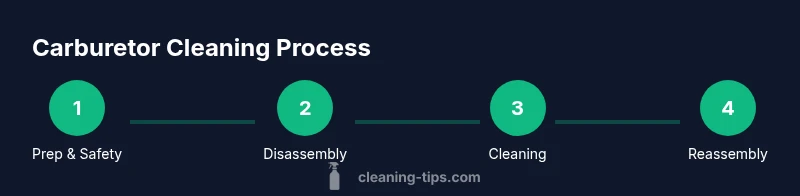
Set up in a well-ventilated area, away from heat sources and open flames. Lay down a clean mat and gather tools within arm’s reach. Make sure the engine is cool and the fuel system is depressurized. Take a reference photo of the carburetor before disassembly to guide reassembly. Label each part as you remove it to avoid misplacement later. This prep work reduces confusion and helps you track small parts that can easily be misplaced. A tidy workspace also lowers the risk of solvent spills damaging parts or finishing surfaces.
Step 2: Remove the air intake and access the carburetor
Loosen clamps or screws holding the air intake box, then carefully lift it away to reveal the carburetor. Disconnect the throttle linkage and fuel line with appropriate wrenches, keeping track of fasteners. Detach any vacuum hoses and electrical connections as needed. Take your time; rushed removal can bend linkages or snap brittle hoses. Cleanliness matters here because grit on the exterior can enter the intake and contaminate freshly cleaned components. Retain a small parts tray for screws and fittings.
Step 3: Disassemble and inspect components
Remove the top cover and any metering blocks, jets, and needle valves. Photograph their orientation for reassembly guidance. Inspect gaskets for cracks or hardening; replace any that show signs of wear. Look for varnish or gum buildup on the jets and passages; this often indicates old fuel residue. If you find damaged components, consider replacing the gasket kit or the entire assembly if needed. Handling fragile parts gently protects critical tolerances and prevents leaks after reassembly.
Step 4: Clean jets and passages
Immerse metal components in carburetor cleaner or use a solvent soak for a few minutes, then scrub away varnish with a soft-bristle brush. Use compressed air to blow air through small passages; never use forceful compressed air that could bend delicate parts. Dry every component completely before reassembly. Avoid over-soaking pilot jets, which can degrade alloy surfaces. For stubborn gum, a stiffer but non-abrasive brush can help—but avoid wire brushes that could nick passages.
Step 5: Reassemble with care and inspect seals
Reinstall metering blocks, jets, and needles in their original orientation, using your photos as a guide. Install new gaskets and O-rings if you have a rebuild kit. Lightly lubricate moving seals with a compatible lubricant where recommended. Reconnect the throttle linkage, fuel line, and vacuum hoses, ensuring all clamps are tight but not over-torqued. Check that the throttle plates open smoothly without sticking. A careful reassembly minimizes air leaks that would skew fuel delivery.
Step 6: Test run and tune
Reconnect the battery and fuel supply, then start the engine and let it warm up. Listen for rough idling, misfires, or stalling. If necessary, adjust the idle screw and mixture screws according to your engine’s service manual. A proper test run confirms whether the cleaning restored proper function or if further adjustment is needed. Finally, document any settings for future reference and schedule periodic checks based on usage and fuel quality.
Tools & Materials
- Carburetor cleaner solvent(Choose a vented container and work in a well-ventilated area.)
- Soft brushes (nylon)(Use different sizes for jets and passages.)
- Precision screwdrivers(Flat and Phillips heads for small screws.)
- Compressed air can(Low-pressure; avoid excessive force.)
- Lint-free rags(For dry-off and wipe-downs.)
- Gloves (nitrile)(Protect skin from solvents.)
- Safety glasses(Eye protection against splashes.)
- Small parts tray(Keep delicate parts organized.)
- Torque wrench or small sockets(Useful for precise reassembly.)
- Gasket kit (optional)(New gaskets and O-rings if available)
Steps
Estimated time: 90-120 minutes
- 1
Prepare your workspace
Set up in a well-ventilated area and lay out a clean mat. Gather tools, take a reference photo, and ensure the engine is cool. Label each part you remove to prevent mix-ups later. A tidy setup saves time and reduces mistakes.
Tip: Take photos from multiple angles during disassembly. - 2
Access the carburetor
Remove the air intake assembly to expose the carburetor. Detach fuel lines, linkage, and any hoses with appropriate tools. Keep fasteners organized and avoid bending delicate linkages.
Tip: Keep track of which part came from where to simplify reassembly. - 3
Disassemble with care
Carefully separate the top cover, metering blocks, jets, and needles. Photograph their orientation and inspect each part for wear or damage. Replace any cracked gaskets or worn pieces before cleaning.
Tip: Handle jets gently; bent jets ruin fuel flow. - 4
Clean jets and passages
Soak metal components in cleaner, scrub buildup with nylon brushes, and blow out passages with compressed air. Ensure all passages are clear and dry before reassembling. Avoid harsh abrasives that can scratch metal.
Tip: Never force debris through passages; if blocked, soak longer or replace parts. - 5
Reassemble with care
Reinstall jets, needles, and blocks in their original orientation. Install new gaskets if you have a rebuild kit. Reconnect fuel line and linkage, ensuring clamps are secure and components move freely.
Tip: Double-check gasket seating to prevent air leaks. - 6
Test and tune
Start the engine and let it warm up. Check idle stability and adjust mixture/idle screws per manual. If possible, perform a quick air-fuel inspection and monitor for leaks or backfires.
Tip: Document settings for future maintenance.
Questions & Answers
What is a carburetor and what does cleaning accomplish?
A carburetor mixes air and fuel for the engine. Cleaning removes varnish and gum that restricts fuel flow, restoring proper mixture and idle. Regular cleaning can improve performance but may require follow-up tuning.
A carburetor blends air and fuel; cleaning removes buildup to restore smooth operation.
Can I clean a carburetor without removing it from the engine?
In some cases you can clean the exterior and fuel passages with care, but thorough cleaning usually requires removing the carburetor to access internal jets and gaskets. Follow safety practices and consult your manual.
Often you’ll need to remove it to access internal parts for a proper clean.
Is soaking the carburetor in solvent safe?
Soaking metal components is common, but avoid soaking rubber parts or gaskets for extended periods. Rinse and dry thoroughly before reassembly to prevent residue or swelling.
Yes, but avoid soaking sensitive parts for too long.
How often should you clean a carburetor?
Frequency depends on usage and fuel quality; older engines with ethanol fuels may need more frequent cleaning. Use symptoms (hesitation, stalls, rough idle) as indicators rather than a fixed schedule.
Clean when you notice engine hesitation or rough idle.
Do I need to replace gaskets after cleaning?
If gaskets show cracking, hardening, or swelling, replace them. Fresh gaskets help prevent air leaks that can ruin fuel delivery and engine performance.
Yes—replace worn gaskets to ensure a proper seal.
Watch Video
The Essentials
- Disassemble carefully and label parts.
- Clean jets and passages without forcing debris.
- Test idle and mixture after reassembly.
- Use fresh gaskets to prevent leaks.
- Document settings for future maintenance.