How to Clean Bugs from Your Car
Learn proven methods to safely remove bug splatter from your car exterior, protect paint, and maintain a pristine finish with eco-friendly cleaners and proper technique.


You can safely remove bug splatter from your car by rinsing first, using a pH-balanced car shampoo, and soft microfiber tools. Work in sections, top to bottom, and finish with a wax or sealant for protection. This approach minimizes scratches and preserves clear coats.
Why bugs stick to your car and why cleaning matters
If you drive on highways, you’ll notice a spray of bugs on the front bumper, hood, and windshield — this is not just unsightly. Clean bugs from car is important because acid in insect residue, combined with sun, can dull wax and leave stubborn stains. According to Cleaning Tips, regular bug-removal sessions help preserve paint and glass, making future cleanups faster. By understanding how bug residue interacts with paint, you can choose safer cleaners, avoid harming seals, and maintain a showroom shine longer. The most important idea is to act soon after a trip when residues are softest. Use a gentle touch and the right tools to minimize micro-scratches and keep coatings intact. In the sections that follow, you’ll find practical steps, equipment, and strategies to get a spotless finish without risking damage.
- Start with a thorough rinse to remove loose debris.
- Work in shade to prevent cleaners from drying too quickly and leaving streaks.
- Use top-to-bottom technique to leverage gravity.
Long-term, keeping bugs off your car with regular maintenance reduces the effort required on each wash and preserves value.
Safe, eco-friendly solutions for bug residues
Many drivers prefer eco-friendly options that are gentle on paint. Use a pH-balanced car shampoo or a dedicated bug-removal product, never straight solvents on painted surfaces. Cleaning Tips analysis shows that mild cleaners paired with microfiber tools protect wax and clear coats while still dissolving bug proteins. For chrome, glass, and trim, use surface-specific products to avoid dulling finishes. Remember to rinse thoroughly and dry with a clean microfiber to prevent water spots. When choosing products, prioritize those labeled safe for automotive finishes and avoid anything with high solvent strength near rubber seals. If you’re washing in the sun, keep cleaners away from direct heat to prevent rapid drying and streaking. This approach aligns with Cleaning Tips’ emphasis on paint-safe methods and maintenance routines that extend the life of your clear coat.
Choosing the right cleaners and applicators
Selecting the right cleaners and applicators is the backbone of effective bug removal. Opt for a dedicated bug-removal solution or a pH-balanced car shampoo rather than household cleaners, which can strip wax. Use a soft microfiber wash mitt for the paint and a separate microfiber cloth for glass to prevent cross-contamination. A two-bucket method, with one for soapy wash and one for rinse, helps keep dirt out of the wash water and reduces swirl marks. For stubborn spots, a soft-bristled brush can be used sparingly, but never scrub aggressively on the painted surface. The Cleaning Tips team recommends testing any new product on a hidden panel first and always drying with a lint-free towel to avoid water spots. Overall, choose products that are specifically formulated for automotive finishes and follow label directions for dilution and contact time. These choices protect the integrity of the paint and trim while delivering a clean look that lasts longer.
Step-by-step approach to bug residue removal
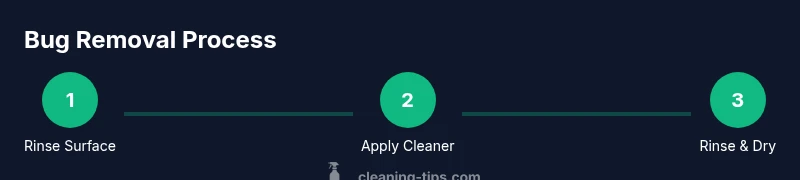
A structured approach yields the best results and minimizes the risk of damage. Start with a gentle rinse to dislodge the bulk of the residue, then apply the cleaner to the top sections first. Gently agitate with a microfiber mitt or soft brush, focusing on raised edges where bugs cling most tenaciously. Rinse thoroughly, re-spray if needed, and dry with a clean microfiber towel. Take care around plastic trim and rubber seals to avoid solvent exposure. If the residue resists, allow the cleaner to dwell briefly (as directed by the product label) before retrying with light agitation. Throughout, avoid aggressive scrubbing that can scratch the paint, and keep sessions in shaded areas to prevent streaks. For visual guidance, refer to Image references in your care manual or accompanying diagrams. The Cleaning Tips guidance emphasizes patience and section-by-section cleaning for best outcomes.
Dealing with stubborn bugs and tar
Road tar and dried insect remains often require a slightly different approach. Apply a bug remover gel or solvent recommended for painted surfaces, then let it sit briefly before gentle agitation. A clay bar can help lift embedded residues after the initial cleaning, but use it with plenty of lubrication to prevent marring. If tar persists, reapply the remover and work slowly on small areas to avoid heat buildup or solvent saturation. After removal, wash the entire panel again and dry thoroughly. This careful process preserves gloss and prevents staining from long-standing residues, aligning with Cleaning Tips’ insistence on paint-safe techniques and routine maintenance for long-term results.
Protecting the finish after cleaning
Cleaning is not the final step—protection matters. Apply a wax or paint sealant after the car is completely dry to seal in the shine and provide a barrier against future bug residues. This protective layer makes future cleanups easier because residues won’t bond as strongly with the clear coat. For best results, choose a product compatible with your paint type and apply in even, thin layers according to the label. Buff to a high gloss using a clean microfiber. Regular protection also reduces micro-scratches caused by dirt and improves water beading, which helps keep the car looking newer longer. The Cleaning Tips team notes that a consistent maintenance schedule yields easier, faster washes over time.
Maintenance tips for future road trips
Prevention is easier than correction. Keep a small cleaning kit in the trunk with a dedicated wash mitt, microfiber towels, and a bug-removal product so you’re ready to treat residues soon after they occur. After each extended trip, rinse the car as soon as practical and avoid letting residues bake in the sun. Schedule periodic detailing when seasons change to refresh wax protection and remove any staining that might have formed. Finally, monitor trim and sealant performance; reapply as needed to maintain a uniform finish. The goal is a simple, repeatable routine that saves effort during each wash and preserves the car’s appearance longer.
Tools & Materials
- Car wash soap (pH-balanced)(Choose automotive-specific cleaner to protect wax and clear coat)
- Two buckets(One for wash solution, one for rinse water to prevent re-depositing dirt)
- Microfiber wash mitt(Soft, plush, non-abrasive to prevent scratching)
- Soft-bristled brush or sponge(Use for stubborn spots, avoid scrubbing on clear coat)
- Microfiber towels (2–3)(Lint-free, for drying and glass cleaning)
- Hose with adjustable nozzle(Gentle spray to rinse without aggressive force)
- Bug remover spray or gel(Specifically designed for insect residue on paint)
- Wax or paint sealant(Protects finish after cleaning)
- Safety gloves(Optional, protects hands during cleaning)
- Glass cleaner (optional)(For streak-free windshield and mirrors)
Steps
Estimated time: 30-45 minutes
- 1
Rinse surface
Begin with a light rinse to remove loose debris. This helps prevent scratching when you scrub later. The rinse also wets the residue, making it easier to lift with cleaner. Take care around sensitive areas like emblems and sensors. Tip: Use a wide spray pattern and avoid blasting high-pressure jets directly at delicate trim.
Tip: Rinse top-to-bottom to manage gravity and keep dirt away from cleaned sections. - 2
Prepare cleaning solution
Mix your car wash soap with water according to the product label, keeping the solution creamy and not sudsy. A properly diluted solution cleans without stripping wax. Having the solution ready prevents delays during the wash. Tip: Use lukewarm water for better soap performance and to avoid shock cooling paint.
Tip: Test a small hidden area first to ensure compatibility with your paint. - 3
Apply cleaner to area
Apply cleaner to a small section or directly to the wash mitt. Avoid letting cleaner sit on the surface for long periods, which can dry and leave streaks. Work in manageable panels to maintain control and coverage. Tip: Keep a damp cloth handy to wipe off excess cleaner on edges and trim before scrubbing.
Tip: Always work from the top down in sections to prevent re-soiling cleaned areas. - 4
Gently scrub bugs
Gently scrub with a microfiber mitt or soft brush in light, circular motions. Target bug clusters at the leading edges of panels where residue is thickest. Avoid aggressive scrubbing that can mar clear coats. If needed, reapply cleaner for stubborn spots and re-wash the area. Tip: Use a figure-eight motion to reduce micro-scratches on curved surfaces.
Tip: Let cleaner work for a moment before scrubbing; this helps lift proteins without heavy rubbing. - 5
Rinse and re-check
Rinse the area thoroughly and inspect for any missed spots. Some bugs bond more strongly as the surface dries; a quick second pass may be necessary. If residue remains, treat again with a fresh application of cleaner and a gentler scrub. Tip: Use a clean towel to dab and compare before moving to the next panel.
Tip: Avoid letting the surface dry between rinses if residues persist. - 6
Dry surface completely
Dry the car with a clean microfiber towel or chamois to prevent water spots. Drying while the surface is cool helps avoid streaks and improves the finish. Pay attention to edges and crevices where water can cling.
Tip: Blot, don’t drag, the towel to minimize swirl marks. - 7
Check for remaining residues
Inspect the treated panels under good lighting to spot any remaining bug matter. If needed, repeat steps on those areas. Once satisfied, move to the next sections methodically to ensure consistent results. Tip: Use a separate towel for glass surfaces to prevent lint and streaks.
Tip: For glass, a dedicated glass cleaner can reduce streaks after bug removal. - 8
Protect with wax or sealant
Apply a wax or paint sealant to protect the finish after cleaning. A protective layer helps repel bug residues on future drives and eases cleaning. Buff to a smooth shine and inspect the surface for uniform gloss.
Tip: Apply in thin, even layers and allow adequate cure time per product guidance.
Questions & Answers
What is the safest cleaner to remove bugs from car paint?
Choose a pH-balanced car shampoo or a dedicated bug-removal product. These are designed to protect the paint while dissolving bug proteins. Avoid straight solvents that can strip wax or dull clear coats.
Use a pH-balanced car shampoo or a dedicated bug remover to protect your paint without harsh solvents.
Can I use dish soap to clean bugs off my car?
Dish soap can strip wax and reduce the protective layer on your paint. It’s better to use automotive cleaners that are formulated for car finishes.
Dish soap is not recommended for regular bug cleaning; use automotive cleaners instead.
Should I use hot water or cold water for bug removal?
Warm or room-temperature water helps cleaners perform better without shocking the paint. Avoid hot water on cold finishes to prevent damage.
Warm water is usually best; avoid hot water on cold paint.
Is it okay to use a clay bar for bug residue?
A clay bar can help lift embedded residues after washing, but use with lubrication to prevent marring the clear coat.
Yes, with lubrication, a clay bar can help remove stubborn residue after washing.
How often should I clean bugs to prevent staining?
Regular bug removal after road trips makes stains easier to remove and protects the finish. Establish a routine that fits your driving frequency.
Clean bugs soon after trips to prevent staining and keep finishes looking new.
What should I do if a stain remains after cleaning?
Repeat the cleaning cycle on the affected area with fresh cleaner and a new cloth. If staining persists, consider professional detailing.
If a stain persists, re-clean or seek professional help to avoid compounding the issue.
Watch Video
The Essentials
- Inspect the surface before cleaning and choose a car-safe product.
- Rinse first, wash from top to bottom, and dry thoroughly.
- Avoid harsh solvents near plastic trim and seals.
- Protect the finish with wax or sealant after cleaning.
- Maintain a lightweight kit for quick, on-road touch-ups.