How to clean drains with baking soda: A practical guide
Learn a safe, effective method to clean drains with baking soda. This step-by-step guide covers prep, technique, troubleshooting, and maintenance to prevent clogs in kitchens and bathrooms.


This guide shows you how to clean drains with baking soda using a simple, chemical-free approach ideal for homes. You’ll learn when to use baking soda alone, when to combine it with hot water, and how to sequence steps to prevent clogs without harsh cleaners. The method emphasizes safety, speed, and cost effectiveness, aligning with Cleaning Tips’ practical home guidance.
Why this method works for common drains
Baking soda (sodium bicarbonate) is mildly abrasive and reacts with hot water to help loosen gunk and lift debris that slow drainage. When you flush with hot water after adding baking soda, the mixture carries loosened material through the trap and into the main line, which can restore flow without resorting to harsh chemicals. This approach minimizes chemical exposure and is gentler on septic systems, a point highlighted by Cleaning Tips in their practical guidance for homeowners. Hair, grease, soap scum, and food residue are the usual culprits in slow drains, and a routine flush using baking soda can reduce the frequency of clogs. Keep in mind that this method shines for minor buildups rather than major, fully blocked pipes.
Safety and environmental considerations
Before you begin, put on gloves and keep curious kids and pets away from the work zone. Do not mix baking soda with any drain cleaner containing bleach or pool chemicals, as dangerous gases can form. This method is generally safe for most household drains and septic systems when used in moderation, but avoid overuse and never ignore a drain that remains stubbornly clogged. If you have metal pipes with a history of corrosion, proceed with extra caution and consult a professional if you’re unsure. According to Cleaning Tips, minimizing chemical exposure and avoiding harsh solvents is better for your health and the home environment.
Prepping and choosing the right baking soda combination
Use plain, unscented baking soda for predictable results. For many minor clogs, a cup or two poured into the drain followed by hot water works well. Some homeowners like to pair baking soda with a small amount of white vinegar for a fizzing action, but this is optional and not a guaranteed cure for serious blockages. If you choose vinegar, pour it after the baking soda has had time to sit (about 5–10 minutes) and then flush with hot water. The Cleaning Tips team notes that this approach can help loosen debris without relying on chemical cleaners, making it a safe, eco-friendly option for kitchen and bathroom drains.
How to tackle different drain types
Kitchen drains: Grease and food particles respond to the baking soda-and-hot-water combination, especially when you pour hot water in between applications. Bathroom sinks: Soap scum and hair benefits similarly from hot water flushes after baking soda. Showers and tubs: Hair is the main challenge; a thorough flush with hot water after baking soda can help move strands through the trap. For all drain types, avoid mixing with bleach and be mindful of the trap’s accessibility; when a clog is out of reach, a plumber may be required.
Troubleshooting and when to call a pro
If your drain remains slow after a couple of rounds, there may be a deeper obstruction or a damaged pipe. Try enzyme-based cleaners as a follow-up, which are generally safe for pipes and septic systems, but avoid aggressive chemical products. Persistent clogs, unusual odors, or standing water with poor drainage can indicate issues beyond routine buildup, such as a blocked vent or tree roots, requiring professional evaluation. The Cleaning Tips team recommends documenting symptoms and attempting maintenance routines before escalating to pay-per-use services.
Maintenance habits to prevent future clogs
To keep drains flowing freely, perform a monthly flush with baking soda and hot water, especially in kitchens where grease accumulates. Use a fine mesh strainer to catch solids before they enter the drain, and run hot water for 15–30 seconds after each use of the sink or shower. Regularly clearing hair from bathroom drains and being mindful of what goes into the garbage disposal will reduce debris buildup. Cleaning Tips emphasizes consistency over intensity for long-term results.
Tools & Materials
- baking soda(unscented, 1–2 pounds recommended for multiple rounds)
- hot water(boiled or near-boiling water for best flush)
- protective gloves(rubber or latex gloves to protect hands)
- bucket(to collect water and debris if needed)
- old towel or rag(to catch drips and protect countertop)
- plunger(handy for stubborn clogs before/after chemical-free method)
Steps
Estimated time: Total time: 25-40 minutes
- 1
Clear the area
Remove items from the sink area and place a towel to catch spills. If there’s standing water, pour it into a bucket and set aside. This setup reduces mess and gives you clear access to the drain.
Tip: Having a dry, clear workspace minimizes splashes and makes the process smoother. - 2
Pour baking soda into the drain
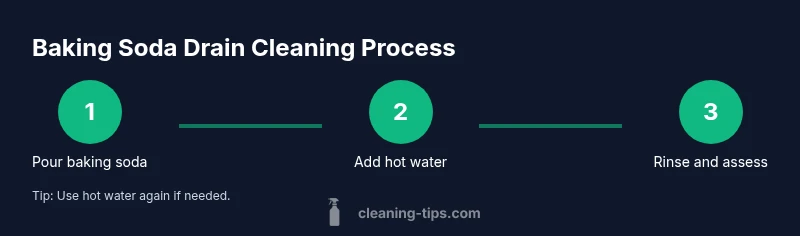
Pour 1/2 to 1 cup of baking soda directly into the drain opening. If you’re dealing with a wider or slower drain, you can use up to 2 cups. Allow the baking soda to sit for a few minutes to begin breaking up buildup.
Tip: Use a funnel or spoon to direct the powder so it doesn’t spill onto the counter. - 3
Add hot water to activate
Carefully pour hot water into the drain in a steady stream. The heat helps dissolve buildup and carries it through the pipes. This step is the core of the routine and often yields immediate results for minor clogs.
Tip: Take care to avoid splashing; too-hot water can cause minor burns. - 4
Optional vinegar fizz (if desired)
If you choose to use vinegar, pour a small amount after the baking soda has sat for 5–10 minutes and observe fizzing. This is optional and not necessary for every drain, but can help loosen stubborn residues.
Tip: Never mix vinegar with bleach or other aggressive cleaners. - 5
Flush again with hot water
Pour another round of hot water to flush loose debris through the trap. This helps ensure any loosened material is moved out of the drain rather than reaccumulating.
Tip: A second flush increases the chance of a successful clear. - 6
Assess results
Run water to check flow. If the drain is still slow, repeat steps 2–5 once more or proceed with enzyme-based cleaners as a gentler follow-up.
Tip: Avoid forcing a deeper blockage with forceful plunging; this can damage pipes. - 7
Finalize and clean up
Wipe the area, wash your hands, and store the baking soda for future use. Consider scheduling a monthly routine to keep drains clear and minimize buildup.
Tip: Note the date on a calendar to maintain consistency.
Questions & Answers
Will baking soda alone unblock a clogged drain?
Baking soda can help with minor grease or soap buildup, but it may not clear a stubborn, deep clog. If the drain remains slow after a couple of attempts, consider enzymatic cleaners or professional help.
Baking soda helps with minor buildup, but for stubborn clogs you may need additional methods or a plumber.
Is it septic-safe to use this method?
For most home septic systems, baking soda and hot water are generally safe when used in moderation. Do not overfill the system; avoid frequent, heavy usage.
Yes, it's usually safe for most septic systems when used in moderation.
Can I use baking soda and vinegar together?
Vinegar can create fizz and help loosen some debris, but it’s not a guaranteed unclogging method. If used, apply vinegar after baking soda has sat, then flush with hot water.
You can use vinegar after the baking soda has had time to sit, then flush with hot water.
How often should I clean drains with baking soda?
For typical households, a monthly or bi-monthly routine can prevent buildup. Adjust based on drain usage and signs of slow drainage.
Most people find monthly cleaning works well; increase frequency if you notice slower drainage.
What should I do if the drain still doesn’t drain?
If there is no improvement after a couple of cycles, try enzymatic cleaners and avoid aggressive chemical dumpers. A plumber may be needed for persistent or unusual clogs.
If it’s still slow after a few tries, call a professional to avoid damaging the pipes.
Is this method safe for metal pipes?
For standard copper or PVC pipes, baking soda and hot water are safe in moderation. If you suspect corrosion or leaks, stop and consult a pro.
It’s generally safe for metal pipes, but be cautious if there are known pipe issues.
Watch Video
The Essentials
- Use baking soda as a safe, eco-friendly cleaner
- Hot water boosts flushing effectiveness
- Avoid chemical cleaners and bleach mixtures
- Consistency beats intensity for ongoing maintenance