How to clean high rise windows safely and effectively
Practical, safety-first methods to clean high rise windows—equipment, weather planning, and maintenance for crystal-clear panes from ground level or rope access.


Learn how to clean high rise windows safely and effectively using ground-based methods or rope-access setups. This guide covers essential safety gear, approved equipment, weather considerations, and a clear, step-by-step approach to achieve streak-free panes without compromising security. Whether you manage a single storefront or a multi-story office, this overview helps you prepare, assess risk, and choose between window-washing equipment options.
Why clean high rise windows matter
According to Cleaning Tips, safe high-rise window cleaning combines proper gear and proven techniques. The appearance of tall glass façades affects curb appeal, tenant perception, and even energy efficiency. But the height and exposure introduce unique risks—from wind gusts to anchor point failures and dropped tools. A thoughtful approach to cleaning high rise windows isn’t just about making panes shine; it’s about protecting people, property, and the building’s integrity. Clean high rise windows contribute to better daylight penetration, reduce mineral buildup, and prolong the life of seals and frames when performed with the right plan. This section lays the foundation for the rest of the guide by clarifying why height adds complexity and why a disciplined process matters for every job—from a single storefront to a multi-story corporate tower.
The reader should understand that this work requires more than a bucket and a cloth. It demands a structured risk assessment, trained personnel, and equipment designed for elevated work. By recognizing the incremental risk added by height, property managers can set expectations, allocate resources, and establish standard operating procedures that teams can replicate across locations. The goal is to achieve crystal-clear windows while preserving safety margins and compliance with local regulations. The guidance here emphasizes practical decisions, realistic constraints, and verifiably effective practices, all framed for homeowners, renters, and facilities teams alike.
Safety fundamentals for high-rise window cleaning
Safety is the non-negotiable foundation of any high-rise window cleaning project. Before any tool touches glass, teams should establish a written plan that covers access method, fall protection, communication, and emergency procedures. A spotter or second person on the ground or at a secondary anchor helps maintain situational awareness and provides rapid aid if something goes wrong. Personal protective equipment (PPE) should include a certified fall-arrest system, a full-body harness, and non-slip gloves. Protective eyewear and a hard hat are advised for protection from falling debris. Clear signage around the work zone reduces pedestrian exposure and helps manage building occupants. Training should include rope-access basics or platform operation, anchor inspection, and the specific hazards of the building’s façade—glass type, coatings, and edge conditions.
In practice, teams should conduct a 360-degree site survey, mark exclusion zones, and verify anchor points for redundancy. A pre-job briefing ensures everyone understands roles, radio channels or hand signals, weather considerations, and escalation steps if conditions deteriorate. The goal is to minimize dynamic risk—where winds, sudden gusts, or changing sunlight can affect visibility and grip. Documentation of weather limits, wind speed thresholds, and securing procedures helps organizations demonstrate compliance and improves consistency across jobs. By embedding safety into every phase—from planning to execution—homeowners and facilities teams can execute high rise cleaning with confidence and accountability.
Access methods and equipment for high-rise windows
There isn’t a one-size-fits-all approach to access. Smaller buildings or storefronts may rely on ground-based poles and extendable squeegees, while taller towers require rope-access systems or suspended platforms. Rope access allows technicians to maneuver along a façade using controlled ascenders, descenders, and redundant anchor points. For very tall or complex façades, suspended cradles or anchored platforms provide stable working surfaces at multiple elevations. Each method has distinct requirements: rope work demands training, redundancy, and a high level of communication; platforms require installation, inspection, and fall-protection planning. Equipment selection should be based on height, edge conditions, glazing type, and the presence of setbacks or parapets.
Key tools include certified fall-protection gear, anchor systems, and a combination of water-fed poles or traditional squeegee setups. Detergent formulations designed for glass and minimal foam help prevent streaks, while microfiber cloths remove residue without scratching. Pre-inspection of the façade, including sealants and frame edges, informs the cleaning sequence and avoids issues in hard-to-reach spots. Maintenance routines should cover rope care, anchor point inspection, and storage of fragile components to extend service life. When done properly, access methods deliver efficient coverage, reduce time on the façade, and improve overall quality.
Weather, timing, and site planning
Weather is a deciding factor in every high-rise window cleaning job. Wind, sun exposure, humidity, and temperature directly affect tool control, drying times, and the formation of streaks. Scheduling should aim for calm conditions with minimal wind gusts, low humidity, and moderate temperatures to facilitate quick drying. Morning sessions can offer cooler conditions in some climates, while late afternoon may pose glare challenges that impact visibility. It’s wise to check local weather forecasts with a focus on wind shear and gust potential at the building’s height. If precipitation or dew is expected, postpone cleaning to avoid slip hazards and compromised results. Site planning includes coordinating with building management, isolating pedestrian zones, and establishing safe drop zones for tools. Clear communication protocols, contingency plans for sudden weather changes, and predefined escape routes enhance safety. The planning phase should also account for power supply, water sources for rinsing, and any on-site access restrictions or security requirements. When conditions align with established limits, teams can operate with confidence, maintain pace, and deliver consistent results across multiple elevations.
Techniques for effective streak-free cleaning
Achieving streak-free glass on high-rise façades requires rigor in tool selection, method, and timing. Start with a clean, pre-rinsed surface to loosen soils, then apply cleaning solution using a method that minimizes foam and allows even distribution. The two-bucket method (one for dirty rinse, one for clean rinse) helps control contaminant transfer and reduces streaking. For larger panes, use wide, consistent strokes in an overlapping pattern from top to bottom to maintain uniformity. The squeegee should be kept sharp at the edge and angled to promote efficient water removal without dragging dissolved minerals across the glass. Use a microfiber cloth to wipe the blade edge and corners, ensuring no lint remains. When working from rope access, consider an anchor- and tool-management plan to prevent entanglements. Drying with a clean edge is crucial; if drying lines appear, re-wipe with a new pass before final inspection. Post-cleaning, inspect for streaks, missed spots, or mineral deposits and re-treat as needed. Training on technique, including angular adjustments for curved or paneled surfaces, will improve confidence and outcomes. Regular maintenance of cleaning tools, rinse water quality, and façade-specific coatings further reduces future buildup and the need for repeat visits.
This section equips you with the practical details necessary to execute a professional clean that looks effortless, even on challenging elevations.
Maintenance, common mistakes, and post-cleaning checks
After completing a high rise cleaning, a quick but thorough post-cleaning routine ensures sustainability of results and safety. Inspect all equipment for wear and tear, store gear properly, and document any part needing replacement. Common mistakes include overloading cleaning solutions, neglecting anchor point checks, and failing to plan for wind shifts. Regular rope-inspection, fall protection harness checks, and anchor point redundancy verification reduce the risk of in-progress incidents. Debris and mineral residue left on frames or seals can degrade performance and invite corrosion, so wipe down edges and inspect the sealant lines for damage. A final walkthrough of the work zone confirms that all tools are accounted for, drop zones are clear, and signage is removed. Cleaning of equipment storage areas should be scheduled to keep gear ready for the next job, along with a maintenance log for future reference. By incorporating a disciplined post-job review, crews can build on successes, address any issues, and continually improve safety and quality across their portfolio.
FAQs and common concerns for home and facilities teams
This section addresses frequent questions about cleaning high rise windows, from safety to technique and equipment maintenance. It will help readers anticipate challenges and apply best practices consistently across buildings.
Final optimization tips for sustained success
Continuous improvement is the goal. Regular training updates, equipment maintenance, and process refinements help teams deliver dependable results while maintaining safety and efficiency across projects.
Tools & Materials
- Safety harness with lanyard(Full-body harness with shock absorber, ANSI/CE rated)
- Rope-access system (descender, ascender, ropes)(Redundant lines; dynamic rope rated for fall protection)
- Anchor points and anchor straps(Multiple redundant anchors; meets local code)
- Suspended platform or cradle(Use only if building access plan requires elevated working surface)
- Extendable squeegee with microfiber blade(45-60 degree angle recommended for control)
- Detergent designed for glass(Low-foaming, neutral pH preferred)
- Microfiber cloths(Multiple cloths for edges and corners; lint-free)
- Two-bucket rinse system(One for dirty water, one for clean rinse)
- Safety gloves with grip(Non-slip; tactile feedback for tool control)
- First aid kit(Basic trauma kit on site)
- Two-way radios or signaling device(Clear communication up to height)
Steps
Estimated time: 60-120 minutes
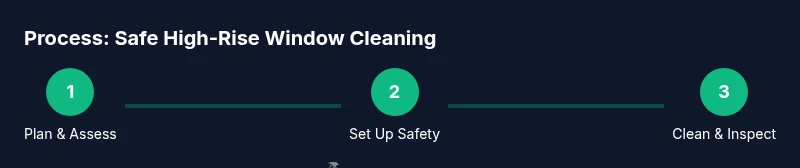
- 1
Assess site and select access
Conduct a quick site survey, identify anchor points, and choose the safest access method (rope, platform, or hybrid). Confirm weather windows and communicate roles. Ensure all personnel understand the plan before any tool is deployed.
Tip: Document anchor points and hazard zones before setup. - 2
Set up safety systems and communications
Install fall protection, anchor lines, and signaling devices. Establish a clear communication protocol with the spotter and the operator. Verify equipment integrity and have a backup plan for equipment failure.
Tip: Test radios and hand signals; verify line-of-sight visibility. - 3
Prepare tools and cleaning solution
Mix cleaning solution in the appropriate concentration, pre-wet squeegee blades, and organize cloths. Check water source quality and ensure the two-bucket system is ready. Keep tools secured to prevent drops.
Tip: Use a dedicated cleaning solution to prevent mineral buildup. - 4
Rinse and test on upper panes
Rinse the topmost sections first to prevent dirty water from running onto cleaned areas. Perform a test pass on a small area to verify no streaks. Adjust technique if streaks appear.
Tip: Keep an eye on blade edge; avoid dragging dirty water downwards. - 5
Execute full cleaning from top to bottom
Work in horizontal or vertical passes with overlapping strokes, maintaining consistent pressure. Use the squeegee with a clean edge for final wipe-downs and dry the blade edge between sections.
Tip: Maintain a stable stance and avoid twisting the body to reduce fatigue. - 6
Rinse, dry, and secure equipment
Rinse away residues, dry corners, and inspect panes for missed spots. Disassemble equipment safely, secure anchors, and perform a quick post-job debrief and inventory check.
Tip: Leave the site as you found it; remove all cords and tools from edge zones.
Questions & Answers
What equipment is essential for cleaning high rise windows?
Essential gear includes a fall protection system, anchor points, rope-access gear, a squeegee, cleaning solution, microfiber cloths, and a spotter. Training and regular equipment checks improve safety and results.
Essential gear includes a fall protection system, rope-access gear, a squeegee, cleaning solution, microfiber cloths, and a spotter.
Can I clean high rise windows from the ground?
Ground-based methods can work for lower sections or with suspended platforms; always ensure a secure anchor and stable platform. For tall façades, rope access or platforms are safer and more efficient.
Ground-based methods can work for lower sections, but use a secure anchor or stable platform.
What weather conditions are safe for window cleaning at height?
Avoid wind gusts, rain, or freezing temperatures; wait for calm, dry conditions with good visibility and minimal glare.
Avoid wind, rain, and freezing temperatures; wait for calm, dry conditions.
How do I prevent streaks on high rise windows?
Use proper technique and tools, adopt a two-bucket rinse, and dry with a clean edge squeegee. Rinse from top to bottom to minimize drips.
Use proper technique and two-bucket rinsing; dry with a clean edge.
What should I do after cleaning the windows?
Inspect panes for missed spots, secure all gear, and store equipment properly. Document any maintenance needs for future jobs.
Inspect for streaks, secure all gear, and store equipment safely.
Watch Video
The Essentials
- Plan safety and access before any ascent.
- Choose the right access method for the building height.
- Use proper squeegee technique for streak-free results.
- Inspect gear and weather conditions prior to starting.