Clean Like a Mother: Practical Cleaning Comparison
Compare everyday maintenance vs deep-clean methods in a practical guide to cleaning like a mother. Learn safe tools, routines, and tips for a healthier home with clear, actionable steps.


TL;DR: A motherly cleaning mindset blends steady daily maintenance with selective deep-clean sessions. Consistent, low-effort routines prevent buildup, while focused deep cleans tackle hidden grime in kitchens and bathrooms. The result is a healthier home with less stress, better odors, and easier future cleaning—an evidence-based balance that Cleaning Tips recommends for most households.
The motherly cleaning mindset defined
The phrase clean like a mother captures a practical philosophy: consistent, thoughtful cleaning that balances speed, safety, and habit. In homes of all sizes, a motherly approach emphasizes keeping high-use areas pristine and preventing grime from taking hold rather than chasing sporadic, intensive scrubs. This mindset borrows from everyday routines—quick checks on kitchen counters, spill-blot routines in living spaces, and a simple system for laundry and bathroom upkeep. Importantly, it prioritizes safety: non-toxic cleaners where children and pets roam, proper ventilation, and clear labeling so everyone knows what to use and what to avoid. The Cleaning Tips team notes that sustainable habits scale from studios to family homes, delivering noticeable improvements over time. When you clean like a mother, you create a healthier backdrop for daily life, reduce stress from mess, and model responsible cleaning for other household members. It’s less about perfection and more about predictable, reliable results over the week.
Core Principles
- Consistency: Make cleaning a daily, predictable routine rather than a marathon monthly event.
- Safety first: Use non-toxic cleaners and ensure good ventilation, especially with kids or pets around.
- Zone-based planning: Divide the home into manageable areas to avoid overwhelm.
- Efficient tools: Microfiber, spray bottles, and multi-use cleaners reduce effort and waste.
- Documentation: A simple checklist helps track what was done and what needs attention next.
- Adaptability: Allow for seasonal adjustments (holidays, guests, weather) without sacrificing core routines.
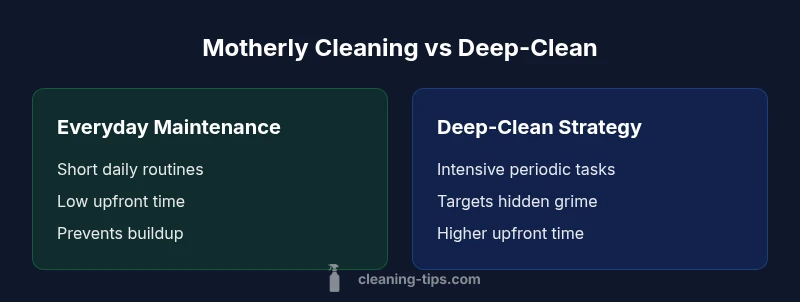
Approach A: Everyday Maintenance (Motherly Daily Routine)
A motherly daily routine emphasizes quick, focused actions that prevent mess from building up. Start with a 15-minute window each evening and tackle the highest-traffic zones: wipe kitchen counters after meals, spot-clean the sink, do a fast sweep of the floors, and run a fabric refresh on living areas. The goal is to reduce friction on the next cleaning session and keep surfaces looking and smelling clean. Use non-toxic cleaners, keep a small caddy with essentials, and rotate tasks across days so every area receives attention. This approach keeps homes comfortable for occupants and visitors, minimizes stress about mess, and models responsible cleaning habits for children. Over time, the cumulative effect is a noticeable improvement in air quality and general tidiness.
Approach B: Deep-Clean Methodology (Periodic Deep-Cleans)
Deep-clean sessions are intentional, scheduled tasks that address areas most prone to buildup—grout lines, under appliances, vent hoods, and behind furniture. Plan a monthly or quarterly deep-clean block, allocating 2–4 hours depending on home size. Break the work into smaller 30–60 minute chunks to avoid burnout, and prioritize high-impact tasks first (kitchen grease, bathroom mildew, upholstery refresh). Use safe, concentrated cleaners and consider a mild layering approach: surface prep, degreasing, scrubbing, and final wipe-down. The result is a more thoroughly cleaned home and a longer interval before stubborn grime returns. Deep cleans complement daily routines by handling the tasks routine maintenance misses.
Tools and Supplies That Support a Motherly Routine
Stock a compact kit with microfiber cloths, a non-toxic all-purpose cleaner, baking soda, white vinegar, a spray bottle, and a squeegee. Choose ingredients with low-VOC formulas to protect indoor air quality. Label bottles clearly and store them out of reach of children. Regularly launder cloths to avoid spread of dirt and grime. These tools enable quick daily touches and effective spot cleaning when spills occur, while also supporting safe, eco-friendly cleanup.
Safety and Health Considerations
The motherly approach prioritizes the health and safety of all household members. Choose cleaners that are non-toxic or low-toxicity, avoid mixing ammonia and bleach, ventilate rooms during cleaning, and keep cleaners away from food-contact surfaces. For homes with kids or pets, seal away chemical storage and consider fragrance-free or naturally scented products to reduce irritants. Regular hand washing and machine-washable cleaning cloths minimize cross-contamination. By focusing on safety first, you protect air quality and reduce long-term exposure risks while maintaining effective cleaning results.
Time Management and Scheduling Strategies
A zone-based calendar makes cleaning more predictable. Create a weekly rhythm with daily 15-minute blocks and set a monthly deep-clean slot. Use reminders to cue tasks and a simple checklist to track progress. Consider rotating tasks so no area remains neglected, and set realistic expectations to avoid burnout. Timeboxing tasks helps maintain momentum, particularly during busy seasons or when families travel. The key is consistency—short, frequent sessions beat long, sporadic marathons and create steady cleanliness over time.
Environment and Odor Control
Air quality and odor management begin with ventilation and surface maintenance. Open windows when possible, use range hoods during cooking, and wash textiles regularly. Baking soda odour-neutralizers in refrigerators or shoes can help, alongside routine laundry that includes temperature-appropriate cycles. Regularly wash curtains and rugs to prevent the buildup of odors in soft surfaces. A fresh, clean home feels healthier and more comfortable, reinforcing a positive cleaning cycle for the entire family.
Stain and Mess Scenarios: Quick Response Plans
Spills demand immediate action to prevent staining. Blot liquids with a clean cloth rather than rubbing, apply a gentle cleaner, and blot again until dry. For grease, sprinkle baking soda to absorb oil, then wipe with a microfiber cloth and finish with a faint spray of cleaner. For red wine or fruit stains, dab with a clean, damp cloth and treat with a color-safe cleaner after testing in an inconspicuous area. Always test cleaners on hidden areas first and work from the outside of the stain toward the center to prevent spreading. Consistency is key—develop a quick-response protocol so messes don’t escalate.
Case Study: A One-Week Cleaning Plan (Sample Schedule)
Monday: Quick 15-minute surface wipe-downs in kitchen and living areas; Monday night: laundry refresh. Tuesday: bathrooms and trash area check. Wednesday: kitchen sink and appliances; Thursday: dusting and electronics care. Friday: floor refresh and pet areas. Weekend: lighter maintenance and a 30–60 minute deep-clean block for one area. This plan shows how a weekly rhythm can sustain cleanliness with minimal disruption to daily life. Adjust based on family size and activity level.
Common Pitfalls and How to Avoid Them
Common mistakes include skipping daily maintenance, rushing through tasks, and using incompatible cleaners. Avoid buying too many products; instead, choose a few versatile, non-toxic cleaners. Resist the urge to deep-clean every surface in one day; spread tasks across multiple sessions. Finally, involve other household members to sustain motivation and ensure routines become shared responsibilities.
Adapting the Motherly Approach to Small Spaces and Rentals
Small spaces require space-efficient tools and adaptable routines. A portable cleaning caddy, foldable broom, and compact steamer can replace bulk equipment. In rentals, protect walls and paint by using sponge- or microfiber-based methods and avoiding harsh scrubbers that cause damage. Assign zones to minimize clutter and establish a daily touch-up routine that fits into a busy lifestyle. The key is to tailor the approach to the constraints without sacrificing core habits.
Measuring Progress and Adjusting the Plan
Progress is qualitative as much as quantitative. Track surface cleanliness, odor levels, and ease of daily tasks. If a zone shows recurring grime, adjust the frequency or method; if odors persist, re-evaluate ventilation and textiles. Use a simple weekly check to decide which areas require more attention in the next cycle. The result is a living cleaning plan that evolves with your family’s schedule.
Comparison
| Feature | Everyday maintenance | Deep-clean methodology |
|---|---|---|
| Time investment | low | high |
| Best for | busy households seeking consistency | homes with buildup or neglected areas |
| Target areas | high-use surfaces, daily touch points | grout lines, under appliances, behind furniture |
| Cost range | low-to-moderate (consumables) | moderate (specialty products) |
| Long-term maintenance | high-impact for regular upkeep | fewer but larger-impact sessions |
Strengths
- Promotes consistency and habit formation
- Reduces stress from mess and time pressure
- Encourages safer, non-toxic cleaners
- Lowers long-term cleaning costs through prevention
Weaknesses
- May require disciplined daily commitment
- Deep-clean sessions can feel burdensome if skipped
- Results depend on ongoing adherence
Motherly cleaning wins for everyday consistency; deep-cleaning remains essential for stubborn buildup
A steady daily routine with periodic deep-clean sessions provides reliable results and a healthier home.
Questions & Answers
What does 'clean like a mother' mean in practice?
It means building reliable daily habits that cover high-use areas, using safe products, and avoiding buildup through proactive routines.
Clean like a mother means building reliable daily habits that cover the most used areas with safe products.
Is this approach better than hiring cleaners?
For many households, consistent maintenance reduces the need for frequent professional cleanings. Deep cleans are still valuable for hard-to-reach areas.
Consistent maintenance can reduce the need for frequent professional cleans.
What tools are essential for a motherly routine?
Microfiber cloths, non-toxic all-purpose cleaner, baking soda, white vinegar, a spray bottle, and a squeegee are versatile and affordable.
Key tools include microfiber cloths and non-toxic cleaners.
How much time should I expect per week?
Many households allocate 30-60 minutes spread across 5-7 days for maintenance, plus 2-4 hours every month for deep cleans.
Most people spend about half an hour to an hour daily for maintenance.
How can I handle stubborn stains safely?
Treat stains with non-toxic cleaners and a gentle brushing action; avoid harsh bleaching on colored fabrics and test on hidden areas first.
Use non-toxic cleaners and test on hidden spots first.
How can I adapt this to a small rental?
Prioritize compact, multi-use tools and set up a portable cleaning kit to make quick work of shared spaces without damaging walls.
A small space benefits from multi-use tools and a portable kit.
The Essentials
- Start with 15-minute daily sessions.
- Balance maintenance with quarterly deep cleans.
- Use non-toxic products and ensure ventilation.
- Create zone-based cleaning to cover all areas.
- Monitor progress and adjust the plan as needed.