How to Create a Clean Logo for a Cleaning Brand
Learn step-by-step how to design a clean logo that communicates trust and efficiency for cleaning brands. Get practical guidance on typography, color, scalability, and brand consistency for print and digital use.


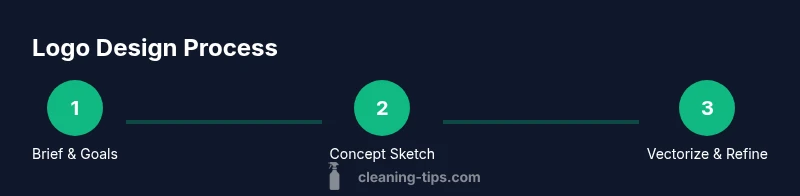
Designing a clean logo starts with a clear brief, continues with minimal shapes and legible typography, and finishes as a scalable vector ready for print and digital use. You’ll generate several concepts, refine the strongest, and prepare color, grayscale, and monochrome variants for versatile branding.
What makes a logo clean and why it matters for a cleaning brand
A clean logo uses simple, geometric shapes and ample negative space to communicate a brand quickly and memorably. For a cleaning brand, clarity and trust are essential because customers decide in a split second whether a service feels reliable. A clean logo avoids unnecessary detail that can clutter at small sizes, ensuring legibility on business cards, service vehicles, and mobile screens. According to Cleaning Tips, clarity and consistency in a logo are among the strongest signals of credibility in home services. By prioritizing readability and restraint, you create a visual mark that stays recognizable even when scanned from a distance or viewed in a crowded feed.
In practice, a clean logo for a cleaning business should balance form and function. It must convey effectiveness without feeling sterile, and it should feel approachable rather than clinical. Start with this philosophy: less is more, but not so minimal that the mark loses meaning. A clean logo becomes a memory cue that customers associate with reliable service, fast response, and healthy homes.
Core design principles for a clean logo
To build a clean logo, anchor your work in universal design principles. Start with a strong grid to enforce alignment and balance, choose a limited color palette for consistent brand recognition, and select typography that remains legible across sizes. Use geometric shapes or rounded forms to evoke cleanliness and efficiency, avoiding heavy textures that muddy the mark.
Key principles include:
- Simplicity: Reduce every element to its essential form.
- Legibility: Ensure digits, letters, and symbol remain clear at small sizes.
- Scalability: Design in vector format so the logo scales without quality loss.
- Consistency: Establish a single, repeatable system for logo usage across materials.
- Distinctiveness: Create a signature look that stands out in a crowded cleaning market.
These principles guide decisions from rough sketches to final refinements and help you build a logo that ages well with your brand.
Color and contrast for effective cleaning logos
Color choice drives immediate perception. For cleaning brands, blue communicates trust and competence, while green signals eco-friendliness and freshness. Neutral tones like charcoal and white provide balance and improve legibility when paired with brighter accent colors. A clean logo should perform well in full color, black and white, and grayscale, ensuring consistent recognition in print, digital, and on packaging.
Practical tips:
- Use a maximum of two core colors plus a neutral.
- Check contrast against white and black backgrounds.
- Test color variants on packaging, screens, and signage to confirm visibility from afar.
Remember, color is a branding tool; don’t let it overshadow the logo’s shape. The most memorable marks rely on strong form supported by a restrained color palette.
Typography choices that boost readability
Typography is critical in a clean logo. Favor geometric sans-serifs or modern grotesques that read well at small sizes. Choose a font with balanced letter widths and clear x-heights to maintain legibility across mediums. Avoid decorative or overly condensed type, which can impede recognition when the logo is reduced for social icons or app favicons.
Strategy tips:
- Pair a primary display type with a simple secondary type for taglines.
- Ensure the type lockups align crisply with the logo icon using baselines and grid alignment.
- Reserve more generous tracking for headlines, tighter tracking for subtext if needed.
A well-chosen typeface reinforces the brand voice and enhances overall legibility while maintaining a clean aesthetic.
Icon ideas that communicate cleaning without clutter
Iconography should reinforce meaning without crowding the design. Clean logos for cleaning brands often incorporate symbolic cues like bubbles, a spray nozzle, droplets, a squeegee, or a stylized wave to suggest cleanliness and freshness. Avoid overly detailed imagery that loses clarity when scaled down. Consider combining a simple geometric shape with a subtle cleaning motif to create a distinctive, memorable mark.
Guidance for icon design:
- Use one dominant symbol with a secondary accent element.
- Favor rounded or softly squared shapes to convey approachability.
- Test the icon as a standalone mark and as part of a wordmark.
Concept development: from rough sketches to a refined idea
Begin with quick sketch sessions to generate multiple concepts. Don’t judge too soon; list at least eight ideas, then narrow to three strong contenders. Each concept should feature a clear silhouette, meaning, and scalable form. Translate the best sketches into vector outlines, preserving the core shapes and avoiding unnecessary detail. This phase is about exploring possibilities while maintaining the clean logo’s integrity.
Practice notes:
- Create a grid system and evaluate each concept’s balance.
- Check that the logo remains legible when reduced to 1 inch or less.
- Consider a subtle variation for horizontal, vertical, and icon-only formats.
Document decisions and rationale to guide the final refinements.
Vectorization: moving from sketch to scalable design
Vectorization converts rough sketches into clean, scalable art. Build with simple anchor points and clean curves. Use consistent stroke weights or solid fills to maintain predictability. Export multiple file formats (AI, EPS, SVG, PNG) for various use cases and ensure the logo holds up in print quality.
Best practices:
- Lock the grid and align elements using alignment guides.
- Create a master logo with clear safe zones to avoid crowding in media.
- Maintain color integrity by saving swatches and color profiles.
Vector work makes it easy to adapt the logo for any platform without losing quality.
Testing readability at small sizes and across media
A clean logo must stay legible when scaled down for icons, app badges, or social avatars. Test at 16x16, 32x32, and 64x64 pixel sizes to confirm the symbol and logotype remain identifiable. Compare on white, black, and colored backgrounds to ensure contrast is preserved. Print proofs to validate consistency across media types.
Testing checklist:
- Verify legibility on screens and in print.
- Ensure the logo remains recognizable in grayscale.
- Confirm that color accents don’t overpower the form when reduced.
If issues appear, revisit the icon scale, line weights, or letter spacing before finalizing.
Variations and usage guidelines for different media
Create a family of logo variations: full-color horizontal, stacked, black-and-white, and monochrome versions. Document minimum clear space, do not alter proportions, and specify which variants should be used for different contexts (website header, social icons, storefront). A well-documented logo system ensures brand consistency across marketing collateral and digital touchpoints.
Usage tips:
- Maintain safe margins around the logo.
- Use color variants that align with backgrounds for readability.
- Provide alternate versions for dark and light environments.
A coherent set of variations supports clean branding across everything from business cards to vehicle wraps.
Accessibility and branding consistency in a clean logo
Accessibility matters in logo design. Ensure sufficient color contrast, readable typography, and clear recognition for users with visual impairments. Create a simple style guide that defines typography, color codes, and logo safe zones. Consistency across all materials builds trust and makes the brand feel dependable and professional.
Brand consistency tips:
- Use the same proportions in all contexts.
- Apply a limited color palette consistently.
- Update guidelines with new uses (merchandise, packaging, signage) as needed.
Common branding mistakes to avoid when designing a clean logo
Even good designers stumble into common traps. Avoid overcrowded motifs, overly trendy typography, and multi-color gradients that impede legibility. Don’t rely on texture or drop shadows to convey cleanliness. Ensure the logo remains clean and recognizable even without color or effects. A timeless logo couples simplicity with a distinct silhouette that’s easy to recall.
Review checklist:
- Is the logo identifiable at small sizes?
- Does the color scheme work in grayscale?
- Are there multiple viable uses without losing meaning?
- Is the logo legally protectable and unique in the market?
Steer clear of clutter to maintain a genuine clean look.
Quick-start checklist and next steps
To move from concept to final logo, use a structured, repeatable workflow. Start with a clear brief, generate ideas, vectorize the best concepts, test extensively, and prepare a complete brand kit. The goal is a logo that stays legible, scalable, and on-brand across all channels. After final approval, publish the brand guidelines and deliver the required file formats for developers and printers.
Quick-start checklist and next steps (continued)
Key deliverables include:
- Final logo in multiple formats (AI, EPS, SVG, PNG, PDF).
- Black-and-white and color variants.
- A brand guidelines document detailing typography, color codes, spacing, and usage rules.
- A logo usage matrix for different contexts like print, web, social, and packaging.
With these elements, you can maintain a clean, consistent brand presence that resonates with customers seeking practical, trustworthy cleaning solutions.
Tools & Materials
- Vector graphics software (e.g., Adobe Illustrator or Inkscape)(Create scalable, editable logo artwork and export common formats (SVG, EPS, AI).)
- Sketchbook or digital drawing tablet(Ideation sessions and quick concept sketches before vectoring.)
- Brand brief and target audience(Defines purpose, values, tone, and key messages.)
- Typography references and font licenses(Ensure you have rights for the chosen fonts and test combinations.)
- Color palette swatches(Include primary, secondary, and neutral colors with hex/CMYK values.)
- Print proofs and calibrated monitor(Validate color accuracy and legibility across media.)
Steps
Estimated time: 4-8 hours
- 1
Define the brand brief
Clarify audience, values, tone, and the problems the cleaning service solves. Capture a few core messages you want the logo to convey, such as reliability, speed, or eco-friendliness. This foundation guides all later design choices.
Tip: Answer five W’s (who, what, where, when, why) and how it will be used. - 2
Brainstorm clean concepts
Generate eight or more rough concepts using a sketch pad or a digital canvas. Focus on silhouettes and how the mark communicates cleanliness without detail. Don’t judge early—quantity fuels better quality later.
Tip: Doodle first, then select the strongest shapes to refine. - 3
Select strongest concepts
Choose three concepts that best express simplicity, readability, and distinctiveness. Compare them against a grid and test how they look on background colors and at small sizes.
Tip: Ask teammates for quick, critical feedback to spot clarity issues. - 4
Vectorize the top concepts
Translate the chosen sketches into vector art. Use clean anchor points, consistent curves, and balanced whitespace. Keep the composition tight and scalable.
Tip: Lock to a grid to ensure precise alignment and symmetry. - 5
Refine typography
Pair a clean display type with a simple supporting font. Check letterspacing, x-height, and legibility at small sizes. Ensure the wordmark aligns visually with the icon.
Tip: Test multiple font pairings and revert if legibility drops. - 6
Apply color palette
Select a restrained palette with high contrast. Create versions for color, grayscale, and monochrome. Verify that color choices remain strong on various backgrounds.
Tip: Choose a primary color with a trustworthy, clean connotation. - 7
Test across sizes
Assess the logo at 16x16, 32x32, and 128x128. Ensure critical details don’t vanish and the symbol remains recognizable. Adjust line weights if needed.
Tip: If it looks muddy at small sizes, simplify the shapes further. - 8
Deliver final assets and guidelines
Prepare vector and raster exports, color and grayscale variants, and a concise brand guideline. Include usage rules, safe space, and examples of correct/incorrect usage.
Tip: Create a one-page quick guide for non-designers.
Questions & Answers
What defines a clean logo for a cleaning brand?
A clean logo uses minimal shapes, strong contrast, and clear typography. It remains legible at small sizes and adapts across print and digital media. The mark should communicate cleanliness, reliability, and efficiency without unnecessary details.
A clean logo is simple, legible, and scalable, conveying cleanliness and reliability at a glance.
Why is simplicity important in logo design?
Simplicity improves recognizability and recall. It ensures the logo works on varied backgrounds, scales well, and doesn't get lost in busy environments. Clean logos also stand the test of time better than trendy, complex marks.
Simplicity makes the logo easy to recognize and versatile across media.
How can I ensure the logo stays readable on small screens?
Test the logo at 16x16 and 32x32 pixels, simplify shapes if needed, and prefer bold, open letterforms. Create a compact icon version separate from the wordmark for small devices.
Test at small sizes and optimize shapes to stay clear on phones and icons.
How long does a clean logo design typically take?
A thorough process—from briefing to final delivery—often spans several hours to a few days, depending on revisions and stakeholder feedback. Plan for a structured cycle with clear milestones and deliverables.
It usually takes a few hours to a few days, including feedback rounds.
Monochrome vs color: when should I use which?
Monochrome versions are essential for stamps, embossing, and black-and-white media. Color variants are preferred for digital and print where color can convey mood and brand personality. Always provide both options in the final package.
Provide both color and black-and-white versions for flexibility.
What file types should I deliver to developers?
Deliver vector formats (SVG, AI, EPS) for scalability, plus PNG and JPEG for immediate use. Include a brand guidelines document and color profiles to ensure consistency across platforms.
Give vectors for scaling and rasters for quick use, plus guidelines.
Watch Video
The Essentials
- Define brand values before designing.
- Keep shapes simple and scalable.
- Test readability at small sizes.
- Use a restrained color palette for clarity.
- Deliver a full brand kit with guidelines.